Standard Treadmill Dimensions and Space Requirements
Accurate spatial planning prevents installation failures and structural damage. Review precise measurements and safety clearances.

Standard home treadmills require a minimum operating footprint of 77 inches by 35 inches, plus an unobstructed 6-foot rear safety zone for emergency dismounts.
Ready to compare models? Start with our Best Treadmill: Top Home Cardio & Under-Desk Picks (2026).
Practical Quick-Reference Table
| Scenario / Metric | Recommended Target | Why It Matters |
|---|---|---|
| Operational Length | 72 to 84 inches | Accommodates full running stride without clipping rear housing. |
| Operational Width | 32 to 38 inches | Ensures adequate arm clearance and stable lateral frame geometry. |
| Rear Safety Zone | 72 inches minimum | Provides critical clearance zone for slip and fall mitigation. |
| Ceiling Clearance | User height + 18 inches | Prevents head collisions during maximum incline workouts. |
| Floor Loading | 150 to 300 pounds static | Protects subfloor deflection and prevents structural resonance. |
| Doorway Clearance | 36 inches nominal | Allows unboxed chassis to pass through standard interior doors. |
Evaluating Physical Footprints and Operating Envelopes
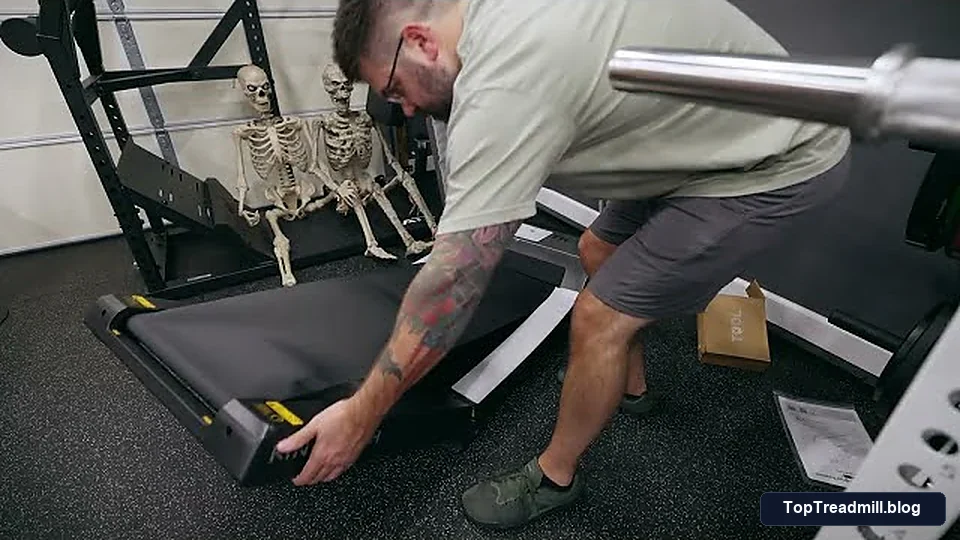
Standard fitness machines occupy distinct spatial envelopes that change between active use and storage. You must measure the absolute maximum operating length before finalizing your room layout.
Manufacturers typically list folded and unfolded dimensions separately. Reviewing the unfolded footprint guarantees your machine clears baseboards, radiators, and adjacent exercise furniture safely.
Running decks require generous clearance to accommodate natural biomechanical swaying, similar to outdoor versus indoor mechanics. A narrow corridor severely restricts your arm movement and compromises your natural running form.
Always account for the console mast angle when calculating room positioning. Modern touchscreens and accessory trays extend further forward than older analog metric consoles.
- Measure room dimensions with baseboards and molding included.
- Verify 72-inch minimum length for unrestricted running strides.
- Confirm 35-inch minimum width for stable lateral frame clearance.
- Account for forward console mast extension during setup.
Analyzing Belt Width and Length Ratios
Running surface dimensions directly dictate user safety and comfort. A 20-inch belt width represents the baseline standard for safe jogging and sprinting.
Walking pads can safely utilize narrower belts down to 16 inches. However, running applications demand extended deck lengths to prevent accidental rear roller strikes.
- Use 55-inch belts for walking and light jogging.
- Select 60-inch belts for taller runners and high-speed sprints.
Vertical Clearance and Ceiling Height Calculations
Basement and attic installations present unique vertical challenges. Your maximum operating height equals your standing height plus the maximum deck elevation.
Treadmill decks sit elevated off the floor to house incline motors and cushioning systems, a key factor when shopping via our best space saving treadmill roundup. This elevation adds 8 to 12 inches of height before you step on.
Engaging maximum incline lifts the front console significantly higher. Failing to calculate this angle can result in severe head impacts against low basement rafters.
Always measure your lowest ceiling point rather than room averages. Exposed ductwork and overhead light fixtures frequently reduce available vertical clearance unexpectedly.
- Add 10 inches of baseline deck elevation to user height.
- Calculate maximum incline angle height increases carefully.
- Ensure 18 inches of overhead clearance above your head.
- Inspect basements for low-hanging pipes and HVAC ducts.
Calculating Maximum Incline Projections
Incline motors alter the geometrical profile of the entire chassis. A 15 percent incline shifts the console significantly closer to ceiling joists.
Test vertical limits by manually elevating the deck completely. Stand on the belt during this check to simulate realistic compression under load.
- Test maximum incline settings before final placement.
- Verify adequate clearance for overhead ceiling fans.
Video Walkthrough: Trisomy Foldable Treadmill Review | 4-in-1 Walking Pad with Incline Worth It?
Floor Load Distribution and Structural Integrity
Heavy fitness equipment exerts concentrated weight onto specific structural points. Modern motorized treadmills frequently weigh between 200 and 400 pounds fully assembled.
Static weight is only half the mechanical equation during workouts. Footstrikes generate dynamic impact forces that multiply the static weight rating significantly.
Upper-floor installations require careful assessment of floor joist spans. Engineered wood I-joists handle heavy point loads differently than traditional solid lumber joists.
Installing heavy equipment across joist spans rather than parallel helps distribute weight. This engineering practice minimizes floor sagging and eliminates annoying structural vibrations.
- Verify total machine weight against floor load limits.
- Position frame perpendicular to underlying floor joists.
- Inspect subfloor materials for rot, warping, or water damage.
- Consult structural engineers for second-story heavy placements.
Using Protective Equipment Mats
Placing high-density rubber mats underneath the frame protects finished flooring. These mats absorb repetitive high-frequency vibrations and prevent floor scuffing.
Ensure your equipment mat does not trap excessive heat beneath the motor housing. Proper airflow prevents premature electronic controller thermal shutdowns.
- Select high-density closed-cell rubber protective mats.
- Keep motor ventilation areas completely unblocked.
Folding Mechanisms and Storage Space Engineering
Folding frames utilize hydraulic assist cylinders for safe storage, making it easier to select a model from our best folding treadmill small space guide. These gas shocks allow users to lift heavy running decks with minimal physical exertion.
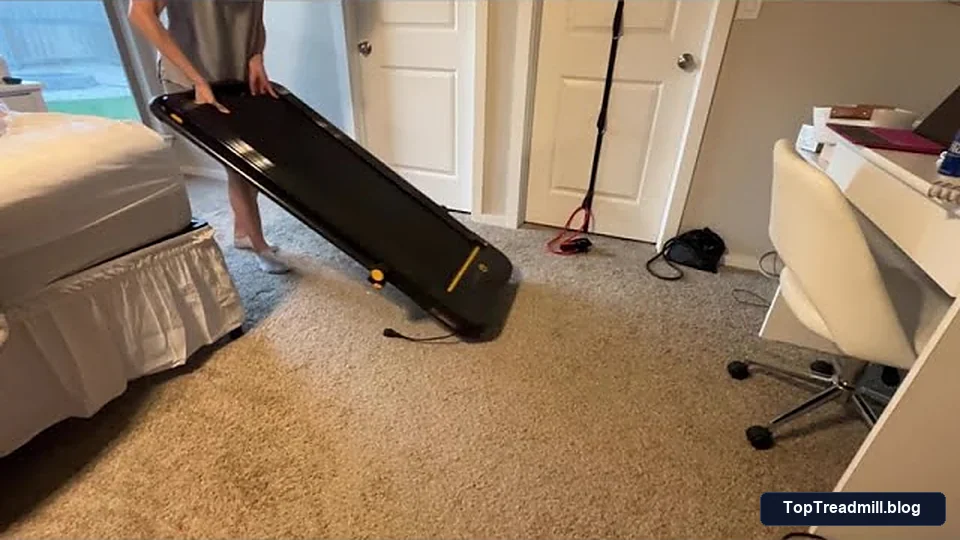
Stored vertical dimensions reduce the floor footprint by nearly half. However, folding the deck increases the overall center of gravity substantially upwards.
Always engage the physical safety lock when the deck is stored upright. Unlocked hydraulic struts can fail unexpectedly and cause catastrophic structural drops.
Measure your available vertical storage height when the deck is locked upright. Some folding designs retain considerable height even in their stowed configurations.
- Verify hydraulic assist cylinder locking mechanisms function properly.
- Confirm stowed height clears low storage room ceilings.
- Never allow children near upright stored folding decks.
- Check transport wheel alignment before rolling stowed units.
Evaluating Transport Wheels and Mobility
Relocating heavy folded frames requires integrated transport caster wheels. These small wheels support the entire machine weight during movement phases.
Always tilt the machine slowly toward your body to control momentum. Moving units across thick carpet requires significantly more physical effort.
- Inspect caster wheels for debris and flat spots.
- Clear pathways of cords before rolling the unit.
Electrical Demands and Dedicated Circuit Requirements
High-horsepower continuous-duty motors demand substantial electrical current delivery. Standard household circuits rated for 15 amps serve most residential motorized treadmills adequately.
Sharing a circuit with heavy appliances like refrigerators causes voltage drops. Low voltage forces the motor controller to draw excessive current, risking failure.
Continuous motor operation generates substantial electrical draw under heavy runner loads. Dedicated circuits prevent nuisance breaker trips during intense workout sessions.
Avoid using extension cords because they introduce electrical resistance. Resistance generates dangerous heat within copper wiring and damages electronic drive boards.
- Verify wall outlet amperage rating with a circuit tester.
- Dedicate a single 15-amp or 20-amp breaker to the unit.
- Never connect motorized frames through standard extension cords.
- Inspect power cords regularly for insulation cracking.
Surge Protection and Voltage Suppression
Sensitive console microprocessors require robust protection against power spikes. Connect your power cord to a UL-listed surge suppressor with high joule ratings.
Basic multi-outlet strip adapters do not offer genuine surge suppression. Invest in industrial-grade protection devices designed specifically for inductive motor loads.
- Install high-joule rated commercial surge protectors.
- Check suppressor clamping voltage specifications annually.
Safety Zones and Rear Emergency Clearance
International safety standards mandate specific clearance zones around exercise equipment, which you can verify using our handy deck size calculator. A minimum 72-inch clear zone behind the running deck is strictly required.
This rear safety buffer prevents severe injury during accidental slips or falls. Slipping off a moving belt at high speeds requires immediate unobstructed runoff space.
Maintain clear side margins of at least 20 inches along both running rails. These side platforms allow safe mounting and emergency straddling during sudden stops.
Never position furniture, glass tables, or rigid walls near the rear roller. Designing an isolated workout perimeter is fundamental for injury prevention.
- Enforce a 6-foot clear zone behind the rear roller.
- Keep side handrail zones free of wall obstructions.
- Remove sharp furniture corners from the immediate perimeter.
- Never place treadmills directly against glass windows.
Lanyard Key Safety Protocols
The magnetic safety lanyard acts as an essential emergency stop switch. Always attach the clip securely to your clothing before starting the running belt.
Test the emergency cutoff switch periodically by pulling the key. The drive motor should cut power and brake to a complete stop instantly.
- Test magnetic safety switch functionality monthly.
- Store safety keys away from curious young children.
Environmental Factors and Ventilation Standards
Internal electronic components generate considerable heat during continuous operation. Adequate room ventilation prevents premature motor controller overheating and thermal shutdowns.
Basement and garage spaces often experience high humidity and temperature swings. Moisture accelerates internal frame oxidation and corrodes sensitive circuit boards over time.
Maintain ambient room temperatures between 50 and 85 degrees Fahrenheit. Extreme cold stiffens drive belts, while excessive heat degrades internal wiring insulation.
Dust and pet hair accumulate rapidly within lower motor shrouds. Regular interior vacuuming prevents flammable debris buildup near the drive electronics.
- Control room humidity below 60 percent relative humidity.
- Avoid placing motorized units in uninsulated outdoor sheds.
- Vacuum motor compartment dust accumulation every six months.
- Ensure proper room airflow to cool drive electronics.
Dust Mitigation and Motor Shroud Maintenance
The plastic motor hood traps fine particulate matter circulating indoors. Removing this shroud exposes the flywheel and brushes for routine maintenance checks.
Always unplug the main power cord before removing protective shrouds. Electric shock hazards exist around transformer terminals even when switched off.
- Always disconnect main power before opening shrouds.
- Inspect drive belt tension during internal cleanings.
Pre-Delivery Access and Doorway Clearance Metrics
Heavy shipping boxes require careful logistical planning before arrival. Standard interior residential doorways measure 32 to 36 inches wide in most modern homes.
Factory-assembled frames often exceed standard doorway widths when crated. You may need to partially disassemble console masts or side arms during delivery.
Staircases introduce tight turning radiuses and low clearance thresholds. Measuring stairwell width and ceiling angles prevents costly delivery bottlenecks and equipment damage.
Always review the manufacturer box dimensions rather than just unit specs. Palletized delivery boxes add significant bulk and weight to the transport process.
- Measure all interior doorways along the delivery route.
- Verify stairwell turning radiuses and ceiling heights.
- Review crated box dimensions before scheduling delivery.
- Keep basic metric tools ready for partial assembly.
Navigating Tight Stairwells and Landings
Carrying heavy frames up stairs requires at least two adults. Secure all moving parts with straps to prevent sudden shifts during the stair transport phase.
Protect hardwood stair treads with heavy moving blankets. Dropping a heavy steel frame can ruin finished stairs and crack internal console glass.
- Enlist at least two strong people for stair moves.
- Secure folding decks with safety locks before tilting.
Frequently Asked Questions
What is the absolute minimum room length required for a standard treadmill?
You need a minimum room length of 14 feet total. This combines an 8-foot machine footprint with the required 6-foot rear safety zone.
Can I plug my motorized treadmill into a standard household extension cord?
Never use an extension cord because it restricts electrical current. This restriction causes dangerous wiring heat and damages internal motor controllers.
How much ceiling clearance do I need to safely use an inclined treadmill?
Calculate your standing height plus baseline deck elevation, then add 18 inches of clearance. This prevents head strikes at maximum incline.
Does a folding treadmill save significant floor space when stored upright?
Folding mechanisms reduce the floor footprint by roughly 50 percent. However, storing the deck upright raises the center of gravity significantly.
Why is a dedicated electrical circuit recommended for heavy motorized treadmills?
Dedicated circuits prevent voltage drops and nuisance breaker trips. Shared circuits struggle with the high current draw demanded by continuous-duty motors.