Difference Between Running On Treadmill And Outside vs Standard Treadmill
Outdoor running forces natural propulsion against unyielding terrain, whereas a standard treadmill utilizes a motorized belt to assist turnover. Understanding these mechanical variations helps runners optimize their training specificity safely.

Choose outdoor running for ultimate propulsive engagement and race simulation. Opt for a standard treadmill when requiring controlled pacing and low-impact joint protection.
Compare all top models in our Best Treadmill: Top Home Fitness Picks (2026 Guide).
Side-by-Side Breakdown
| Criteria | Difference Between Running On Treadmill And Outside | Standard Treadmill | Edge |
|---|---|---|---|
| Core Design / Build | Unrestricted natural geography with varying elevation profiles. | Engineered steel frame with a continuous loop running belt. | Standard Treadmill |
| Real-World Performance | Requires 100 percent self-propulsion and lateral stabilization. | Assisted belt movement reduces true horizontal propulsion effort. | Difference Between Running On Treadmill And Outside |
| Ease of Setup & Use | Step outside your door and begin running immediately. | Requires console programming, safety key attachment, and electrical power. | Difference Between Running On Treadmill And Outside |
| Durability & Reliability | Subject to weather degradation, uneven pavement, and debris. | Heavy-duty commercial frames withstand thousands of continuous miles. | Standard Treadmill |
| Efficiency / Operating Footprint | Zero electricity required, utilizing purely biological energy output. | Draws continuous electrical current during motor operation. | Difference Between Running On Treadmill And Outside |
| Maintenance Requirements | None required beyond footwear replacement and route planning. | Regular belt lubrication, deck cleaning, and calibration checks. | Difference Between Running On Treadmill And Outside |
| Best Ideal Use Case | Ideal for marathon race prep and authentic terrain adaptation. | Perfect for interval training, controlled rehabilitation, and bad weather. | Standard Treadmill |
Core Engineering And Mechanical Differences
Outdoor running relies entirely on human muscle power to push against stationary asphalt. Your hamstrings and glutes engage intensely to generate every single stride forward across the earth.
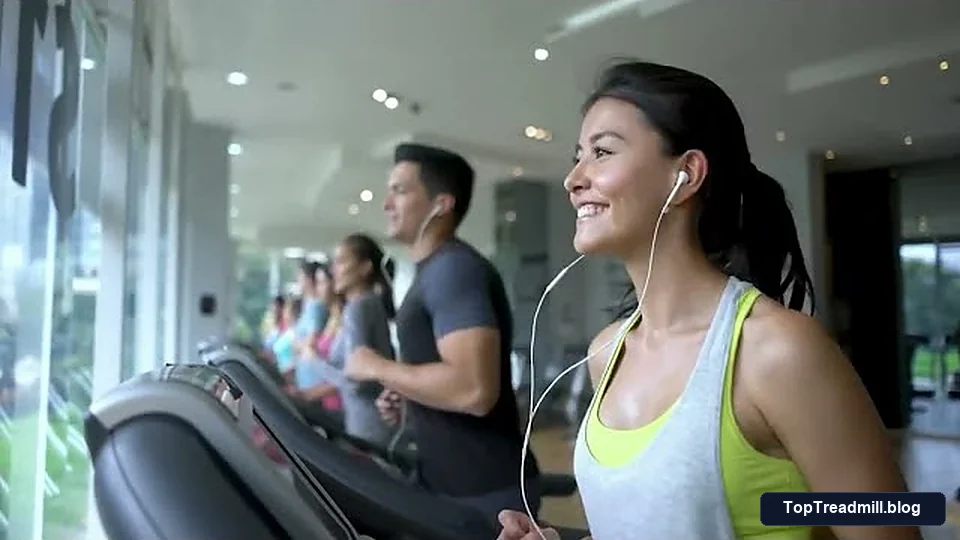
A standard treadmill features a motorized belt driven by a robust system detailed in our chp versus hp motor guide. This mechanical assistance slightly alters your natural gait by reducing the normal push-off phase.
Understanding these foundational design differences allows athletes to adjust their workouts. While outdoor surfaces demand complete lateral stability, motorized decks offer a predictable and uniform stride surface.
Motor-driven belts rely on consistent continuous torque delivery from a high-performance DC or AC motor to maintain constant velocity under heavy footstrike loads across varying user weights.
Outdoor running completely requires active self-propulsion where your primary gluteal and hamstring muscles generate massive horizontal ground reaction forces directly against stationary outdoor pavement surfaces.
Conversely, standard motorized treadmills actively pull the belt backward beneath your feet, which significantly reduces mechanical push-off demands compared to running on natural outdoor terrain.
- Outdoor surfaces require complete self-propulsion mechanics.
- Motorized belts assist leg turnover during the stance phase.
- Stationary terrain demands active lateral stabilization from ankles.
Propulsion Mechanics And Belt Dynamics
When running outdoors, your body mass must accelerate against stationary ground resistance. This demands high activation from posterior chain muscles to achieve forward momentum.
Treadmills minimize this requirement because the belt pulls backward automatically beneath your landing foot. Consequently, many runners experience lower hamstring activation when logging miles indoors.
- Belt friction changes horizontal force application vectors.
- Motor assistance alters overall metabolic energy expenditure profiles.
Biomechanics And Muscle Activation Profiles
Running biomechanics shift significantly when using indoor machinery evaluated in our best budget treadmill for running reviews. Stride length often decreases on motorized equipment due to visual confinement and belt speed.
Outdoor runners naturally vary their pace, stride frequency, and foot strike pattern based on obstacles. Conversely, a treadmill forces a cadence lock that can feel rigid to experienced distance runners.
Joint loading also experiences distinct variations across these two training environments. Concrete yields higher impact shock, while quality motorized decks absorb some shock through elastomer cushioning systems.
Stride length on motorized treadmills often shortens slightly because the continuous moving belt surface completely eliminates the need for aggressive terminal knee extension mechanics.
Comprehensive electromyographic studies demonstrate that quadriceps activation remains relatively high indoors, while active hamstring recruitment drops significantly due to the assisted leg recovery phase.
Joint kinematics change as runners rapidly adapt to the constant belt speed, leading to altered ankle dorsiflexion angles and significantly reduced vertical oscillation training parameters.
- Stride length typically shortens on motorized running belts.
- Pace consistency remains artificially steady on motorized equipment.
- Foot strike patterns adapt to the uniform texture of belts.
Cadence And Stride Length Alterations
Indoor runners frequently adopt a higher step frequency to compensate for moving belts. This adjustment prevents overstriding and helps maintain balance on narrow running surfaces.
Outdoor terrain encourages longer strides because runners feel secure on wide paths. Recognizing these postural differences helps prevent overuse injuries during intense training blocks.
- Higher cadence rates are common on indoor treadmills.
- Wide paths encourage longer, unrestrained running strides.
Environmental Factors And Physiological Load
Weather elements such as wind resistance, ambient temperature, and humidity heavily influence outdoor running. These external stressors raise heart rates and demand superior thermoregulation from your body.
Standard treadmills operate in climate-controlled indoor spaces devoid of natural headlamps or opposing wind forces. To simulate outdoor wind resistance, many trainers recommend setting an incline of one percent.
Physiological adaptations therefore differ between these two distinct training settings. Outdoor training builds mental toughness against harsh weather, while indoor training isolates cardiovascular output efficiently.
Outdoor running exposes athletes to variable wind resistance, which exponentially increases overall aerodynamic drag and total metabolic energy expenditure at higher running velocities.
Indoor training environments lack natural cooling airflow, causing core body temperature to rise faster unless you utilize a dedicated high-velocity fan for thermal regulation.
To accurately compensate for zero wind resistance indoors, many running coaches strongly recommend setting a one percent incline to closely match outdoor energetic costs.
- Wind resistance increases outdoor energy expenditure significantly.
- Indoor environments eliminate natural cooling airflow currents.
- Climate control stabilizes heart rate responses during long runs.
Thermoregulation And Wind Resistance
Without forward motion through still air, indoor runners lack evaporative cooling. Sweat accumulation increases rapidly unless powerful auxiliary fans are positioned near the console.
Outdoor runs provide natural airflow that cools skin temperatures effectively. This environmental cooling helps sustain higher intensities during warm weather endurance sessions.
- Auxiliary fans are vital for indoor cooling management.
- Natural airflow aids sweat evaporation during outdoor workouts.
Standard Treadmill Deck Construction And Cushioning
Modern motorized equipment relies on engineered medium-density fiberboard decks mounted on elastomer shock absorbers. This specialized construction absorbs a substantial portion of initial foot strike impact forces.
Outdoor asphalt and concrete provide zero shock absorption, transmitting peak ground reaction forces directly up through your joints. Runners transitioning outdoors must build mileage slowly to protect connective tissues.
The degree of deck cushioning varies widely among different machine models featured in our best treadmill for walking and running selections. Some brands offer adjustable firmness settings to mimic road running or soft trail conditions.
Modern running decks utilize multi-layer phenolic boards paired with advanced elastomer cushioning blocks to absorb initial shock impact forces very efficiently during training sessions.
This engineered shock absorption effectively protects vulnerable joints from harsh repetitive trauma, unlike running directly on unforgiving asphalt surfaces commonly found outdoors.
However, excessive deck bounce can destabilize ankle proprioception, making firm or adjustable stiffness decks far more preferable for serious endurance and distance runners.
- Elastomer shock absorbers reduce peak joint impact forces.
- Concrete surfaces transmit maximum impact up skeletal structures.
- Adjustable deck firmness alters specific training shock profiles.
Impact Absorption Technologies
Engineers design deck cushioning systems to protect knees and lower backs from repetitive stress injuries. These mechanical cushions compress slightly under heavy foot strikes during sprints.
While beneficial for injury rehabilitation, excessive cushioning can sometimes dull neuromuscular reflex loops. Runners should evaluate whether their indoor deck matches their preferred race surface.
- Shock systems protect runners from repetitive stress injuries.
- Soft decks may occasionally alter natural neuromuscular reflexes.
Calibration, Speed Accuracy, And Incline Mechanics
Standard treadmills require precise motor calibration to ensure displayed speeds match actual belt velocities. Over time, belts stretch and require manual tension adjustments to maintain accuracy.
Outdoor distances use satellite GPS tracking, which can falter near tall buildings. Conversely, belt velocity on models found in our best home treadmill for running guide remains mechanically absolute and precise.
Incline adjustments on motorized units alter vertical elevation with exact numerical precision. Outdoor hills present irregular gradients that challenge pacing strategies in unpredictable ways.
Modern commercial-grade motor controllers heavily rely on integrated optical encoders to ensure precise belt speed calibration, preventing belt slip under heavy user workloads.
Modern motorized incline systems use heavy-duty linear actuators to lift the chassis, accurately simulating uphill grade mechanics entirely without outdoor wind resistance variables.
Regular belt tensioning and silicone lubrication are essential routine maintenance tasks to prevent premature motor strain and maintain accurate pace metrics over time.
- Motor calibration ensures accurate speed and distance metrics.
- GPS watches track outdoor routes subject to signal interference.
- Incline motors provide repeatable and precise elevation profiles.
Pacing Control And Interval Precision
Treadmills excel at maintaining strict interval pacing for speed workouts. You simply input your target speed, and the motor forces you to maintain that exact velocity.
Outdoor interval training demands rigorous self-discipline to avoid starting too fast. Maintaining consistent splits requires practice and acute internal pacing awareness.
- Motors enforce strict pacing for structured speed intervals.
- Outdoor runners must cultivate internal pacing discipline manually.
Joint Impact And Injury Mitigation Dynamics
Repetitive stress injuries plague distance runners regardless of where they log their weekly mileage. Indoor treadmills offer a forgiving surface that can reduce flare-ups of chronic shin splints.
Outdoor running strengthens stabilizing muscles because uneven terrain forces constant micro-adjustments. Neglecting these stabilizer muscles can leave runners vulnerable when transitioning back to rough trails.
Balancing both training modalities often yields the best injury prevention results. Alternating surfaces distributes mechanical loads across different tissue structures effectively.
Modern treadmill decks reliably reduce peak impact forces by storing and returning energy, which significantly lowers lower-extremity stress fractures during high mileage weeks.
Conversely, hard outdoor concrete running paths impose maximum ground reaction forces, requiring greater tendon stiffness and resilience from the adapting musculoskeletal system.
Smartly alternating between surfaces helps balance mechanical stress, preventing overuse injuries caused by identical repetitive movement patterns on unchanging indoor training platforms.
- Forgiving indoor belts help manage chronic shin splints.
- Uneven outdoor paths strengthen ankle stabilizing muscle groups.
- Mixed surface training optimizes overall injury mitigation.
Balancing Indoor And Outdoor Training
Smart training programs incorporate both indoor machinery and outdoor routes to build comprehensive fitness. This hybrid approach leverages the controlled pacing of machines with outdoor grit.
Listen to your body when shifting between distinct running environments. Gradual transitions prevent sudden overload on unaccustomed muscle fibers and joints.
- Hybrid routines combine indoor pacing with outdoor strength.
- Gradual transitions prevent sudden muscle overload injuries.
Practical Implementation And Training Integration
Selecting your primary running environment depends heavily on local climate, schedule constraints, and personal goals. Busy professionals often rely on indoor equipment for safe nighttime workouts.
Outdoor enthusiasts prioritize fresh air, scenic variety, and authentic race simulation above all else. Your ultimate choice should align with your specific athletic objectives and lifestyle needs.
Investing in quality footwear remains essential regardless of your chosen running venue. Proper shoes complement deck cushioning or road surfaces to protect your lower extremities.
Utilizing motorized treadmills for structured interval training allows precise pace execution, effectively eliminating the distractions of weather and urban traffic obstacles.
Traditional outdoor running remains completely irreplaceable for specific race preparation, teaching your body to navigate uneven terrain and corners naturally and safely.
Combining both training modalities successfully creates a balanced program that maximizes cardiovascular fitness gains while protecting vulnerable joints from excessive wear.
- Local climate dictates the viability of outdoor training routines.
- Indoor setups provide secure environments for late-night sessions.
- Quality footwear complements surface characteristics for injury prevention.
Structuring Your Weekly Running Schedule
Design your weekly schedule to utilize the distinct advantages of each running medium. Use indoor sessions for precise tempo runs and bad weather days.
Reserve outdoor runs for long weekend endurance efforts and race simulation practice. This balanced methodology prepares your body comprehensively for peak performance.
- Schedule precise tempo workouts on indoor motorized belts.
- Save weekend long runs for authentic outdoor terrain.
Frequently Asked Questions
Is running on a treadmill easier than running outside?
Yes, because the moving belt assists with leg turnover and eliminates wind resistance. This mechanical assistance makes maintaining high speeds feel noticeably less strenuous.
Do I need to set the treadmill incline to match outdoor running?
Setting a one percent incline compensates for the lack of natural wind resistance indoors. This minor adjustment aligns your energy expenditure with outdoor running efforts.
Does treadmill running cause more or fewer injuries than outside?
Treadmill decks offer superior shock absorption that protects joints from high impact. However, monotonous strides can occasionally strain Achilles tendons if variety is lacking.
Why does my outdoor pace feel different from treadmill pacing?
Treadmills enforce a strict cadence lock that prevents natural speed fluctuations. Outdoor running involves micro-adjustments in terrain and wind that alter perceived exertion.
Can I train effectively for a marathon entirely on a treadmill?
You can build exceptional cardiovascular fitness and speed using indoor machines. However, adding outdoor runs is vital for terrain adaptation and race psychology.