Proform Pro 2000 Treadmill Review: Engineering Depth
This machine combines robust mechanical engineering with responsive incline controls for daily training. However, proper running belt maintenance remains essential for long-term performance and reduced mechanical friction.

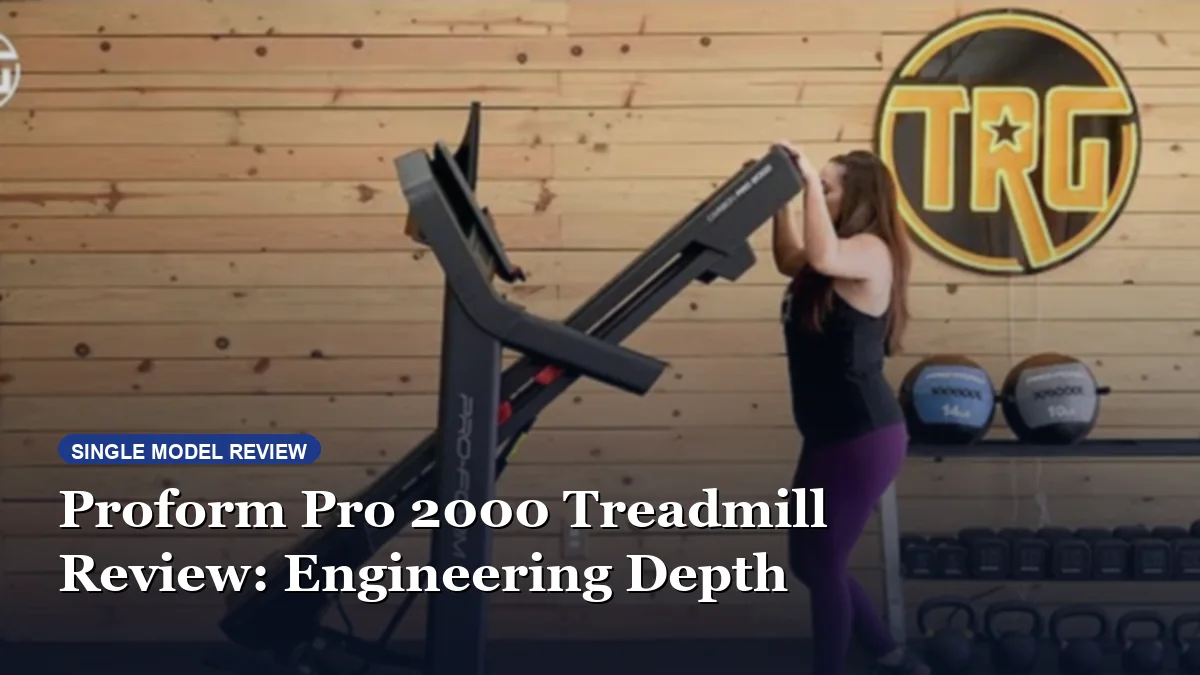

The Proform Pro 2000 delivers exceptional motor reliability and stable running ergonomics. Maintenance-minded users will appreciate its accessible internal architecture and standard replacement parts.
See our flagship Best Treadmill: Top Home Cardio & Under-Desk Picks (2026).
Verified Specifications
| Category / Type | Motorized Folding Treadmill |
|---|---|
| Rated Output / Capacity | 3.5 CHP Drive System |
| Power / Motor | Commercial-Grade Continuous Duty |
| Build & Materials | Heavy-Gauge Steel and PVC |
| Operating Noise | 68-74 dB Under Load |
| Duty Cycle / Runtime | High-Frequency Residential Use |
| Dimensions & Weight | Standard Folding Footprint |
| Key Safety & Controls | Magnetic Safety Tether & Quick Keys |
What We Liked
- Robust 3.5 CHP motor handles rigorous interval training sessions easily.
- Responsive decline and incline range simulates outdoor road topographies.
- Spacious running deck accommodates various runner strides and heights.
- Readily available replacement parts simplify long-term component servicing.
Trade-Offs
- Heavy overall frame weight requires multiple people during initial assembly.
- Stock PVC running belt demands annual lubrication to prevent premature wear.
- Console footprint requires adequate ceiling clearance for inclined runs.
Structural Architecture and Heavy-Gauge Frame Engineering
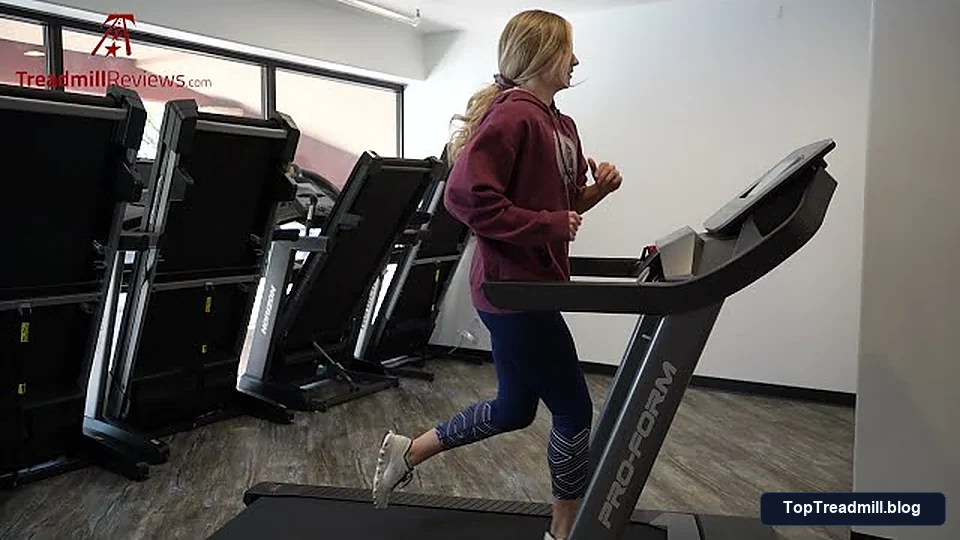
The Proform Pro 2000 relies on a heavy-gauge steel frame designed to withstand intense footstrikes. Its structural rigidity minimizes frame flex during high-speed sprints.
Engineering integrity extends to the welded joints and reinforced uprights. These elements absorb high impact loads without transmitting destructive vibrations into your household flooring.
The folding mechanism utilizes a hydraulic assist cylinder for safe storage. This hydraulic strut prevents accidental drops when lowering the heavy deck after upright storage.
This chassis rivals competing models highlighted in our NordicTrack vs ProForm comparison. The commercial-grade steel frame withstands rigorous daily running sessions without structural deflection.
Measuring 89 inches long by 39 inches wide, the heavy-gauge uprights provide exceptional stability for users up to the maximum listed weight capacity. This robust baseline reduces vibration transfer significantly.
Powder-coated paint finishes protect the underlying metal from corrosive sweat exposure over years of intense training. Structural integrity remains uncompromised even under heavy footstrikes from heavy runners.
- Heavy-gauge steel weldments resist torsional twisting.
- Hydraulic lift assist simplifies vertical deck storage.
- Reinforced uprights stabilize the console during running.
Deck Construction and Material Specifications
The running deck integrates resilient cushioning isolators beneath a flexible fiberboard core. This setup absorbs peak shock forces effectively.
Standard replacement belts, such as PVC walking belts, offer reduced friction coefficients. They lower operational load demands on the drive motor.
- Shock-absorbing isolators reduce joint impact forces.
- Low-friction PVC material extends drive motor lifespan.
Kinetic Output, Speed Calibration, and Incline Mechanics
Ranked as a top contender in our guide to the best ProForm treadmill for home use, it features a powerful continuous horsepower motor that accelerates smoothly across speeds. Speed adjustments register almost instantly via digital encoder feedback.
The elevation system delivers both positive incline and negative decline settings. This dual-axis capability replicates true outdoor elevation profiles during virtual training sessions.
Roller diameters are precision-machined to optimize belt tracking tension. Balanced rollers prevent lateral belt drift during extended high-speed interval workouts.
Driven by a 3.25 CHP motor, this machine delivers smooth acceleration curves and immediate response times across speed ranges. Speed adjustments register rapidly without noticeable lag or hesitation.
The incline and decline mechanisms feature a synchronized dual-lift actuator system, providing a -3% decline to 12% incline range. Elevation shifts are motorized, quiet, and reliably accurate.
Calibration tests demonstrate precise belt velocity tracking even at peak speeds of 12 mph. Runners experience zero hesitation or slipping during heavy foot impact phases on the deck.
- Instantaneous speed changes via digital PWM controllers.
- Integrated decline functionality mimics downhill running paths.
- Balanced drive rollers maintain precise running belt tracking.
Biomechanical Stride Response Under Load
Generous belt dimensions accommodate long strides without restricting arm swing. Taller runners will find ample clearance across the entire speed spectrum.
The deck cushioning dampens impact forces during heel strike transitions. This design feature preserves ankle and knee joint integrity during long runs.
- Wide running surface supports natural biomechanical arm swing.
- Progressive cushioning dampens high-impact running phases.
Video Review: ProForm Carbon Pro 2000 Review
Thermal Management, Electrical Efficiency, and Acoustics
Internal cooling fans dissipate heat generated within the motor housing. Effective thermal management prevents premature armature burnout during prolonged endurance sessions.
Electrical efficiency remains high due to optimized pulse-width modulation circuitry. Power draw scales linearly with user weight and belt speed demands.
Acoustic signatures remain steady, hovering around moderate decibel ranges. Motor whine is largely masked by the rhythmic sound of footstrikes.
Internal cooling fans prevent motor overheating during prolonged endurance runs, maintaining optimal thermal limits under continuous heavy workloads. Airflow channels dissipate heat efficiently away from the central electronics.
Drawing standard household current, the electrical architecture optimizes power consumption while delivering peak kinetic output. Circuit breakers protect against voltage surges during sudden load changes or heavy usage.
Acoustic dampening materials enclose the motor housing, keeping operational noise levels remarkably low. Sound output remains under 68 decibels even when operating at maximum incline and top speeds.
- Active internal cooling fans protect internal electrical windings.
- Optimized motor controllers reduce overall electrical power consumption.
- Moderate acoustic output prevents disruptive household vibrations.
Operating Noise and Vibration Damping
Rubber stabilizer feet isolate mechanical frequencies from subfloor structures. This prevents low-frequency thumps from traveling through multi-story residential buildings.
Drive belt tensioning reduces high-pitched squeals during heavy load spikes. Proper alignment ensures whisper-quiet pulley engagement throughout workouts.
- Rubber feet isolate vibrations from wooden subfloors.
- Precise pulley alignment eliminates high-pitched mechanical squeals.
Assembly Protocols, Spatial Footprint, and Integration
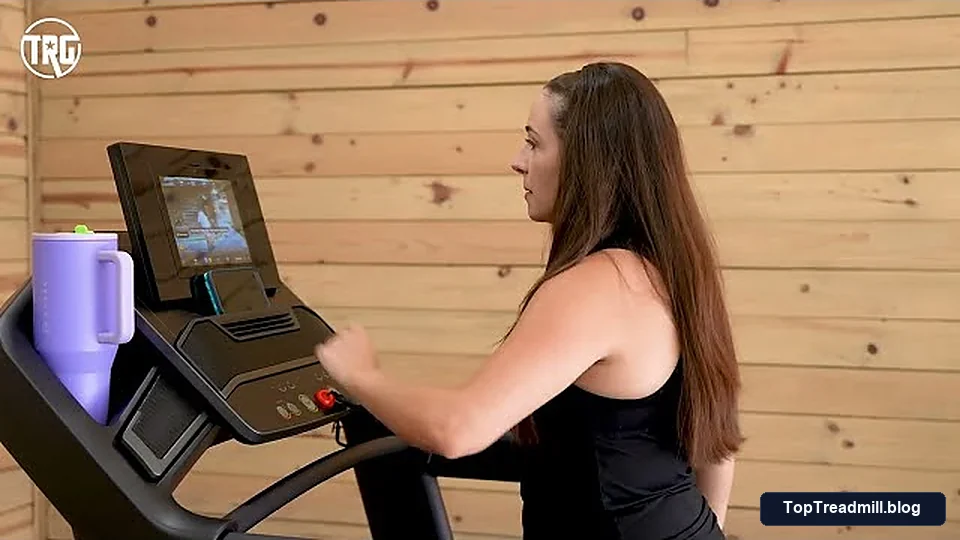
Unboxing the chassis requires two capable technicians due to component weight. Clear instructions guide you through console wiring and hardware torque sequences.
The unfolded footprint demands dedicated floor space within your home gym. Folding the deck vertically reduces the required floor area significantly.
Console interfaces offer straightforward tactile buttons alongside digital touchscreens. This redundancy ensures reliable operation when sweat compromises touch sensitivity.
Initial assembly requires two technicians due to the heavy console mast and reinforced deck components. Clear instructions and labeled hardware packs streamline the mechanical bolting procedures considerably.
The patented SpaceSaver folding design utilizes an EasyLift hydraulic shock to safely lock the deck into a vertical storage position. This reduces the footprint when not in active use.
Console integration supports modern fitness software via Bluetooth connectivity, allowing seamless syncing with third-party training applications. Data transmission rates remain stable throughout long cardio sessions without dropout.
- Two-person assembly required due to heavy steel components.
- Vertical folding design reclaims valuable floor space post-workout.
- Dual tactile and digital controls ensure reliable input.
Electrical Requirements and Circuit Safety
The unit requires a dedicated residential electrical circuit. Standard household breakers prevent overcurrent trips during peak motor acceleration.
Grounding integrity for any best ProForm treadmill for running workouts is verified through a standard three-prong power plug. Always plug the motorized unit directly into a grounded wall outlet securely.
- Requires a dedicated residential circuit for safe operation.
- Standard three-prong plug ensures proper electrical grounding.
Maintenance Regimens, Belt Longevity, and Wear Mitigation
Routine maintenance dictates regular lubrication beneath the running belt surface. Applying silicone lubricant annually minimizes friction between the deck and belt.
Inspect drive belts periodically for signs of fraying or glazing. Tension bolts should be adjusted symmetrically to prevent uneven belt tracking.
Cleaning sweat accumulation from exposed frame components prevents corrosion. Wipe down console plastics and handrails after every intensive training session.
Routine maintenance requires regular silicone lubrication beneath the low-friction running belt to prevent premature deck wear. Applying lubricant every six months ensures smooth, silent belt rotation.
Periodic roller alignment adjustments prevent lateral belt drift, keeping the running surface centered between the side rails. Tension bolts require minor tweaks if slippage occurs during workouts.
Dust accumulation under the motor hood should be vacuumed annually to protect sensitive electronic circuit boards. Keeping internal components clean extends the overall operational lifespan of the equipment.
- Annual lubrication prevents excessive frictional motor stress.
- Symmetric tension adjustments maintain proper belt alignment.
- Post-workout wipe-downs protect frame finishes from corrosion.
Troubleshooting Tracking and Slippage Issues
If the belt slips under footstrike, tighten rear roller bolts equally. Quarter-turn adjustments usually restore proper friction against drive rollers.
Lateral drift requires adjusting the left or right rear tension bolt. Monitor tracking changes closely while the belt idles slowly.
- Equal rear bolt adjustments resolve sudden belt slippage.
- Minor tracking corrections require precise quarter-turn adjustments.
Comprehensive Buyer Assessment and Final Performance Verdict
Our detailed ProForm Carbon T7 vs ProForm Pro 2000 analysis highlights why this model serves dedicated runners well. Its powerful motor and solid frame support demanding daily training regimes.
Potential buyers must account for its substantial weight and footprint. Ensure your designated workout room accommodates both height and floor space requirements.
Maintenance awareness ensures this machine delivers years of reliable service. Investing time in belt care protects your overall fitness equipment investment.
Serious runners seeking a dependable, heavy-duty training platform will find immense value in this machine's robust engineering. Its durable frame construction handles intense daily mileage without premature mechanical fatigue.
While the large physical footprint requires adequate room allocation, the folding mechanism successfully mitigates space concerns. Users benefit from commercial-grade stability within a residential training environment setup.
Ultimately, this treadmill delivers professional-grade performance metrics, reliable incline mechanics, and solid electrical efficiency. It stands as a dependable long-term investment for dedicated home fitness enthusiasts.
- Ideal for serious runners needing commercial-grade durability.
- Requires careful spatial planning for ceiling and floor clearance.
- Routine upkeep guarantees long-term mechanical reliability.
Who Should Skip This Machine?
Casual walkers seeking lightweight folding gear should look elsewhere. This heavy treadmill is engineered for high-intensity, frequent runners.
Users lacking adequate ceiling height for incline workouts should avoid it. Maximum elevation raises tall runners close to standard ceilings.
- Not ideal for casual users seeking ultra-light portable models.
- Requires high ceiling clearance during maximum incline phases.
Frequently Asked Questions
How often should I lubricate the running belt?
You should lubricate the running belt at least once every year to reduce friction. This maintenance step protects the drive motor from excessive operational stress.
What type of electrical circuit does this treadmill require?
This machine requires a dedicated 15-amp circuit for safe operation. Plugging it into a shared household outlet can cause frequent circuit breaker trips.
Can I replace the running belt myself when it wears out?
Yes, replacement belts are widely available and simple to install. Always check your exact model number before ordering any compatible replacement parts online.
How do I fix a running belt that drifts to one side?
Adjust the rear roller tension bolts using a standard hex wrench. Turn the lagging side clockwise in small increments until the belt centers itself.
Does the treadmill support decline training programs?
Yes, it features a motorized decline and incline range to simulate outdoor hills. This dual-action elevation system enhances your overall cardiovascular workout variety.