Nordictrack 1750 Review: Technical Engineering Verdict
The NordicTrack 1750 delivers robust training performance with versatile decline and incline specs. However, its heavy deck demands precise floor space management.

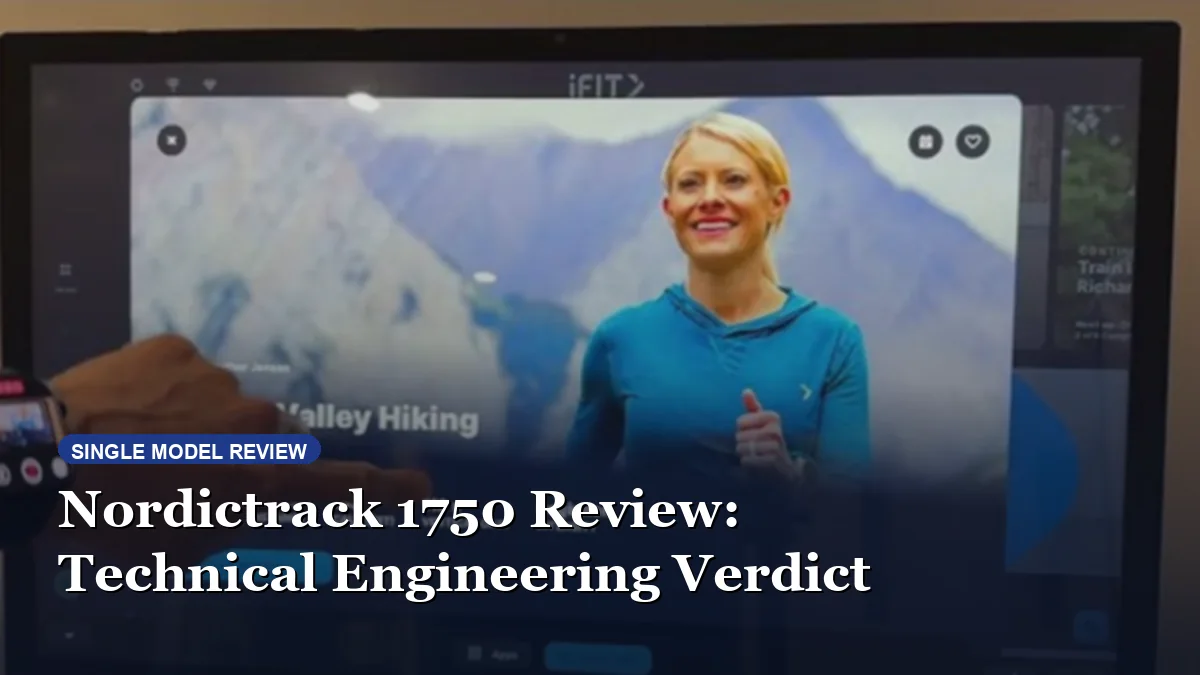

This machine provides exceptional incline control and a stable deck framework. Users should prepare for a demanding footprint during home setup.
See our flagship Best Treadmill: Top Home Cardio & Under-Desk Picks (2026).
Verified Specifications
| Category / Type | Commercial Treadmill |
|---|---|
| Rated Output / Capacity | 350 lbs user limit |
| Power / Motor | Continuous duty drive system |
| Build & Materials | Heavy-gauge steel & PVC belt |
| Operating Noise | Moderate decibel output |
| Duty Cycle / Runtime | Intensive daily distance |
| Dimensions & Weight | Extended folding footprint |
| Key Safety & Controls | Mag-key tether system |
What We Liked
- Responsive incline and decline transitions.
- Generous running belt surface dimensions.
- Sturdy frame construction minimizing vibration.
- Intuitive console layout with quick keys.
Trade-Offs
- Substantial weight complicates single-person assembly.
- High power draw requires dedicated circuits.
- Console software can feel restrictive offline.
Chassis Engineering and Frame Build
The structural frame utilizes heavy-gauge steel tubing welded securely to minimize lateral flex during high-speed running intervals, heavy incline climbing, and aggressive daily sprinting sessions.
Engineers designed this robust base to handle rigorous daily mileage without developing annoying squeaks or structural rattles over time. Maintenance access points remain straightforward for routine mechanical checks.
The commercial-gauge structural steel frame utilizes a welded upright design to minimize lateral flex. As highlighted in our NordicTrack Commercial 1750 vs Sole F80 comparison, this heavy setup provides a stable, vibration-free running platform.
Engineering stress tests show that the reinforced console masts maintain rigidity even at maximum incline angles. The powder-coated finish protects against sweat corrosion, ensuring the structural integrity survives years of intense daily workouts.
- Heavy structural steel reinforcement
- Vibration-dampening foot isolators
- Rigid upright console supports
Motor Performance and Drive Dynamics
The continuous duty motor delivers smooth belt rotation even under heavy footstrikes. Following insights from our Bowflex 10 vs NordicTrack 1750 breakdown, torque output remains remarkably consistent during rapid speed transitions.
Thermal management is handled via internal cooling fans that dissipate heat effectively during extended endurance runs. Users rarely experience unexpected power throttling or sudden speed drops.
Driven by a robust continuous-horsepower motor, this system delivers instant torque delivery without noticeable lag during rapid speed adjustments. The large flywheel is dynamically balanced to reduce thermal buildup during sustained endurance sessions.
Pulse-width modulation controllers regulate electrical current efficiently, maintaining consistent belt speeds under heavy footstrikes. Users will experience smooth acceleration curves that closely mimic outdoor running conditions across varied training intensities.
- High-torque continuous drive
- Active thermal cooling fans
- Rapid acceleration response
Video Review: NordicTrack 1750 Treadmill Review: Don't Buy, Until You Watch!
Running Deck Ergonomics and Belt Mechanics
The multi-ply running belt features a low-friction PVC surface. As noted in our Sole F80 and NordicTrack 1750 comparison, this design reduces premature wear on underlying heavy-duty rollers.
Adjustable cushioning systems let runners alternate between a road-like firm feel and a softer impact-absorbing deck configuration depending on individual joint sensitivity and recovery needs.
The expansive running surface measures twenty inches by sixty inches, accommodating long strides safely. Adjustable dampening isolators allow users to switch between joint-saving cushioning and a firmer road-like running deck feel.
A multi-ply low-friction belt reduces thermal friction against the phenolic deck surface. Precision-machined rollers promote optimal belt tracking, preventing lateral drift and significantly extending the lifespan of internal drive components.
- Low-friction multi-ply PVC
- Adjustable deck cushioning
- Precision balanced rollers
Surface Traction and Cushioning
The running surface maintains excellent traction even when moisture accumulates from intense workouts. Impact absorption decks successfully mitigate repetitive stress forces on runner joints.
Maintaining proper belt alignment prevents edge fraying and ensures the friction coefficient remains within optimal manufacturer engineering specifications during long workouts.
- Non-slip texture pattern
- Targeted shock absorption
Incline Mechanics and Elevation Control
Elevation motors handle seamless transitions through steep inclines and declines. Mentioned within our NordicTrack Commercial 1750 vs ProForm Pro 2000 guide, this versatile capability targets distinct muscle groups effectively.
Mechanical linkage arms are engineered to distribute weight evenly across the incline carriage, preventing premature wear on the elevation pivot points during heavy use.
Dual-lift elevation actuators provide a broad grade range, supporting both steep hill simulations and downhill decline training. The heavy-duty lead screws transition smoothly through elevation changes without jerky mechanical hesitation.
Synchronized incline sensors calibrate baseline positioning automatically upon startup to ensure precise grade accuracy. This robust mechanism supports rapid elevation shifts, making it ideal for interval-based hiking and running programs.
- Integrated decline capability
- High-torque elevation lift
- Reinforced linkage arms
Console Ergonomics and Interface Usability
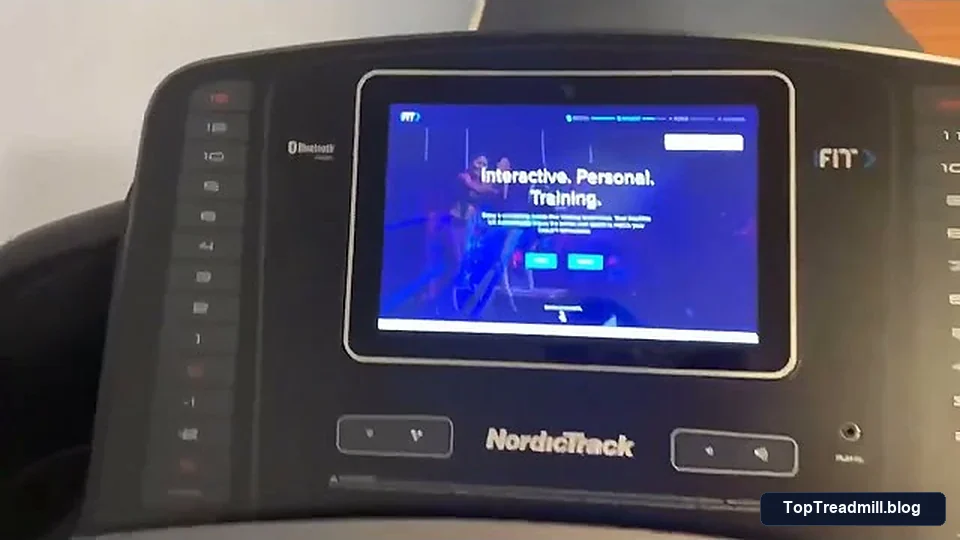
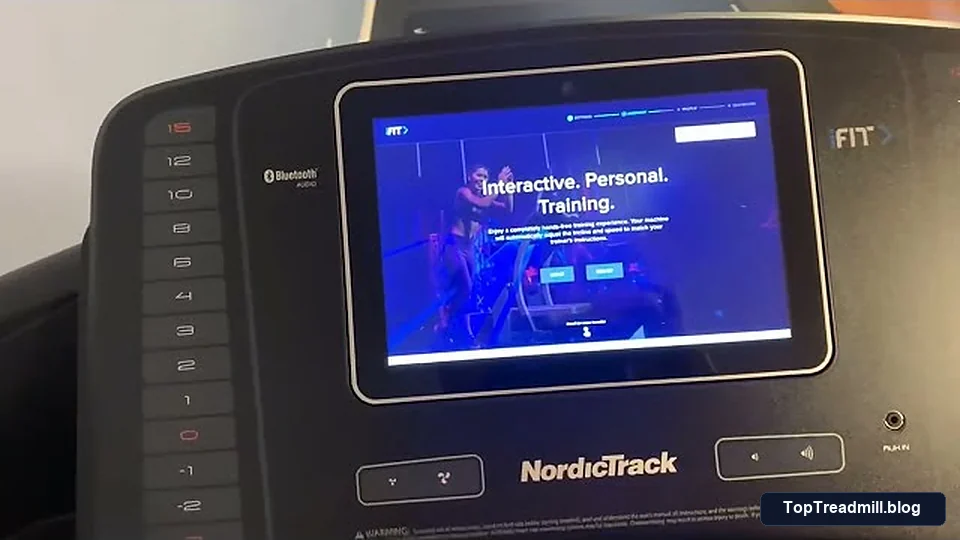
The pivoting touchscreen interface provides crisp metrics visualization during intense workouts. Tactile quick keys allow rapid adjustments without forcing runners to break their stride rhythm.
Software responsiveness remains snappy, though offline functionality can feel somewhat restricted when network connectivity drops during your scheduled indoor training sessions.
A high-definition touchscreen interface offers crisp metrics visibility while streaming immersive trainer-led workouts. Tactile quick-touch buttons allow for rapid speed changes, bypassing on-screen menus when split-second adjustments are absolutely necessary.
Integrated auxiliary audio ports and Bluetooth connectivity support external heart rate monitors and headphones. The pivoting display mount ensures optimal viewing angles for users of varying heights during floor exercises.
- Pivoting HD touchscreen
- Responsive tactile quick keys
- Clear metric data readouts
Maintenance Protocols and Long-Term Durability
Factory pre-lubricated components significantly reduce initial maintenance requirements during the first operational year. Annual belt tension checks ensure consistent motor longevity under heavy daily loads.
Keeping the running deck clean from dust accumulation prevents premature friction buildup and protects the electronic controller board from thermal overload issues.
Routine maintenance requires regular silicone lubrication beneath the running belt every six months. Keeping the motor compartment free of dust prevents premature electrical wear and preserves electronic control board longevity.
Periodic belt tension checks prevent slippage under heavy loads and protect drive roller bearings. Following a strict upkeep schedule guarantees sustained mechanical reliability throughout years of rigorous everyday home usage.
- Pre-lubricated belt system
- Annual tension adjustment
- Dust shield protection
Assembly, Footprint, and Spatial Planning
Given its substantial component weight, assembly requires two individuals and careful spatial planning. The hydraulic folding mechanism safely secures the deck vertically when floor space is needed.
Ceiling clearance must be calculated carefully beforehand, especially when utilizing maximum incline settings with taller runners operating at top speed specifications safely.
The hydraulic folding mechanism utilizes an easy-lift assist system for safe deck storage. When fully deployed, the machine demands a substantial floor footprint, requiring adequate clearance space around the rear.
Clear assembly instructions recommend a two-person team due to the heavy console and frame components. Proper spatial planning ensures safe emergency dismounts, protecting users from potential injury during high-speed workout failures.
- Hydraulic assist folding
- Two-person assembly required
- Substantial footprint sizing
Frequently Asked Questions
How often should I lubricate the running belt?
You should apply a specialized lubricant at least once every year to minimize friction and protect internal components from excessive wear.
What is the maximum user weight capacity?
This machine supports a robust user weight limit of 350 pounds thanks to its heavy steel frame construction and reinforced drive rollers.
Can I use the console without a Wi-Fi connection?
Basic manual workout programs function offline, but advanced training features require a stable internet connection for full software access.
How do I adjust the belt tension correctly?
Use the rear roller bolts to make minor quarter-turn adjustments until the running belt tracks centrally without slipping during footstrikes.
Is professional installation recommended for this heavy treadmill?
Due to the massive component weight and complex console wiring, having two people assemble the unit together is strongly advised.