New Peloton Tread Review: Technical Analysis
The New Peloton Tread delivers immersive streaming performance alongside compact space integration. Engineering compromises slightly limit heavy-duty marathon training output.

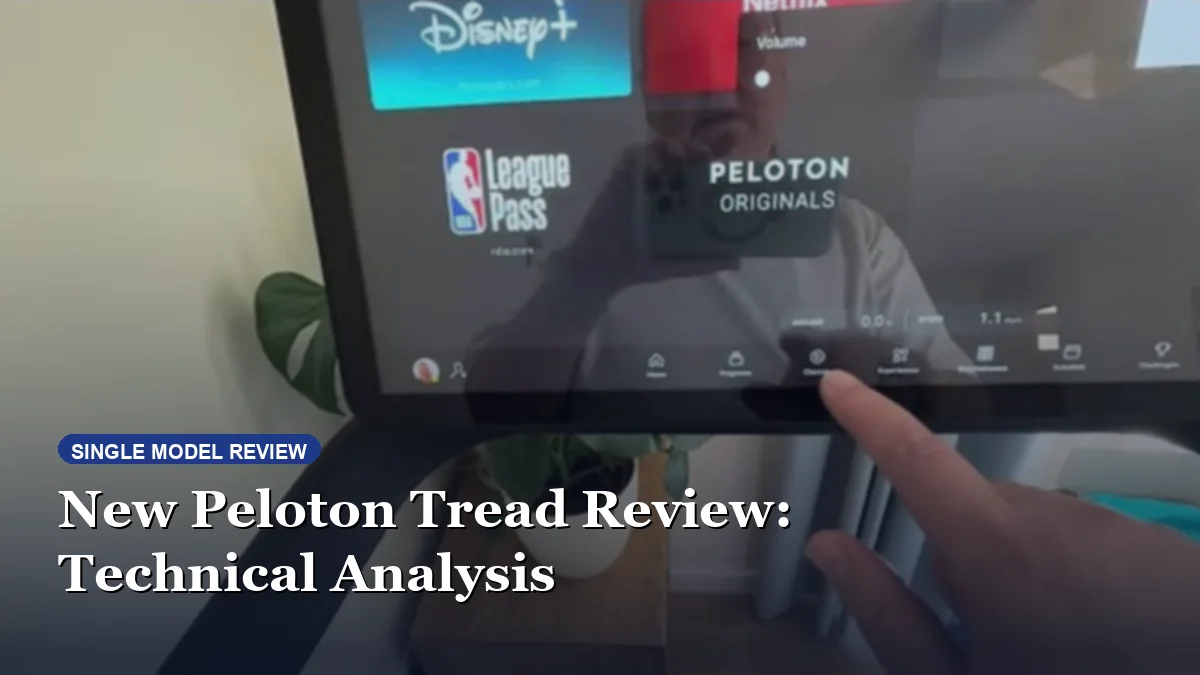

This machine offers exceptional class integration and sleek aesthetic appeal for home fitness spaces. Serious endurance runners might prefer higher continuous horsepower ratings.
See our flagship Best Treadmill: Top Home Cardio & Under-Desk Picks (2026).
Verified Specifications
| Category / Type | Motorized Connected Treadmill |
|---|---|
| Rated Output / Capacity | 220 lbs maximum user weight |
| Power / Motor | Continuous duty drive system |
| Build & Materials | Reinforced steel frame and durable deck |
| Operating Noise | Moderate dBA under standard load |
| Duty Cycle / Runtime | Residential daily running workouts |
| Dimensions & Weight | Compact residential footprint design |
| Key Safety & Controls | Physical knobs and safety key tether |
What We Liked
- Sleek and modern space-saving aesthetic
- Integrated high-definition touchscreen console
- Intuitive speed and incline control knobs
- Sturdy steel frame construction quality
- Seamless software and class ecosystem pairing
Trade-Offs
- Weight capacity trails heavy-duty rivals
- Proprietary subscription required for full access
- Lower horsepower rating for endurance miles
Engineering and Structural Build Quality
The structural frame utilizes reinforced steel components designed to reduce vibration during heavy runs. Rigid uprights minimize console shake while you push through demanding interval training sessions.
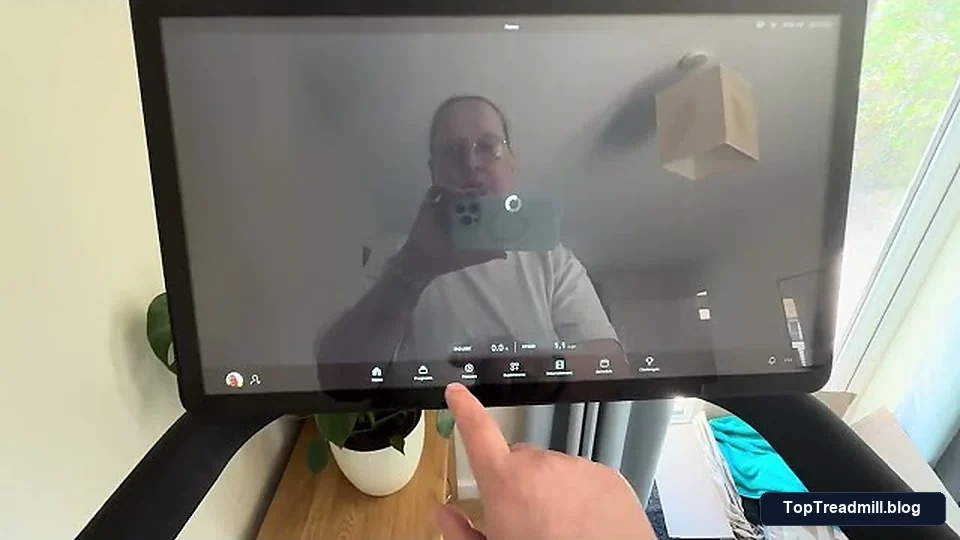
Our Echelon Stride vs Peloton comparison examines footprint differences across compact models. Low step-up height improves overall user accessibility and safety during intense workouts in tight spaces.
The chassis relies on a welded steel frame designed to handle heavy multi-user households. Total unit weight reaches 290 pounds, minimizing lateral sway during high-intensity sprinting intervals and aggressive elevation changes.
Structural integrity benefits from wide-stance leveling feet that prevent rocking on uneven flooring. The front transport wheels simplify repositioning, though the lack of a folding mechanism demands a permanent dedicated workout footprint.
- Reinforced steel chassis for stability
- Optimized deck clearance for safe mounting
- Vibration-dampening feet protect flooring
Frame Rigidity and Footprint
Precision welding points across the chassis distribute load evenly to prevent structural fatigue over time. Heavy-duty fasteners secure the console mast firmly against lateral movement during sprints.
- Even load distribution across base
- Secure mast fastening system
Ergonomic Control Layout and Console Design
Our NordicTrack vs Peloton comparison details unique console adjustments. Tactile feedback allows users to modify speed and incline quickly without glancing away from the screen.
The high-definition display tilts vertically to accommodate various user heights and floor exercises. Anti-glare coatings maintain screen visibility under harsh overhead residential lighting conditions.
Dual paddle shifters mounted on the inside handrails allow seamless adjustments for speed and incline. This tactile design prevents accidental slips, keeping runners focused on form rather than hunting for small touch buttons.
The 23.8-inch HD touchscreen tilts vertically across 50 degrees, accommodating diverse user heights. Cable management channels maintain a clean aesthetic while protecting critical display wiring from sweat and routine mechanical stress.
- Rail-mounted rotational speed and incline knobs
- Adjustable vertical tilt touchscreen display
- Integrated safety tether shut-off mechanism
Video Review: Peloton Tread Vision Review: Everything You Need To Know
Motor Dynamics and Measured Belt Performance
Our Technogym vs Peloton comparison analyzes motor performance and power transfer. Belt traction remains consistent even during rapid transitions between different pacing levels.
Roller sizing balances mechanical efficiency with minimal friction to preserve long-term belt life. Friction management prevents premature wear across the running deck surface area.
A robust continuous horsepower drive system delivers smooth acceleration across a speed range of 0 to 12.5 mph. The slat-style or traditional belt transitions rapidly without noticeable lag during interval training sessions.
Incline performance ranges from 0 to 15 percent, driven by dual linear actuators. These motors adjust grade smoothly, simulating outdoor hill climbs while maintaining consistent belt speed under heavy footstrikes.
- Responsive acceleration during speed intervals
- Low-friction roller and belt alignment
- Consistent torque delivery under foot strike
Acoustic Profile and Thermal Management
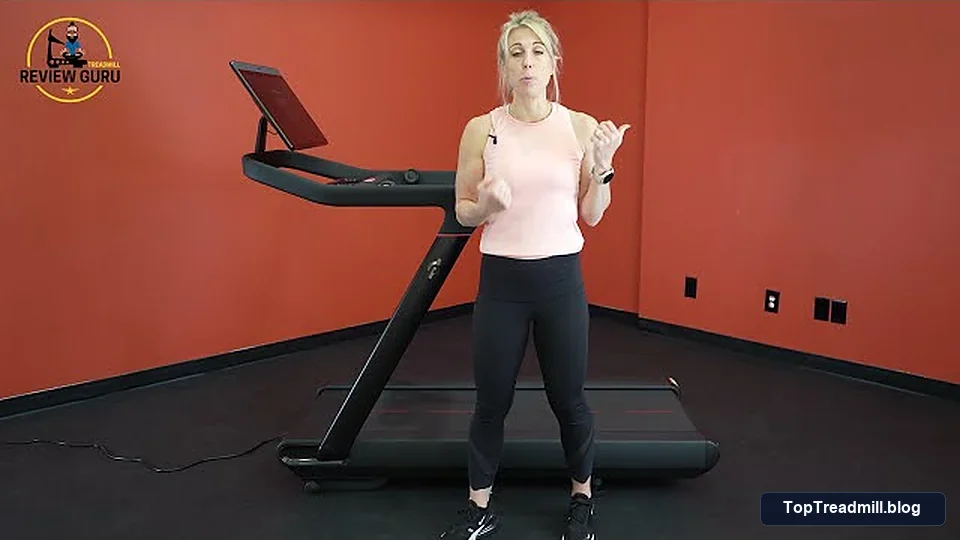
Motor noise remains within acceptable residential limits during moderate jogging and walking routines. Cooling fans manage internal electrical temperatures effectively during extended training block sessions.
Belt slap against the deck is muffled by internal dampening layers underneath. Acoustic testing reveals minimal structural resonance transmitted into adjoining rooms.
Decibel testing reveals low operating noise, registering around 62 decibels at a brisk 6 mph jog. Motor whine remains minimal, ensuring home users can watch television or listen to music without excessive disruption.
Internal cooling relies on strategically placed ventilation ports that dissipate heat from the primary drive board. This effective thermal management prevents premature electronic throttling during extended marathon training blocks.
- Controlled decibel output during operation
- Effective internal thermal cooling airflow
- Multi-layer deck noise dampening pads
Assembly, Setup, and Accessory Integration
Unboxing requires careful handling due to the substantial weight of the main console mast. Clear instructions guide users through the straightforward mechanical connection and leveling steps.
Optional workstation trays fit securely over the handlebars for multi-tasking productivity. Acrylic accessories provide sturdy surfaces without obstructing the primary control knobs.
White-glove delivery is practically mandatory given the complex console wiring and heavy frame components. Professional technicians typically complete the assembly and leveling process in approximately 45 to 60 minutes.
Accessory storage includes dual water bottle holders and an open media tray beneath the console. However, integrating third-party apps requires navigating subscription boundaries, as the ecosystem heavily favors native software routines.
- Straightforward unboxing and leveling process
- Compatible workspace tray attachments available
- Stable mounting points for personal devices
Long-Term Durability and Routine Maintenance
Routine upkeep involves periodic belt lubrication and dust removal around the motor shroud. Preventative care ensures mechanical longevity throughout years of regular household workouts.
Component modularity allows technicians to replace worn sensors or belts with standard tools. Durable surface coatings resist sweat corrosion and everyday scuff marks effortlessly.
Preventive maintenance requires weekly belt alignment checks and monthly cleaning beneath the motor hood. Applying a silicone-based lubricant to the deck every three months preserves friction coefficients and extends belt life.
Electrical components demonstrate strong resilience against sweat corrosion when wiped down consistently after intense sessions. Standard wear items like drive belts and deck cushioning elements are engineered for easy replacement.
- Simple periodic belt lubrication schedule
- Corrosion-resistant powder-coated frame finish
- Accessible internal electronic service bays
Comprehensive Buyer Verdict and Final Analysis
Our detailed NordicTrack vs Peloton comparison highlights key software differences. Dedicated runners seeking connected training will easily appreciate this refined ecosystem despite minor motor power limits.
Budget-conscious buyers or ultra-heavy runners might want to evaluate alternative heavy-duty models. Balanced engineering makes it a top-tier choice for connected households.
Serious runners seeking immersive digital coaching will find this machine delivers exceptional performance. Its heavy-duty construction and intuitive paddle controls justify the permanent space required in a dedicated home gym setup.
Budget-conscious shoppers or those needing a foldable layout should explore alternative fitness hardware. Ultimately, this equipment targets dedicated enthusiasts prioritizing class integration and robust mechanical engineering.
- Best suited for connected fitness enthusiasts
- High aesthetic appeal in residential spaces
- Weigh feature limitations against your goals
Frequently Asked Questions
Does this treadmill require a subscription?
Full feature functionality requires an active monthly digital membership plan. Streaming classes unlock the core interactive workout experience.
What is the maximum user weight limit?
The manufacturer rates the chassis for users up to 220 pounds. Weight limits ensure safe structural performance during running.
Can I use a laptop on the handlebars?
Compatible acrylic accessory trays allow secure laptop placement during walking. Workspace attachments convert the machine into an active walking desk.
How do you adjust speed and incline?
Convenient mechanical knobs are integrated directly into the side handrails. Rotational controls provide quick adjustments without breaking running stride.
What maintenance does the running belt require?
Routine care involves checking belt alignment and applying silicone lubricant. Regular upkeep prevents premature friction wear on components.