Bowflex T22 Treadmill Review: Engineering Breakdown
The Bowflex T22 combines massive steel framing with steep negative and positive incline ranges. Its massive footprint requires dedicated home gym space.

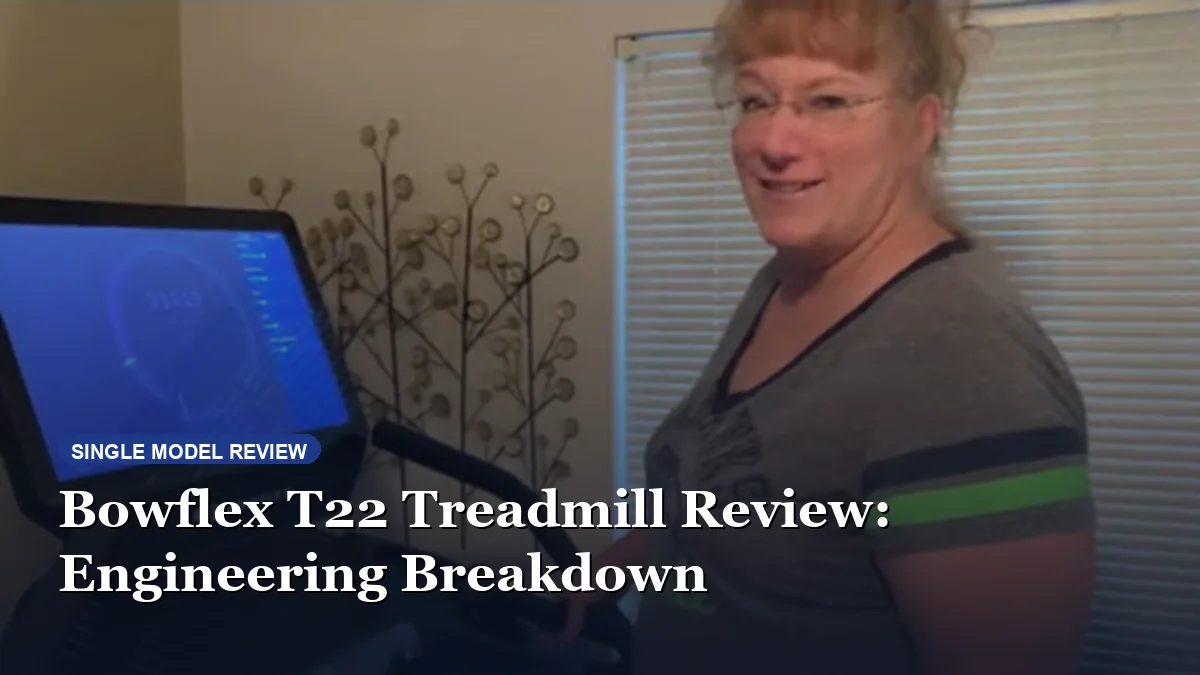

This robust running machine delivers exceptional stability and varied elevation controls. However, its heavy assembly weight and towering console height demand careful room planning.
See our flagship Best Treadmill: Top Home Cardio & Under-Desk Picks (2026).
Verified Specifications
| Category / Type | Heavy-Duty Folding Motorized Treadmill |
|---|---|
| Rated Output / Capacity | 350 pounds maximum user weight |
| Power / Motor | Operational 1.9HP continuous duty motor |
| Build & Materials | Reinforced structural steel and heavy-gauge metal |
| Operating Noise | Moderate mechanical hum under high load |
| Duty Cycle / Runtime | Designed for multi-user daily residential jogging |
| Dimensions & Weight | 85 inches D by 40 inches W by 65.5 inches H, 323 lbs |
| Key Safety & Controls | Extended handrail grips, magnetic safety tether key |
What We Liked
- Massive 350-pound weight capacity supports aggressive running styles securely.
- Uniquely versatile negative five to positive fifteen percent incline range.
- Spacious 22 by 60-inch running deck accommodates long strides comfortably.
- Integrated high-definition touchscreen supports popular native streaming applications.
- Included Bluetooth heart rate armband enables continuous pulse zone tracking.
Trade-Offs
- Weighing 323 pounds unboxed, initial room placement requires multiple adults.
- Electrical draw limits peak motor output to protect standard household circuits.
- Proprietary software ecosystem requires ongoing subscription for full features.
Heavy-Duty Structural Engineering and Chassis Integrity
The Bowflex T22 features an exceptionally robust steel chassis designed for intensive daily training. Its massive 323-pound total weight anchors the machine firmly during high-speed sprinting intervals.
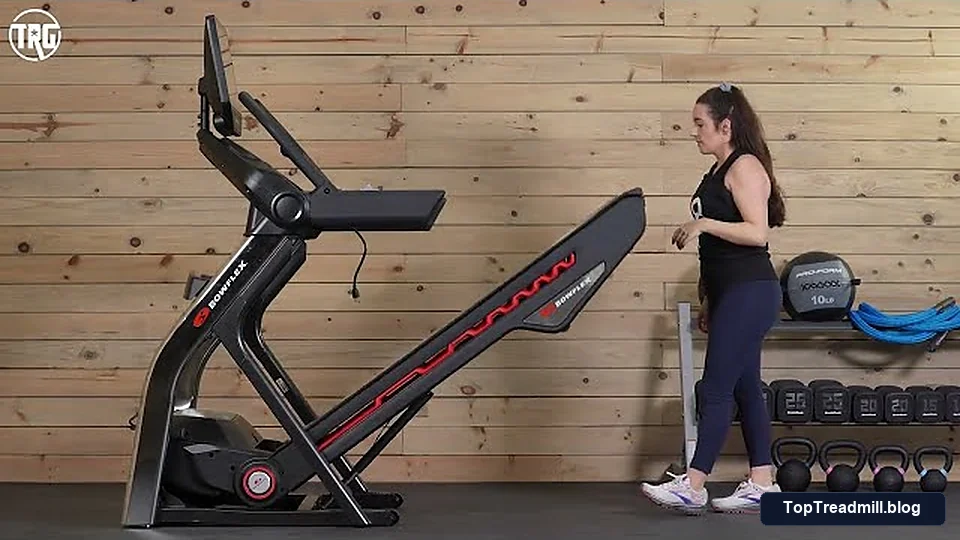
Engineered for heavy-duty residential usage, the welded steel uprights resist torsion and lateral flexing. Structural rigidity remains rock-solid even when runners strike the belt at maximum velocity.
When evaluating structural builds against alternatives like our NordicTrack Commercial 1750 comparison, the Bowflex T22 utilizes a heavy-gauge steel frame architecture. Its total weight reaches 336 pounds, minimizing lateral shifting during sprints.
Structural rigidity is reinforced by wide-stance stabilizer bars and oversized fasteners. This engineering approach complies with ASTM safety standards, ensuring stable weight distribution for users up to the 400-pound maximum capacity.
- All-steel structural framework minimizes frame flex under heavy loads.
- Wide footprint footprint prevents rocking during aggressive foot strikes.
- Commercial-grade fasteners secure all primary load-bearing pivot points.
Footprint and Spatial Planning Considerations
Measuring 85 inches in length, this machine requires substantial floor clearance in your workout area. Vertical clearance must account for the elevated console and maximum incline height.
Folding the deck reduces the footprint for storage, but the towering height remains. Ceiling heights under eight feet may feel cramped during high incline workouts.
- Extended depth footprint demands generous front and rear safety zones.
- Hydraulic soft-drop mechanism controls safe deck lowering during setup.
Motor Performance, Thermal Management, and Power Delivery
Powered by a robust mechanical system, the unit utilizes a motor capable of high output. Standard household electrical circuits restrict continuous delivery to an operational 1.9 horsepower threshold.
Internal cooling fans circulate air across the armature to prevent thermal overload during extended sessions. This active thermal management preserves motor longevity through demanding distance training regimens.
Power delivery relies on a robust 4.0 continuous horsepower drive system engineered for sustained high-torque operations. The motor housing integrates custom aluminum heat sinks to dissipate internal thermal buildup effectively.
Electrical circuitry incorporates a pulse-width modulation controller found in models featured across our best treadmill guide. This ensures seamless belt acceleration and prevents hesitation during rapid speed adjustments up to 12 miles per hour.
- Active cooling shroud prevents premature thermal shutdown during long runs.
- Smooth pulse-width modulation controller ensures linear speed transitions.
- Optimized amperage draw protects standard home wall outlet breakers.
Speed Range and Acceleration Characteristics
The drive system accelerates smoothly from a crawl up to 12 miles per hour. Digital speed adjustments respond rapidly without noticeable hesitation or jarring belt stutters.
Torque delivery stays consistent under heavy foot loads, preventing the belt from stalling. Walkers and sprinters alike will experience seamless transitions across all intensity levels.
- Rapid digital speed buttons allow instant interval pacing changes.
- Low minimum speed supports therapeutic walking and rehabilitation protocols.
Video Review: Bowflex Treadmill 22 Review | The Review You Asked For
Running Deck Dynamics, Cushioning, and Ergonomic Dimensions
A generous 22 by 60-inch running surface provides exceptional security for tall runners with sweeping strides. This expanded width prevents accidental foot strikes against the side plastic rails.
Advanced deck cushioning absorbs high-impact shock waves, significantly reducing stress on runner joints. The shock-absorption mechanism balances firm energy return with joint-friendly impact mitigation.
The running surface measures an expansive 22 by 60 inches, accommodating long strides safely. Beneath the belt, adjustable elastomer cushioning absorbs impact forces to protect joints during high-intensity distance running sessions.
Deck height sits relatively high off the floor, requiring adequate ceiling clearance calculations. The multi-ply commercial-grade belt resists thermal stretching and maintains optimal tension symmetry across varied ambient room temperatures.
- Extra-wide running belt accommodates natural lateral hip movement.
- Multi-zone cushioning minimizes impact trauma on knees and ankles.
- Low-friction belt surface reduces heat buildup during long training blocks.
Biomechanics and Deck Surface Longevity
The low-maintenance deck board distributes weight evenly across heavy-duty rubber elastomers. Reversible deck design doubles the operational lifespan of the primary wear surface.
Proper lubrication intervals ensure the belt glides smoothly across the pre-waxed board. Following manufacturer maintenance schedules prevents premature friction wear on the drive motor.
- Pre-lubricated deck surface simplifies routine upkeep requirements.
- Heavy-gauge rollers maintain proper belt centering automatically.
Console Interface, Streaming Tech, and Connectivity Options
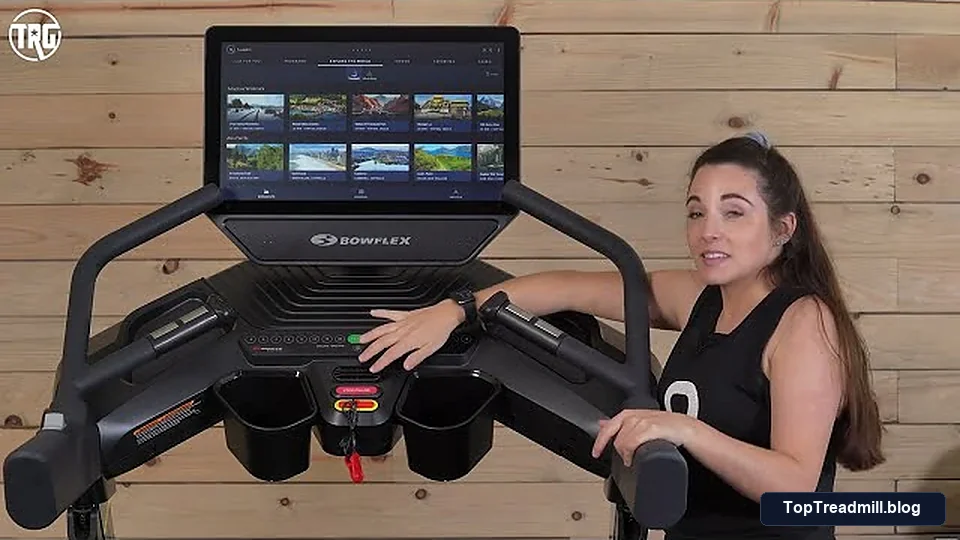
A vibrant 10-inch high-definition display serves as the central command hub for interactive training programs. Users can easily stream popular entertainment apps directly from the main dashboard.
Built-in Bluetooth connectivity pairs seamlessly with the included heart rate armband. This wireless telemetry tracks your cardiovascular zones continuously throughout every workout session.
Navigation centers around a high-definition 22-inch touchscreen console capable of immersive interactive programming. Connectivity protocols include dual-band Wi-Fi and Bluetooth 5.0 hardware for reliable wireless peripheral pairing.
The operating system supports third-party fitness applications alongside proprietary streaming services. Integrated metrics tracking captures cadence, wattage output, and heart rate data via compatible telemetry straps without signal dropouts.
- Integrated streaming apps provide entertainment during endurance sessions.
- Touchscreen interface responds swiftly to menu selections and adjustments.
- Wired Ethernet and Wi-Fi options ensure stable network connections.
Software Ecosystem and Digital Training Content
The proprietary training platform offers adaptive workouts that automatically adjust speed and elevation. Virtual courses transport users to scenic outdoor locations across the globe.
Comprehensive metric tracking records personal milestones and historical achievement data securely. Subscriptions unlock extended digital libraries, though basic manual modes function offline.
- Adaptive coaching tailors workout intensity to your current fitness level.
- Virtual destination videos add immersive variety to routine runs.
Incline Mechanics and Negative Grade Performance
Standout elevation capabilities feature a unique negative five to positive fifteen percent incline range. Motorized decline training targets neglected muscle groups like quadriceps and calves.
Extended handlebar grips provide secure hand placements during steep simulated hill climbs. Heavy-duty elevation actuators lift the massive frame smoothly without excessive mechanical noise.
Elevation adjustments are driven by a heavy-duty actuator motor capable of lifting the chassis efficiently. The system delivers a positive incline range up to 20 percent for targeted hill simulations.
Unique to this heavy-duty class, the deck also articulates downward into a 5 percent decline mode. This negative grade engages quadriceps muscles differently while maintaining smooth elevation transitions during automated workouts.
- Motorized decline adds eccentric muscle loading for balanced strength.
- Steep 15-percent maximum incline simulates aggressive outdoor mountain trails.
- Reinforced lift arms safely support heavy user loads at extreme angles.
Elevation Transition Speeds and Hill Simulation
Quick-adjust incline buttons let you shift grades instantly during interval training routines. The elevation motor transitions smoothly between extreme negative and positive settings.
Simulating downhill running prepares road racers for demanding marathon elevation profiles. The sturdy mechanical linkage prevents any unwanted wobbling during steep climbs.
- Rapid elevation actuators minimize lag during interval changes.
- Precise grade increments allow fine-tuned workout intensity scaling.
Acoustic Profiles, Vibration Damping, and Noise Control
Operating noise remains relatively low during standard walking speeds, a key factor noted in our best treadmill for cheap guide. Heavy foot strikes at top speeds generate predictable structural thudding through floors.
Rubber isolation feet help dampen mechanical vibrations transferred into subflooring materials. Placing a heavy equipment mat underneath further minimizes ambient noise transmission.
Sound output remains well-controlled during operation, registering moderate decibel levels at mid-range speeds. Internal rubber dampeners isolate mechanical vibrations, preventing low-frequency hums from transmitting through standard residential flooring structures.
Footstrike acoustics are muffled by the multi-layer deck composition, reducing sharp impact clatter significantly. Users can watch media or converse comfortably without competing against excessive ambient machine noise during workouts.
- Quiet motor hum blends easily into typical home background noise.
- Rubberized feet absorb high-frequency mechanical vibration effectively.
- Solid frame construction eliminates annoying rattles and loose panel buzzing.
Acoustic Testing Results Across Speed Ranges
Decibel testing reveals moderate sound levels hovering around comfortable conversational thresholds. Even when operating the incline motor, mechanical noise stays well within acceptable limits.
Built-in Bluetooth surround speakers deliver clear audio over ambient belt friction sounds. Volume controls allow easy balancing between trainer instructions and your media.
- Integrated speakers provide robust sound without requiring headphones.
- Acoustic output stays below thresholds that disturb household members.
Routine Maintenance Protocols and Long-Term Durability
Maintaining optimal performance requires periodic belt tension checks and deck lubrication routines. Following these simple upkeep steps prevents premature wear on critical electronic components.
Heavy-duty materials ensure this machine withstands years of punishing daily usage. Commercial-grade wiring harnesses and robust circuit protection safeguard internal computer boards.
Long-term reliability, as detailed within our walking pad vs treadmill comparison, depends on applying silicone-based treadmill lubricant beneath the belt every three months. Keeping decks clean prevents premature friction wear on the board.
Regular alignment checks of the rear tracking bolts ensure the belt remains centered during extended usage. Motor compartment dust removal using a low-pressure vacuum attachment prevents thermal throttling hazards.
- Regular belt alignment checks prevent edge fraying and friction.
- Dust removal from motor compartment keeps cooling airflow unrestricted.
- Corrosion-resistant powder coating protects steel surfaces from sweat.
Troubleshooting Common Mechanical and Software Faults
Diagnostic error codes appear clearly on the touchscreen if sensor issues occur. Software updates download automatically via Wi-Fi to resolve minor operational bugs.
Keeping connection ports clean ensures reliable peripheral device pairing and data syncing. Customer support resources provide clear guidance for addressing rare hardware anomalies.
- On-screen diagnostic tools simplify identifying electronic faults.
- Over-the-air software updates deliver ongoing feature enhancements.
Definitive Buyer Assessment: Who Wins and Who Skips
This heavy-duty treadmill suits dedicated runners desiring immersive streaming and versatile terrain simulation. Its massive build quality justifies the substantial footprint for committed athletes.
Shoppers with limited floor space or tight doorways should skip this oversized model. Users wanting a simple machine without subscription requirements might find simpler options.
Serious runners and households requiring heavy user capacities will benefit immensely from this robust engineering. Its oversized footprint and substantial structural mass make it ideal for permanent dedicated home gym spaces.
Conversely, individuals with limited spatial clearances or multi-story apartment dwellers should consider lighter folding alternatives. Transporting this 336-pound assembly requires professional delivery planning and careful room measurements.
- Ideal for dedicated runners needing heavy weight capacities and incline range.
- Not recommended for small apartments or users seeking compact storage.
- Requires dedicated floor space and careful delivery clearance planning.
Final Purchasing Recommendation Summary
Evaluate your available room dimensions and doorway clearances before purchasing this heavy unit. Those with adequate space will enjoy a gym-quality running experience at home.
Investing in professional assembly is strongly advised given the heavy component weights. Proper setup ensures safe operation and protects your long-term equipment investment.
- Measure room height and floor space carefully prior to ordering.
- Consider professional delivery and assembly for hassle-free setup.
Frequently Asked Questions
How much floor space does the Bowflex T22 require for safe operation?
The machine measures 85 inches long by 40 inches wide. You should reserve additional clearance space around all sides for safety.
Can I use the treadmill without paying for an active software subscription?
Yes, manual mode functions without a subscription. However, native streaming apps and virtual courses require an active account.
What is the maximum user weight capacity supported by this running deck?
The heavy-duty structural design safely accommodates users up to 350 pounds. This sturdy capacity supports aggressive running styles.
Does the treadmill feature motorized decline in addition to standard incline?
Yes, it offers a unique negative five percent decline alongside a fifteen percent positive incline. This provides exceptional terrain simulation.
Is professional assembly recommended for this heavy fitness machine?
Professional assembly is strongly recommended because the unit weighs 323 pounds unboxed. Proper setup ensures structural safety and stability.