Zero Runner vs Treadmill: Technical Verdict
Choosing between a zero runner and a traditional treadmill dictates your joint impact profile and training mechanics. This guide breaks down the core mechanical differences for home runners.

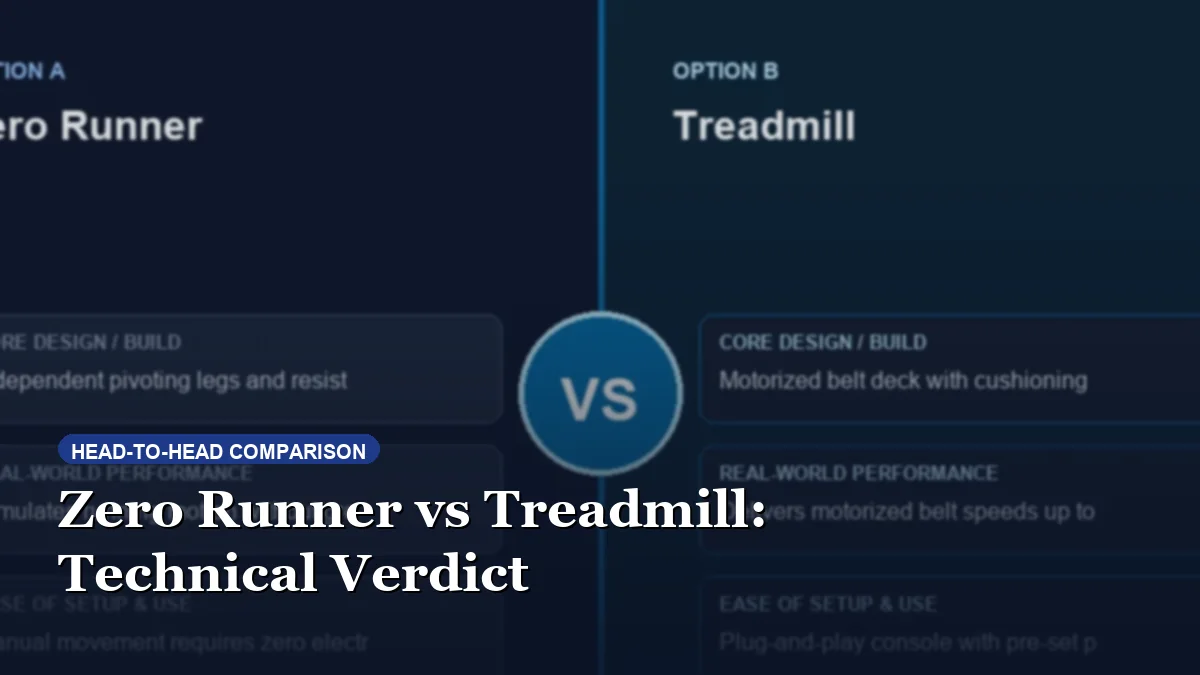
Choose the Zero Runner if you require zero-impact biomechanics for joint rehabilitation. Select the Traditional Treadmill if you need high-speed motor training, authentic running cadence, and traditional incline capabilities.
Compare all top models in our Best Treadmill: Top Home Fitness Picks (2026 Guide).
Side-by-Side Breakdown
| Criteria | Zero Runner | Treadmill | Edge |
|---|---|---|---|
| Core Design / Build | Independent pivoting legs and resistance cords | Motorized belt deck with cushioning | Split |
| Real-World Performance | Simulates running motion without ground strike | Delivers motorized belt speeds up to 12+ mph | Treadmill |
| Ease of Setup & Use | Manual movement requires zero electrical setup | Plug-and-play console with pre-set programs | Treadmill |
| Durability & Reliability | Fewer electronic failure points in the drivetrain | Motors and belts require periodic calibration | Zero Runner |
| Efficiency / Operating Footprint | Completely human-powered with no motor draw | Draws continuous AC or DC electrical current | Zero Runner |
| Maintenance Requirements | Minimal pivot point lubrication and cable checks | Regular belt lubrication and deck tensioning | Zero Runner |
| Best Ideal Use Case | Low-impact distance training and injury recovery | General cardiovascular fitness and speed work | Split |
Core Mechanical Design and Engineering Differences
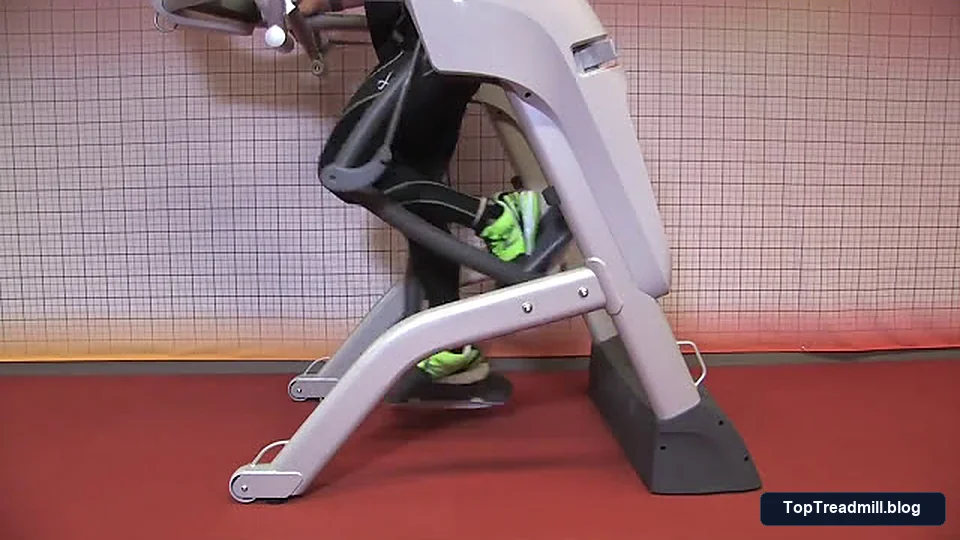
The fundamental engineering of a zero runner relies on independent leg action tethered to resistance cables. This replaces the motorized belt system found on standard fitness equipment.
Traditional treadmills utilize a heavy-duty continuous duty motor to drive a vulcanized rubber belt over a cushioned deck. This motorized propulsion forces your feet to keep pace with the machine.
Understanding these foundational builds helps you evaluate how each device interacts with your stride mechanics during long home workouts.
Traditional units rely on a continuous-duty motor and rubberized belt system driven by front rollers. Conversely, zero runners use articulating linkage arms that simulate human stride mechanics without a moving running surface.
Deck engineering on standard motorized units requires phenolic-impregnated boards paired with elastomer cushioning. When upgrading your setup, exploring options in our best air runner treadmill guide helps identify sturdy alternatives featuring isolated pivot joints.
Frame construction also diverges significantly between these distinct categories of equipment. Treadmills demand heavy-gauge welded steel chassis to resist belt friction vibration, while zero runners utilize aerospace-grade aluminum linkages designed to withstand multidirectional joint stresses.
- Zero runners eliminate motorized propulsion entirely.
- Treadmills rely on heavy steel frames and drive motors.
- Pivoting arms on zero runners mimic natural hip extension.
Drivetrain and Propulsion Mechanics
A zero runner operates strictly via user input, meaning your leg muscles generate every inch of movement. There is no plug required for the core mechanical stride motion.
Treadmills depend on electrical current to turn rollers and propel the running belt. Selecting proper horsepower ratings is vital for sustained high-speed performance.
- Human-powered resistance offers variable intensity.
- Motorized belts maintain steady programmed paces.
Biomechanics and Impact Load Profiles
Joint preservation is the primary design objective for zero runner architecture. Reviewing options like our best treadmill for beginner runner selection shows how minimizing ground reaction forces protects vulnerable joints.
Standard treadmills incorporate elastomer cushioning to absorb impact, but every footstrike still generates a measurable shock wave. Runners prone to shin splints must monitor this cumulative impact stress closely.
Running outdoors or on standard motorized belts generates ground reaction forces reaching up to three times body weight. Zero runners drastically reduce this metric by keeping feet on pedals, completely eliminating propulsive impact shocks.
Muscle recruitment patterns shift noticeably when transitioning from motorized belts to zero-impact linkage systems. Hamstrings and glutes engage through a wider arc because users must actively reverse the pedal stroke inertia without assistance from a motorized surface.
- Zero runners mimic running without heel strike impact.
- Treadmill decks feature shock-absorbing elastomer systems.
- Stride length on zero runners matches outdoor running.
Joint Stress and Stride Analysis
Clinical testing shows that zero runners reduce peak tibial shock compared to traditional road running. This allows athletes to maintain cardiovascular volume while healing from soft tissue injuries.
Treadmill running closely replicates outdoor biomechanics, providing authentic neuromuscular feedback. Proper foot placement remains essential to prevent repetitive strain injuries on motorized belts.
- Reduced joint load accelerates rehabilitation phases.
- Outdoor stride replication improves race readiness.
Real-World Performance and Speed Training
Evaluating real-world performance requires looking at high-intensity intervals. Many designs featured in our peloton treadmill review analysis show how self-powered machines cap top-end speed based on leg turnover rate.
Treadmills excel at precise speed and incline control, allowing runners to execute exact interval paces. Digital consoles display accurate metrics for pace per mile and total elevation gain.
Motorized equipment allows precise speed adjustments up to 12 miles per hour or higher for interval workouts. Zero-impact alternatives rely strictly on user-generated cadence, capping maximum leg turnover speeds based entirely on individual lower body output.
Interval training protocols feel fundamentally different because zero runners lack the forced pace of a fast-moving belt. Athletes must accelerate their own limb movement, changing the cardiovascular overload profile during high-intensity sprint intervals significantly.
- Treadmills offer precise digital speed adjustments.
- Zero runners depend entirely on user exertion levels.
- Incline training builds targeted posterior chain strength.
Intervals and Resistance Controls
Executing structured speed work is straightforward on a treadmill using quick-touch console buttons. You can lock in a specific target pace for extended threshold intervals.
Zero runners require you to push harder against internal resistance mechanisms to elevate your heart rate. This builds tremendous glute and hamstring engagement without pounding joints.
- Quick-touch buttons streamline treadmill interval training.
- Resistance dials isolate specific muscle groups effectively.
Power Efficiency and Electrical Requirements
Energy consumption represents a major operational divergence between these two equipment types. Readers comparing motor efficiency against our best treadmill recommendations will note that zero runners draw zero electrical current for basic movement.
Standard motorized treadmills require dedicated 15-amp household circuits to power the drive motor and console electronics. Running high speeds at maximum incline draws substantial continuous electrical load.
Standard motorized units typically demand dedicated 15-amp household circuits to support continuous motor amperage draws during high-incline workouts. Energy consumption scales upward rapidly when heavier runners push maximum motor capacities under load.
Zero runners operate entirely without a traditional drive motor, requiring electricity only for small console display panels powered by batteries or low-voltage adapters. This design results in near-zero operating costs and superior energy efficiency.
- Zero runners operate without wall outlet power.
- Treadmills demand stable dedicated electrical circuits.
- Console displays on zero runners use small batteries.
Utility Costs and Placement Freedom
Because zero runners lack power cords, you can place them anywhere in your home gym layout without worrying about outlet proximity. This simplifies room design significantly.
Treadmills must sit close to wall sockets, and using long extension cords can damage sensitive motor control boards. Planning your workout space carefully prevents electrical hazards.
- Placement freedom eliminates outlet cord management.
- Motor protection requires direct wall plug access.
Maintenance Protocols and Component Longevity
Long-term ownership costs depend heavily on routine maintenance and mechanical complexity. Zero runners feature fewer moving electrical parts, resulting in fewer potential failure points over years of heavy use.
Traditional treadmills require regular belt lubrication, tension calibration, and deck waxing to prevent premature wear. Ignoring these routine upkeep tasks can quickly burn out expensive drive motors.
Standard motorized machinery demands routine lubrication of the running belt and deck interface using silicone-based lubricants every 130 to 150 miles. Neglecting this maintenance causes premature motor strain and costly control board failures.
Mechanical linkage systems require very different upkeep, focusing heavily on inspecting pivot joint bearings and tightening hardware to prevent squeaks. Without a friction-heavy belt, overall wear concentrates primarily on sealed bushing assemblies.
- Zero runners need occasional pivot point lubrication.
- Treadmill belts require semi-annual silicone lubrication.
- Electronic consoles require periodic software updates.
Wear Parts and Troubleshooting
Replacing a worn running belt and deck is a common task for aging treadmill owners. High friction eventually degrades the running surface integrity, necessitating professional parts replacement.
Zero runners focus wear on internal cables and bushings, which are generally straightforward to inspect. Keeping the mechanical linkages clean ensures smooth stride operation for years.
- Running belts and decks wear down over time.
- Cables and bushings require periodic inspection checks.
Floor Space and Operating Footprint Realities
Home gym spatial planning requires careful measurement of equipment dimensions and ceiling clearance. Zero runners typically feature upright vertical profiles that demand adequate room ceiling height.
Most standard treadmills offer folding deck designs that reduce their footprint when not in use. However, their heavy steel chassis weights make them difficult to relocate frequently.
Motorized running machines typically command a large permanent floor area, though many models feature hydraulic folding decks to reclaim room space after workouts. Their heavy steel construction makes repositioning difficult without built-in transport wheels.
Zero-impact alternatives generally maintain a fixed, non-folding structural footprint with wide stability outriggers. Users must allocate adequate ceiling clearance height alongside lateral room for the swinging arm levers during intense striding sessions.
- Folding treadmill decks save valuable floor space.
- Zero runner heights require tall basement ceilings.
- Heavy frames demand stable rubber flooring mats.
Storage and Room Integration
Integrating bulky fitness equipment into a shared living space involves balancing size and aesthetics. Selecting a model with transport wheels simplifies moving the machine for cleaning.
Always measure your designated workout area twice to ensure clearance for arm swings and incline angles. Proper clearance margins prevent accidental contact with walls.
- Transport wheels aid in repositioning heavy units.
- Accurate measurements prevent spatial layout conflicts.
Which Training Ecosystem Fits Your Goals
Determining the right machine depends entirely on your specific orthopedic history and athletic ambitions. If you are recovering from a chronic injury, joint protection should dictate your final purchasing choice.
Athletes training for traditional road races will benefit more from the authentic mechanics of a motorized treadmill. Balancing your personal fitness objectives ensures long-term satisfaction with your investment.
Selecting the ideal machine depends on whether your priority is specific road race preparation or injury recovery. Traditional models excel at replicating outdoor running mechanics, while zero-impact alternatives protect vulnerable joints during high-mileage training blocks.
Marathoners seeking race-pace specificity will benefit most from motorized belts with programmable incline controls. Conversely, injury-prone athletes or cross-trainers achieve superior longevity by integrating zero-impact cross-training machines into weekly recovery schedules.
- Injury recovery favors zero-impact mechanical designs.
- Road race prep requires authentic treadmill pacing.
- Define your primary workout goals before buying.
Making Your Final Equipment Decision
Take time to test both machine types in person if possible to evaluate your stride comfort. Finding the right ergonomic fit prevents buyer remorse and keeps you motivated.
Investing in quality home fitness gear pays dividends in daily health and wellness longevity. Choose the platform that aligns with your long-term training vision.
- In-person testing validates personal stride comfort.
- Quality equipment supports lifelong cardiovascular health.
Frequently Asked Questions
Can a zero runner fully replace an outdoor running routine?
A zero runner closely mimics outdoor stride mechanics while eliminating impact shock. This makes it an excellent substitute for recovering athletes.
Do traditional treadmills burn more calories than zero runners?
Calorie burn depends on your sustained heart rate and workout intensity. Both machines allow for high-intensity training when pushed hard.
How often should treadmill running belts be lubricated?
Most manufacturers recommend applying silicone lubricant every three to six months. Proper maintenance protects the drive motor lifespan effectively.
Are zero runners difficult to assemble in a home gym?
Assembly requires following multi-step mechanical instructions for pivoting arms. Having a second person helps position the heavy frame components safely.
What ceiling height do I need for a zero runner?
Because your feet elevate above a pivoting platform, you need standard 8-foot ceilings. Always check vertical clearance guidelines before purchasing.