Xiaomi X21 vs R2: Concise Verdict
Navigating folding walking pads requires understanding technical specifications and frame engineering. This guide compares two popular Xiaomi models for daily indoor fitness.

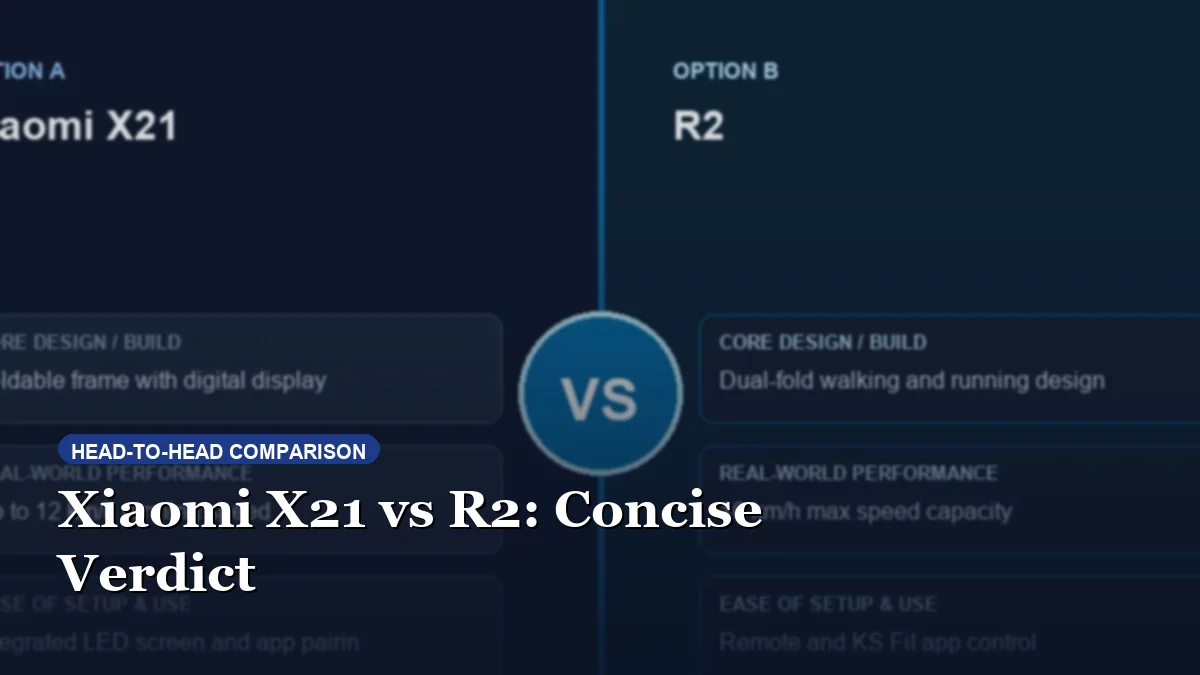
Choose the Xiaomi X21 for advanced digital integration and higher speed ceilings. Select the R2 if you prefer a streamlined folding mechanism for tight apartment spaces.
Compare all top models in our Best Treadmill: Top Home Fitness Picks (2026 Guide).
Side-by-Side Breakdown
| Criteria | Xiaomi X21 | R2 | Edge |
|---|---|---|---|
| Core Design / Build | Foldable frame with digital display | Dual-fold walking and running design | Xiaomi X21 |
| Real-World Performance | Up to 12 km/h running speed | 10 km/h max speed capacity | Xiaomi X21 |
| Ease of Setup & Use | Integrated LED screen and app pairing | Remote and KS Fit app control | R2 |
| Durability & Reliability | Aluminum alloy frame structure | Steel alloy reinforced frame base | Xiaomi X21 |
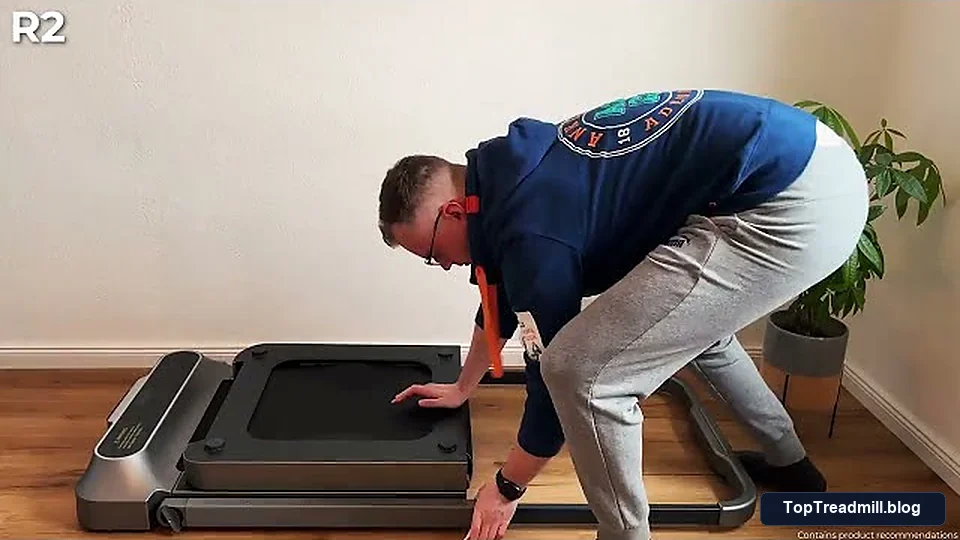
| Efficiency / Operating Footprint | Compact vertical storage footprint | Flat folding under-bed storage | R2 |
| Maintenance Requirements | Periodic belt lubrication and tension checks | Standard silicone oil application intervals | Tie |
| Best Ideal Use Case | Dedicated home office joggers and runners | Casual walkers and remote workers | Split |
Engineering Architecture and Frame Design
Frame integrity dictates treadmill longevity under regular foot impacts. Both models utilize lightweight aluminum alloys to reduce total weight while maintaining structural rigidity for everyday users.
As detailed in our Kingsmith Walkingpad X21 review, the Xiaomi X21 features an integrated LED display embedded directly into the handrail structure to centralize operational feedback without requiring external mounts.
The structural foundation of these walking pads relies on aluminum alloy frames designed to minimize weight while maintaining rigidity. Engineers use finite element analysis to ensure the unfolded chassis handles lateral stress during strides.
Joint stress points on folding treadmills require precision casting. The Xiaomi models integrate reinforced hinges and cast aluminum joints that prevent micro-flexing, directly improving the structural integrity under continuous daily walking and light jogging workloads.
- Aluminum alloy chassis construction
- Integrated upright handrail supports
- Reinforced joint pivoting points
Structural Materials and Chassis Build
Engineering a folding treadmill requires balancing weight reduction with user safety limits. Manufacturers utilize industrial plastics alongside metal frames to absorb vibrations during moderate walking sessions.
- Corrosion-resistant coating layers
- Impact-absorbing joint fasteners
Motor Performance and Speed Capabilities
As evaluated in our Xiaomi R2 Pro treadmill review, motor output determines whether a unit suits casual walking, while quiet brushless designs reduce audible distractions.
The X21 achieves a top speed of 12 kilometers per hour, accommodating light running routines. Conversely, the R2 limits top speeds to 10 kilometers per hour, prioritizing walking safety.
Brushless direct current motors drive both units, offering high torque at low RPMs. The X21 features a 1.25 hp brushless motor, while the R2 utilizes a similar nominal power output optimized for quiet apartment use and consistent speed delivery.
PWM controllers regulate electrical current to prevent stuttering. Users experience smooth transitions because the pulse width modulation systems dynamically adjust voltage, ensuring your footfalls do not cause motor lag or unexpected belt hesitations during acceleration phases.
- Brushless motor engineering specifications
- Variable frequency drive control boards
- Continuous horsepower output ratings
Operational Noise and Thermal Limits
High friction levels can overheat compact treadmill motors during prolonged workouts. Proper ventilation channels within the motor hood help dissipate thermal energy during extended operating cycles.
- Thermal overload protection circuits
- Decibel output under load
Folding Mechanisms and Storage Efficiency
Space-saving dimensions remain primary selling points for under-desk walking pads. The dual-folding mechanism allows both units to collapse into remarkably compact packages for closet storage.
As noted in our Kingsmith X21 review, the R2 utilizes a flat-lying folding deck, whereas the vertical-folding X21 includes integrated transport wheels for easy closet placement.
Dual-folding technology allows the deck to collapse completely flat. The R2 uses a 180-degree fold, reducing its total footprint drastically, whereas the X21 features a refined hinge mechanism that locks securely into a compact vertical storage position.
Integrated transport wheels assist with relocation once folded. Users can tilt the chassis onto front-mounted polyurethane wheels and roll the equipment smoothly across hardwood floors without scratching surfaces or straining lower back muscles during movement.
- 180-degree flat folding hinge
- Vertical storage stability brackets
- Integrated transport wheel assemblies
Footprint Comparison in Small Apartments
Measuring available floor clearance prevents purchasing incompatibilities in tight living quarters. Evaluating storage profiles ensures your chosen treadmill fits seamlessly beneath furniture or inside closets.
- Under-bed clearance requirements
- Vertical wall stability footprints
Digital Displays and App Integration
When exploring options in our best treadmill guide, you will find that modern fitness equipment relies heavily on digital interfaces to monitor real-time workout metrics.
Companion smartphone applications expand functionality by recording historical fitness data. The KS Fit app connects via Bluetooth, offering firmware updates and customized speed adjustments for workouts.
LED panel matrices embedded beneath the running surface display metrics clearly. The X21 integrates an NFC pairing chip inside the LED dashboard, allowing rapid smartphone connection, while the R2 relies on standard Bluetooth protocols for fitness app data synchronization.
Companion mobile applications track workout history, speed zones, and calibration data. Connecting via KS Fit software enables firmware updates, custom speed limits, and advanced child lock settings to prevent accidental activations by pets or small children at home.
- Bluetooth 4.0 connectivity modules
- Real-time LED metric readouts
- Smartphone application synchronization
Manual Controls Versus Remote Operation
Operating speed can be adjusted through handheld remotes or console buttons. Selecting your preferred control method minimizes distractions while walking or jogging at elevated paces.
- Ergonomic wireless remote controls
- Console integrated speed dials
Ergonomics, Deck Cushioning, and Running Dynamics
Joint protection depends heavily on deck cushioning materials and belt thickness. Multi-layer walking belts absorb initial heel strikes, reducing impact shock transmitted to knee joints.
Walking pads lack traditional incline features due to their ultra-flat folding construction. Users must accept a flat running surface, compensating with adjusted walking speeds for cardio intensity.
Multi-layer belt construction absorbs impact forces effectively. The surface layers include an anti-skid running belt, an EVA cushioning layer, and a dense fiber board designed to reduce joint impact shock during walking or light jogging workouts.
Low-profile deck heights reduce tripping hazards significantly. Stepping onto a four-inch step-up height feels natural, ensuring proper biomechanics and minimizing ankle rolls compared to bulkier commercial treadmills that sit much higher off the floor surface.
- Multi-layer shock-absorbing running belts
- Low profile deck architecture
- Fixed zero-incline design parameters
Belt Slippage and Tracking Adjustments
Walking asymmetry can cause running belts to drift toward either side over time. Routine tension bolt adjustments restore proper belt centering and prevent premature edge wear.
- Hex wrench tension bolt adjustments
- Silicone lubrication distribution patterns
Maintenance Protocols and Component Longevity
Preventive maintenance ensures long-term reliability for motorized fitness equipment. Regular cleaning prevents dust accumulation inside the motor compartment, avoiding electrical shorts and overheating failures.
Applying specialized silicone lubricant beneath the running belt reduces friction coefficients. Following manufacturer maintenance schedules prevents premature motor strain and extends overall equipment lifespan significantly.
Regular upkeep ensures prolonged belt and motor life. Owners should apply silicone treadmill lubricant beneath the walking belt every three months, preventing excessive friction and reducing thermal stress on the internal drive components over years of operation.
Belt tension adjustments require precise hex key rotations. Maintaining proper lateral alignment stops the belt from rubbing against side rails, which prevents premature fraying of the edges and maintains consistent motor performance during daily walking sessions.
- Silicone oil lubrication intervals
- Motor compartment dust cleaning
- Drive belt tension checks
Troubleshooting Common Mechanical Issues
Addressing error codes promptly prevents minor electrical faults from causing permanent damage. Consulting user manuals helps owners resolve sensor disconnects and speed calibration warnings safely.
- Error code diagnostic sequences
- Sensor alignment verification tests
Safety Standards and Electrical Requirements
Electrical safety certifications protect users from power surges and wiring faults. Plugging folding treadmills directly into grounded wall outlets prevents circuit overloads during high-speed operations.
Safety tether keys provide an immediate emergency stop mechanism if users stumble. Maintaining clear clearance zones behind the moving belt prevents accidental slips during workouts.
Electrical safety certifications guarantee reliable home operation. These machines demand a dedicated 15-amp circuit and feature built-in overload protection to prevent electrical surges from damaging the sensitive internal circuit boards during sudden power fluctuations.
Operational safety relies on automated speed reduction features. If a user steps too far forward or backward, the optical sensor systems or magnetic tether keys trigger immediate deceleration, complying with strict international safety standards for motorized fitness equipment.
- Magnetic emergency stop safety keys
- Grounded power cord requirements
- Minimum rear clearance zones
Weight Capacities and User Limits
Respecting maximum weight thresholds ensures structural integrity during vigorous exercise sessions. Exceeding specified user limits accelerates mechanical wear on motors, bearings, and folding frame joints.
- Maximum user weight thresholds
- Frame stress distribution limits
Frequently Asked Questions
Can I use both treadmills under a standing desk?
Yes, both models feature low-profile decks designed specifically for office environments. The R2 folds completely flat, making it ideal for desk setups.
Do these walking pads require professional assembly out of the box?
No professional tools or installation services are required for either machine. You simply unpack the unit, unfold the frame, and plug it in.
How often should I lubricate the running belt?
You should apply silicone lubricant every few months depending on usage frequency. Regular lubrication reduces friction and protects the motor from burnout.
Can I run at high speeds on these folding pads?
The Xiaomi X21 supports light running up to twelve kilometers per hour. However, the R2 is better suited for walking and slow jogging.
Are companion apps mandatory for operating the treadmills?
Companion apps enhance functionality but are not strictly required for daily use. You can control basic speed adjustments using the included wireless remote or console.