X22I vs X32I: Ultimate Incline Trainer Face-Off
Comparing these two premier incline trainers reveals a choice between a compact 22-inch display and an immersive 32-inch cinematic screen. Both deliver identical mechanical ranges for intense alpine workouts.

Choose the X22I if you want a more streamlined footprint and lower energy draw. Opt for the X32I if you prioritize a massive visual display for immersive virtual coaching sessions.
Compare all top models in our Best Treadmill: Top Home Fitness Picks (2026 Guide).
Side-by-Side Breakdown
| Criteria | X22I | X32I | Edge |
|---|---|---|---|
| Core Design / Build | Heavy-duty steel frame with robust structural joints | Massive reinforced steel frame built for expanded display weight | X32I |
| Real-World Performance | Features 40 percent incline and 6 percent decline | Identical 40 percent incline and 6 percent decline range | Tie |
| Ease of Setup & Use | Moderate footprint requiring two-person assembly | Heavier chassis demanding careful positioning and extra clearance | X22I |
| Durability & Reliability | Commercial-grade drive system handles high-wattage outputs | Upgraded power delivery supporting a larger console unit | X32I |
| Efficiency / Operating Footprint | Requires standard dedicated 20-amp circuit for stability | Draws slightly higher peak amperage for the massive screen | X22I |
| Maintenance Requirements | Regular belt lubrication and incline ramp cleaning needed | Standard belt care plus screen ventilation checks | Tie |
| Best Ideal Use Case | Dedicated runners seeking advanced incline training spaces | Virtual hikers wanting maximum visual immersion indoors | X32I |
Core Design and Engineering Differences
Evaluating the structural integrity of these machines reveals heavy-duty steel construction. Both units utilize a reinforced chassis designed to handle extreme vertical angles without flexing or compromising structural stability during intense sessions.
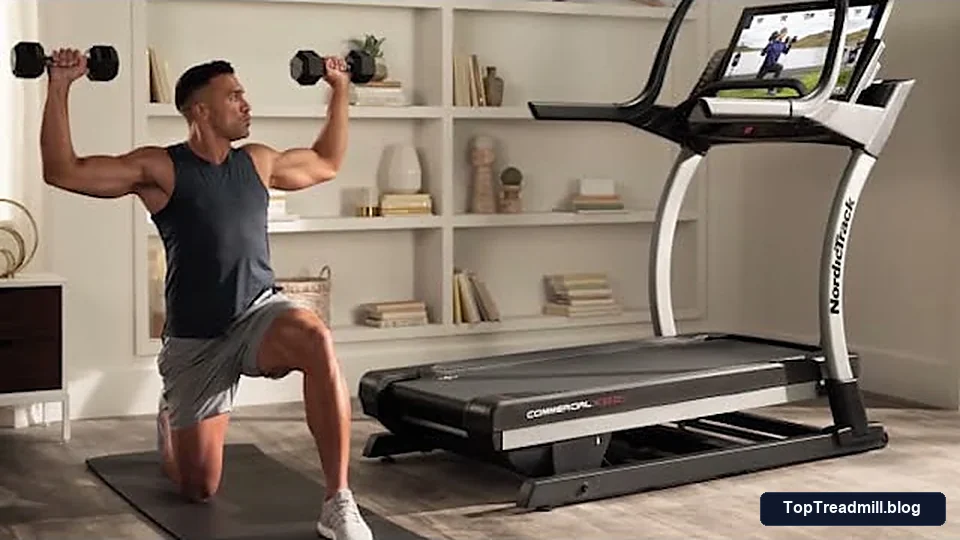
The primary engineering divergence centers on the upper console housing. Supporting a significantly larger high-definition touchscreen requires extra structural reinforcement in the upright masts, altering the overall weight distribution profile considerably.
Engineering teams incorporated identical drive motor specifications into both frames. This ensures that the mechanical resistance, transition speeds, and elevation torque remain completely consistent regardless of your chosen screen size configuration.
Structural frames utilize heavy-gauge steel designed to withstand rigorous daily workouts. Both models feature robust welded joints, but the larger unit incorporates reinforced upright supports to handle increased structural loads during extreme elevation changes safely.
Drive systems rely on high-torque commercial-grade motors. As highlighted in our NordicTrack X32i review, thermal management utilizes internal cooling fans and oversized commutators to dissipate heat efficiently under extreme incline stress.
Elevation mechanisms use heavy-duty incline motors capable of producing massive thrust. These linear actuators are bolted securely to pivot arms, allowing smooth transitions between negative six percent and positive forty percent grades without binding.
- Heavy-duty welded steel frames
- Reinforced upright masts for console stability
- Consistent high-torque drive motor systems
Chassis Weight and Frame Stability
Massive frame weights prevent rocking during high-speed sprints and steep mountain climbs. The extra heft absorbs vibrations effectively, protecting internal mechanical components from premature wear over years of heavy daily use.
Anchoring these heavy machines securely requires stable flooring surfaces. Rubber equipment mats help dampen operational noise while preventing subtle shifting during maximum incline transitions and rapid speed adjustments.
- Substantial base weight limits frame movement
- Vibration dampening protects internal electronics
Real-World Performance and Incline Mechanics
Steep elevation changes define the core appeal of these trainers. As evaluated in our NordicTrack Commercial X22I review, both models feature an aggressive 40 percent incline to target diverse muscle groups effectively.
Transition speeds between extreme elevation and decline angles remain remarkably smooth. Heavy-duty lift motors adjust quietly, allowing you to focus entirely on maintaining proper running form and steady breathing rhythms.
Endurance athletes will appreciate the robust continuous horsepower output. The drive systems maintain consistent belt velocity even when subjected to heavy foot strikes on steep mountain climbing simulations.
Incline mechanics demand exceptional torque to lift the entire deck assembly against gravity. The lift motor must maintain steady RPMs even when users execute rapid interval adjustments during intense, high-intensity hill workouts.
Decline capabilities require precise electronic calibration to ensure the running surface stops accurately at preset angles. Safety limit switches prevent over-extension, protecting the internal worm gear and threaded drive spindle from premature mechanical wear.
Speed control relies on Pulse Width Modulation controllers that regulate voltage sent to the drive motor. This guarantees consistent belt velocity, eliminating stuttering or hesitation under heavy footstrikes during maximum speed sprints.
- Extreme 40 percent incline capability
- Responsive negative six percent decline
- Smooth, quiet motorized elevation changes
Simulating Outdoor Terrain Transitions
Automatic trainer control links directly with virtual mapping software. As virtual trail elevations shift, the deck adjusts instantly to match real-world topography without requiring manual button presses.
Leg muscle activation shifts dramatically as you climb steep virtual grades. Hamstrings and glutes engage far more intensely at peak elevation compared to flat running surfaces.
- Automated trainer control via software
- Enhanced posterior chain muscle activation
Belt Dimensions and Deck Cushioning Systems
Generous running surface dimensions accommodate natural running strides comfortably. Both models provide ample width and length, ensuring secure footing during aggressive sprinting intervals and steep incline walking workouts.
Advanced deck cushioning technologies absorb significant impact forces before they reach your joints. You can easily adjust the dampening feel to mimic outdoor road running or maximize shock absorption.
Low-friction belt materials minimize heat buildup during extended endurance sessions. This engineering choice extends belt lifespan and reduces the frequency of required tension adjustments over time.
Running surface dimensions dictate user stride freedom and spatial comfort during extended training sessions. Wider and longer belts provide essential safety margins, accommodating natural biomechanical sway and preventing accidental edge missteps at high velocities.
Deck cushioning relies on elastomer dampeners strategically positioned underneath the multi-ply running belt. These dampeners absorb initial impact shock, reducing cumulative stress on ankle joints and lower lumbar vertebrae during repetitive distance running.
Deck firmness can often be adjusted by tightening or repositioning the internal cushioning isolators. Turning these dampeners transforms the feel from a soft, road-simulating compliance to a firm, stadium-track rigidity favored by racers.
- Spacious running surface dimensions
- Adjustable impact cushioning systems
- Low-friction durable belt materials
Joint Protection and Impact Reduction
Reducing repetitive impact stress helps runners log higher weekly mileage safely. The cushioned deck deflects shock effectively, minimizing post-workout stiffness in your ankles, knees, and lower back.
Turning off the cushioning feature provides a firmer road-like feel for race preparation. This versatility lets you customize every workout based on your current recovery needs.
- Lower impact forces protect joints
- Switchable firmness for road training
Console Technology and Visual Interface Specs
Display size represents the most striking visual differentiator between these two flagship machines. One utilizes a sprawling cinematic screen, while the other offers a slightly more compact yet brilliant high-definition monitor.
Both consoles run fluid software interfaces that stream interactive instructor-led classes seamlessly. High-speed processor hardware ensures quick menu navigation and zero lag during intensive streaming sessions.
Integrated audio speakers deliver crisp sound quality for coaching cues and motivating music tracks. Bluetooth connectivity also allows you to pair your preferred wireless headphones for private listening.
Console technology centers around high-definition touchscreens designed to stream immersive instructor-led coaching content. Graphics processors inside these consoles render virtual terrains smoothly, syncing visual landscapes directly with real-time treadmill elevation angles.
Processor speed and internal memory allocation dictate how fast applications launch and navigate smoothly. Adequate RAM prevents buffering lag, ensuring your workout metrics update instantaneously without interrupting the streaming video playback.
Audio output is delivered through integrated dual speakers or Bluetooth headphone connectivity. Audio controls allow users to independently balance coach voice volume against background music tracks, optimizing the acoustic training environment.
- Sprawling high-definition touchscreen displays
- Fluid software interface and fast processors
- Wireless headphone pairing via Bluetooth
Immersive Virtual Coaching Experiences
Large high-definition screens pull you directly into global outdoor studio sessions. The expansive visual field enhances the feeling of actually running through remote mountain trails and scenic valleys.
On-screen metrics track your heart rate, elevation gain, and pace in real-time. This immediate data feedback helps you maintain target training zones throughout grueling endurance intervals.
- Expansive visual field for immersion
- Real-time workout metric tracking
Maintenance, Efficiency and Power Requirements
Heavy electrical draws demand proper wall outlet placement in your dedicated workout space. Both heavy-duty machines require a stable dedicated circuit to prevent tripped breakers during peak motor loads.
Routine maintenance involves keeping the running belt properly centered and lubricated. Applying silicone-based lubricant under the walking deck every few months prevents friction damage and motor strain.
Dust accumulation inside the motor hood can degrade internal electronic components over time. Periodic vacuuming around the base helps maintain optimal cooling airflow for the heavy-duty drive system.
Power requirements are substantial, often demanding dedicated twenty-amp household circuits to prevent tripping breakers. The continuous amperage draw spikes during heavy inclines, making proper electrical planning vital for safe home gym operation.
Lubrication schedules require silicone-based lubricants applied beneath the running belt every few months. Keeping the deck surface properly slick reduces friction, extending motor longevity and preventing excessive thermal buildup on the board.
Belt tensioning bolts must be inspected periodically to prevent slipping during high-torque hill climbs. Proper alignment ensures the running belt tracks centrally down the deck, avoiding fraying along the side rail edges.
- Requires a dedicated electrical circuit
- Routine belt lubrication schedule
- Internal motor hood dust cleaning
Extending Component Lifespan Through Care
Proactive upkeep ensures your investment delivers years of reliable mechanical performance. Monitoring belt tension regularly prevents premature wear on the drive rollers and internal bearings.
Keeping the incline ramp clean prevents debris accumulation in the lift screw mechanism. A quick wipe-down after intense sweat sessions preserves the exterior finish and electrical ports.
- Regular belt tension checks
- Incline ramp debris cleaning
Floor Space, Assembly, and Room Ergonomics
Massive equipment footprints demand careful room measurement before purchase and delivery. These trainers do not fold upward, meaning they occupy a permanent, substantial rectangular area in your home gym.
Ceiling height clearance is a critical safety factor given the extreme forty percent incline. Ensure your room has adequate vertical clearance so taller users avoid hitting their heads on low ceilings.
Professional assembly services are highly recommended due to the sheer weight of the components. Heavy steel frames and massive display consoles require coordinated teamwork to assemble safely.
Floor space footprints are exceptionally large due to the robust incline framing and massive console assemblies. Users must verify both floor dimensions and vertical ceiling clearance, particularly when the deck reaches its maximum elevation.
Assembly requires at least two people due to the extreme weight of the console and base components. Following torque specifications for every bolt is crucial for structural integrity and preventing annoying squeaks during workouts.
Room ergonomics extend beyond simple footprint measurements to include user sightlines and surrounding hazard zones. Maintain a safety clearance zone behind the treadmill matching standard safety standard guidelines for heavy gym equipment.
- Permanent non-folding equipment footprint
- High ceiling clearance requirements
- Professional assembly highly recommended
Optimizing Home Gym Layouts
As noted in our NordicTrack X22I review, this heavy-duty machine demands robust Wi-Fi connectivity. Strong network signals prevent annoying buffering delays during live interactive coaching sessions.
Leave adequate clearance behind the rear roller for safe dismounting. Proper spatial planning ensures a safe, comfortable environment for intense daily training sessions.
- Strong Wi-Fi router proximity
- Safe clearance behind rear roller
Which Incline Trainer Fits Your Setup
Choosing between these exceptional machines depends primarily on your visual immersion preferences and available room space. Both deliver identical mechanical performance and extreme incline ranges for serious athletes.
Budget considerations also play a role since screen size directly impacts overall equipment cost. Evaluate whether a massive cinematic display justifies the extra investment for your personal training style.
Consider your long-term fitness goals when making your final selection. Both units provide world-class conditioning tools designed to push your cardiovascular limits and build lower body strength.
Choosing the right model depends heavily on available room dimensions and your specific athletic goals. Taller runners benefit tremendously from extended deck lengths, while standard users find smaller footprints sufficient for daily training.
Screen size preference also dictates your final selection between these two powerful incline trainers. If you prefer expansive, theater-like visual immersion, the larger display transforms your workout space into an interactive studio.
Budget allocation and electrical infrastructure should guide your final purchase choice. As detailed in our X22I incline trainer review, ensuring proper electrical capacity guarantees long-term reliability and uninterrupted performance.
- Weigh visual immersion preferences
- Evaluate available room space
- Match choice to fitness goals
Making Your Final Buying Decision
Review your home gym layout, ceiling height, and electrical setup carefully. Ensuring your room meets all structural requirements guarantees a smooth installation process and optimal workout safety.
Take time to assess which console size best matches your visual tracking needs during workouts. Both options deliver an unmatched incline training experience for dedicated home fitness enthusiasts.
- Verify room structural requirements
- Choose ideal console size
Frequently Asked Questions
Do both treadmills feature the exact same incline range?
Yes, both models feature a maximum 40 percent incline and a negative six percent decline. This provides identical climbing mechanics across both machines.
Can these trainers be folded for easy storage?
No, neither machine features a folding deck mechanism. They occupy a permanent footprint and require a dedicated workout space.
What electrical requirements are needed for setup?
Both units require a stable dedicated circuit to safely handle peak motor draws. Plugging them into standard shared circuits can cause tripped breakers.
Is professional assembly recommended for these heavy units?
Yes, professional assembly is strongly advised due to the massive console weight. Heavy steel components require coordinated teamwork for safe installation.
What is the main difference between these two treadmills?
The primary difference is the console screen size. One model features a sprawling cinematic display while the other offers a slightly more compact monitor.