Walkingpad vs Treadmill: Concise Verdict
Choose between compact under-desk utility and robust training capability. Engineered fitness equipment requires careful alignment with your specific biomechanical needs and home space constraints.

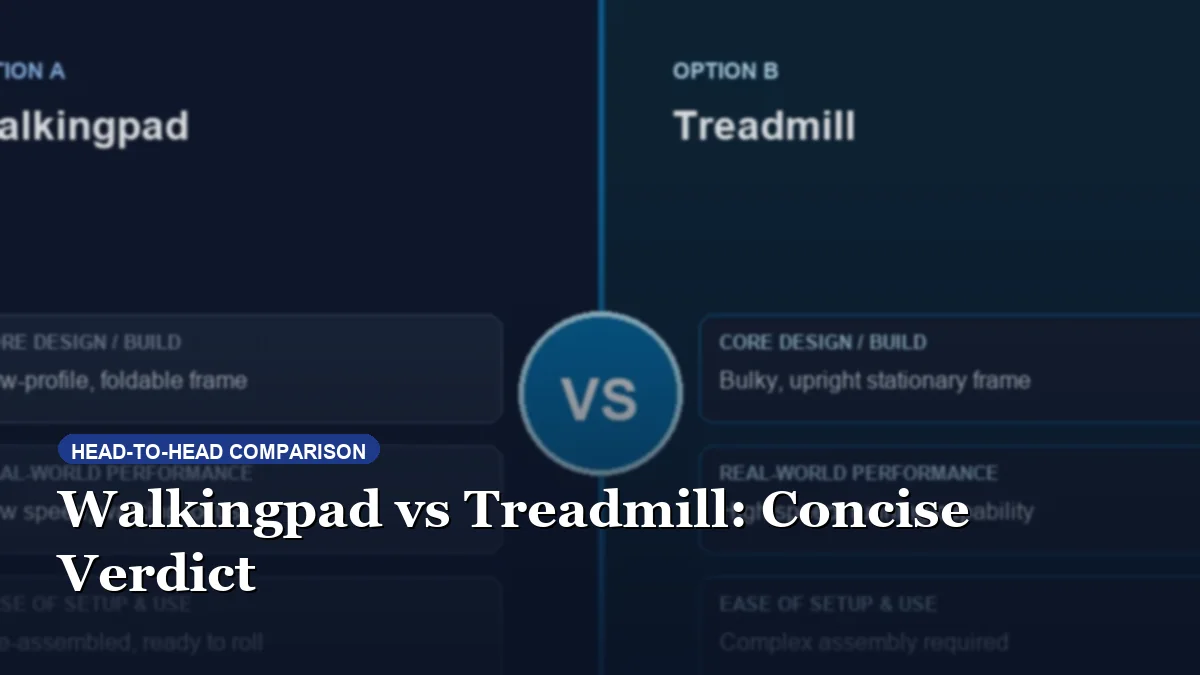
Pick the walkingpad for light office steps and minimal storage footprints. Select a traditional treadmill if you require higher speeds, structured incline training, and heavy-duty structural durability.
Compare all top models in our Best Treadmill: Top Home Fitness Picks (2026 Guide).
Side-by-Side Breakdown
| Criteria | Walkingpad | Treadmill | Edge |
|---|---|---|---|
| Core Design / Build | Low-profile, foldable frame | Bulky, upright stationary frame | Depends on space |
| Real-World Performance | Low speed, walking focus | High speed, running capability | Treadmill |
| Ease of Setup & Use | Pre-assembled, ready to roll | Complex assembly required | Walkingpad |
| Durability & Reliability | Light-duty residential motors | Commercial-grade heavy frames | Treadmill |
| Efficiency / Operating Footprint | Stows upright or under furniture | Permanent floor space needed | Walkingpad |
| Maintenance Requirements | Minimal belt checks | Regular lubrication and calibration | Walkingpad |
| Best Ideal Use Case | Active office environments | Dedicated indoor running sessions | Depends on goals |
Core Architectural and Design Differences
Modern home fitness equipment varies wildly in structural engineering and spatial demands. For tight spaces, selecting among the best walking pads provides an ultra-slim chassis designed to slide beneath standing desks.
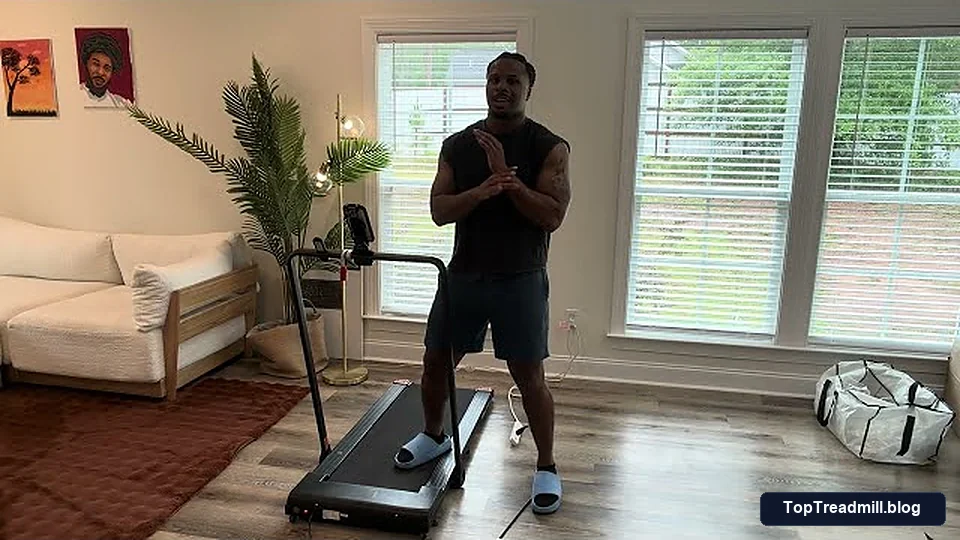
Conversely, a traditional running machine features a heavy steel upright console, fixed armrails, and a reinforced deck. These structural elements support intense multi-directional force generated during high-speed running workouts.
Engineering priorities dictate how these devices integrate into daily living spaces. While compactness drives walkingpad innovation, structural rigidity remains the primary objective for standard full-sized running platforms.
Traditional treadmills utilize a welded steel frame and fixed console mast to handle high-speed impact forces. Walking pads rely on a low-profile aluminum alloy chassis designed strictly for flat walking dynamics.
Console integration heavily alters physical dimensions. Standard units feature heavy upright arms with emergency tether stops, whereas walking pads eliminate upper structures entirely, utilizing remote controls or automated foot-sensing speed zones.
Frame rigidity dictates maximum weight capacities. Heavy-duty folding mechanisms on conventional machines prevent lateral flex, while ultra-slim walking pads use folding deck hinges that require flat subfloor surfaces to maintain structural alignment.
- Ultra-slim chassis optimized for low-profile horizontal storage under furniture.
- Reinforced steel upright consoles providing stable handrail support during heavy runs.
- Substantially different weight profiles affecting portability and permanent floor placement stability.
Frame Geometry and Footprint
Spatial efficiency dictates the physical dimensions of modern walking pads. Manufacturers eliminate traditional console arms entirely to create a flat, easily concealable platform for everyday walking.
Standard running machines maintain a towering console structure equipped with safety keys, emergency stop lariats, and integrated display screens that demand dedicated permanent room allocation.
- Flat deck designs remove cumbersome console uprights completely.
- Permanent footprints require dedicated corner or room real estate.
Real-World Performance and Motor Capacity
Motor engineering separates casual walking devices from serious cardiovascular training platforms. Walking pads typically employ compact brushless direct-current motors engineered specifically for low-speed continuous operation.
Traditional running machines utilize high-torque continuous duty motors capable of sustaining rigorous intervals, steep inclines, and rapid velocity changes without overheating or stalling under foot strike impact.
Biomechanical performance changes drastically when transitioning between these two distinct motor classes. True running requires robust horsepower ratings to maintain belt speed under heavy user loads.
Motor engineering defines operational boundaries. Walking pads typically feature compact brushless DC motors rated between 1.0 and 2.0 continuous horsepower, optimized for low-speed torque rather than sustained high-velocity output.
Full-sized treadmills incorporate robust continuous-duty motors ranging from 2.5 to 4.0 horsepower. These powerful systems prevent belt stalling under heavy footstrikes and maintain consistent speeds during aggressive incline adjustments.
Thermal dissipation separates the two categories. Standard machines use large flywheel housings with internal cooling fans, while walking pads depend on passive chassis heat dissipation, limiting continuous running durations to prevent thermal shutdowns.
- Low-speed DC motors designed for quiet walking performance.
- High-torque continuous duty motors built for sustained running speeds.
- Significant variance in sustained power delivery under heavy foot strikes.
Speed Ceilings and Incline Engineering
Maximum velocity thresholds define the practical limits of your daily exercise routine. Walking pads generally cap out around walking speeds, restricting intense cardiovascular sprint sessions.
Standard running platforms safely accommodate high-velocity running speeds and often incorporate motorized incline ramps to simulate outdoor hill climbs and enhance caloric expenditure effectively.
- Walking pads cap speeds strictly for safety without side rails.
- Standard machines feature motorized inclines for advanced cardiovascular challenges.
Maintenance Protocols and Component Lifespan
Owning fitness hardware involves ongoing upkeep to ensure long-term mechanical reliability. Walking pads feature simplified internal mechanics, reducing the frequency of complex user interventions and belt adjustments.
Full-sized running machines demand proactive maintenance schedules including regular silicone belt lubrication, drive belt tension checks, and electronic calibration to prevent premature wear and motor failure.
Component longevity directly correlates with overall build quality and intended workload intensity when choosing from the best treadmill models for daily home fitness environments.
Belt lubrication requirements differ based on design tolerances. Walking pads often feature factory-pre-lubricated decks requiring specialized silicone oil applications every three months, whereas many traditional treadmills utilize self-lubricating reservoirs.
Deck wear patterns reflect intended usage intensities. Walking pad running belts are thinner and prone to faster edge fraying, requiring precise tension bolt calibration to prevent lateral tracking drift over time.
Electrical component longevity depends heavily on dust accumulation. Enclosed motor hoods on conventional treadmills shield circuit boards from debris, while low-profile walking pads expose internal control boards to floor-level dust particles.
- Simplified internal mechanics reduce overall routine maintenance needs.
- Regular silicone lubrication is mandatory for standard running belts.
- Component wear accelerates significantly under heavy daily running loads.
Lubrication and Deck Wear
Friction management remains crucial for preserving walking and running surfaces. Compact walking platforms utilize pre-lubricated friction strips that require infrequent attention from the average user.
Traditional running decks endure immense friction forces requiring manual lubricant application every few months to protect the walking belt and control motor resistance load.
- Pre-lubricated strips minimize user maintenance on compact models.
- Manual silicone injection protects high-friction running decks.
Electrical Efficiency and Power Management
Power consumption profiles differ substantially based on motor sizing and intended operational speeds. Walking pads draw minimal electrical current, operating efficiently on standard household electrical circuits.
Large running machines demand higher electrical output to drive heavy belts and power illuminated consoles, cooling fans, and motorized incline mechanisms during intense workout sessions.
Energy efficiency truly matters when operating the best running treadmills continuously in home settings alongside sensitive computer electronics and peripheral office workstation hardware configurations.
Power consumption profiles align directly with intended workloads. Walking pads draw minimal electrical current, typically operating efficiently on standard 15-amp household circuits without risking thermal overload during extended sessions.
Standard treadmills demand higher amperage, especially when accelerating heavy users against an active incline grade. Peak electrical draws can approach upper circuit thresholds, requiring dedicated wall outlets to prevent breaker tripping.
Standby power draw varies significantly between models. Walking pads often feature energy-saving sleep modes with negligible idle draw, whereas complex console displays on traditional treadmills maintain continuous background power consumption.
- Low electrical draw suits shared office electrical circuits safely.
- High-wattage motors require dedicated wall outlets during intense use.
- Energy management impacts overall utility costs over time.
Continuous Duty vs Peak Draw
Understanding motor ratings prevents unexpected circuit breaker trips during peak workloads. Walking units maintain stable, low wattage draws suitable for continuous low-speed pacing.
Standard running systems experience sharp electrical spikes during heavy foot strikes and rapid acceleration phases, demanding robust internal power management systems.
- Stable low wattage characterizes compact walking platforms.
- Electrical spikes occur during heavy running acceleration phases.
Ergonomics, Joint Impact, and Deck Cushioning
Biomechanical safety depends heavily on deck construction and shock absorption technology. Walking pads offer minimal cushioning since walking generates lower impact forces on skeletal joints.
Traditional running machines incorporate sophisticated elastomer shock absorption systems designed to absorb high-impact running forces, protecting knees, ankles, and lower lumbar regions effectively.
Choosing the right platform safeguards your body against repetitive strain injuries during extended training blocks inside your residential workout space.
Joint protection relies heavily on internal deck suspension. Traditional treadmills employ durable elastomeric cushions or shock-absorbing springs to reduce cumulative impact forces on knees, ankles, and lumbar spine regions.
Walking pads feature minimalist construction with rigid deck surfaces placed close to the floor. This design lacks sophisticated shock absorption, transferring higher impact forces directly to joints during brisk walking sessions.
Belt length directly dictates natural stride biomechanics. Standard models offer generous running surfaces exceeding 55 inches, while compact walking pads restrict stride length, requiring shorter steps to prevent striking the motor housing.
- Minimal deck cushioning is acceptable for low-impact walking.
- Elastomer shock absorbers protect joints during high-speed runs.
- Skeletal impact forces dictate necessary cushioning technology levels.
Shock Absorption Mechanics
Impact reduction technology varies widely between compact and full-size machines. Walking pads keep profiles thin, sacrificing advanced cushioning for maximum portability.
Standard running platforms utilize multi-zone deck suspension to cushion foot strikes at the front while offering a firm push-off zone at the rear.
- Thin profiles omit complex shock absorption systems.
- Multi-zone suspension safeguards joints during running.
Setup, Portability, and Storage Workflows
Logistical convenience heavily influences daily workout consistency for most users. Walking pads arrive fully assembled, allowing you to unbox the unit and begin walking immediately.
Traditional running equipment requires tedious mechanical assembly, heavy lifting, and careful placement due to massive frame weights and fixed upright console structures.
Storage flexibility remains the standout advantage for compact walking platforms in small apartments or shared multi-purpose rooms where floor space is exceptionally tight.
Spatial footprint management defines everyday usability. Walking pads slide effortlessly under standard furniture using integrated transport wheels, eliminating the need for heavy lifting or complex folding safety latches.
Conventional treadmills require dedicated floor space or cumbersome vertical folding assists with hydraulic lift cylinders. Their substantial dead weight demands careful positioning to avoid damaging residential flooring materials.
Assembly complexity varies drastically between equipment classes. Walking pads arrive fully assembled out of the box, whereas standard treadmills require extensive mechanical fastening, console wiring, and regular hardware torque inspections.
- Arrive fully assembled for instant out-of-box operation.
- Built-in transport wheels simplify under-furniture storage routines.
- Heavy frames demand permanent placement in dedicated rooms.
Folding Mechanisms and Wheels
Portability features determine how easily you can clear your exercise space. Walking units often feature fold-in-half designs paired with smooth transport wheels for effortless mobility.
Standard running machines utilize hydraulic folding deck assists, though the remaining upright structure makes them heavy and awkward to relocate across rooms.
- Fold-in-half designs maximize everyday storage convenience.
- Hydraulic assists help lift heavy traditional running decks.
Determining the Optimal Option for Your Space
Selecting the ideal fitness machine requires honest assessment of your actual training habits. If your primary goal is accumulating daily step counts while working remotely, a walkingpad excels.
If you are training for endurance events or running daily miles, exploring the best budget treadmills ensures you secure a durable machine capable of handling intense hill intervals without breaking the bank.
Match your physical investment directly to your long-term fitness objectives to ensure maximum satisfaction and prevent costly equipment misalignments down the road.
Selecting the right equipment requires evaluating your primary fitness objectives. Choose a full-sized treadmill if your routine involves running, interval training, or steep incline hill simulations for cardiovascular conditioning.
Opt for a low-profile walking pad if your priority is increasing daily step counts while working at a standing desk. Their compact footprint accommodates shared multi-purpose living spaces seamlessly.
Assess your physical environment before purchasing. Measure available clearance heights under furniture for storage, verify local circuit breaker capacities, and confirm your flooring can support the combined dead weight of the machine.
- Match equipment capability to your specific daily training habits.
- Evaluate available floor space and storage needs carefully.
- Prioritize joint protection if high-speed running is your goal.
Tailoring Equipment to Workout Goals
Define your primary fitness metrics before purchasing home exercise gear. Casual walkers benefit from the unobtrusive footprint of modern flat walking platforms.
Serious runners require the robust speed ceilings, safety features, and structural stability found exclusively on traditional high-performance running machines.
- Casual walkers thrive with compact under-desk platforms.
- Dedicated runners need heavy-duty stationary machines.
Frequently Asked Questions
Can you run on a walkingpad safely?
Running on a walkingpad is generally unsafe due to low maximum speeds and the absence of safety handrails. Always use a traditional treadmill for high-speed running workouts.
Do walkingpads require assembly out of the box?
Most walkingpads arrive fully assembled and ready for immediate operation right out of the box. You simply plug the unit in and start walking with the remote.
How often should you lubricate a treadmill deck?
You should apply specialized silicone lubricant every three to six months depending on usage frequency. Regular lubrication prevents premature belt wear and motor strain.
Are walkingpads quiet enough for office environments?
Walkingpads utilize low-profile brushless motors engineered specifically to minimize operational noise. This quiet performance makes them ideal for shared home office spaces.
Which option offers better joint protection?
Traditional treadmills offer superior joint protection through advanced elastomer shock absorption systems. Walkingpads feature minimal cushioning since walking generates lower skeletal impact.