Walkingpad C2 vs A1: Concise Verdict
Comparing the Walkingpad C2 and A1 reveals distinct folding mechanics and deck engineering. This guide breaks down engineering specs to help you choose the right under-desk walking pad.

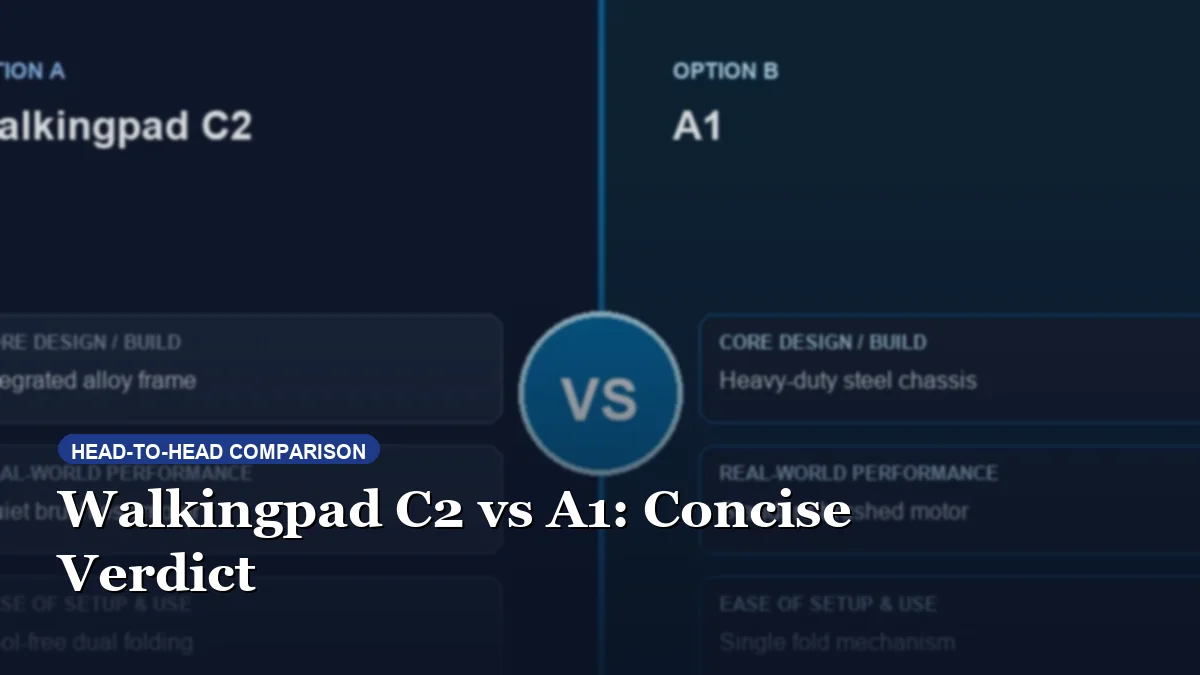
Choose the Walkingpad C2 for its superior folding mechanism and lighter daily footprint. Opt for the A1 if you prefer a classic industrial layout with traditional frame durability.
Compare all top models in our Best Treadmill: Top Home Fitness Picks (2026 Guide).
Side-by-Side Breakdown
| Criteria | Walkingpad C2 | A1 | Edge |
|---|---|---|---|
| Core Design / Build | Integrated alloy frame | Heavy-duty steel chassis | Walkingpad C2 |
| Real-World Performance | Quiet brushless motor | Standard brushed motor | Walkingpad C2 |
| Ease of Setup & Use | Tool-free dual folding | Single fold mechanism | Walkingpad C2 |
| Durability & Reliability | Enhanced joint stability | Robust structural rigidity | A1 |
| Efficiency / Operating Footprint | Low energy draw | Standard power consumption | Walkingpad C2 |
| Maintenance Requirements | Standard belt lubrication | Frequent tension checks | Walkingpad C2 |
| Best Ideal Use Case | Tight urban apartments | Dedicated home offices | Walkingpad C2 |
Core Design and Engineering Differences
Evaluating under-desk walking pads requires examining structural frames and folding mechanisms. Similar to findings in our kingsmith walkingpad r2 pro review, alloy frames minimize unit weight without sacrificing baseline stability.
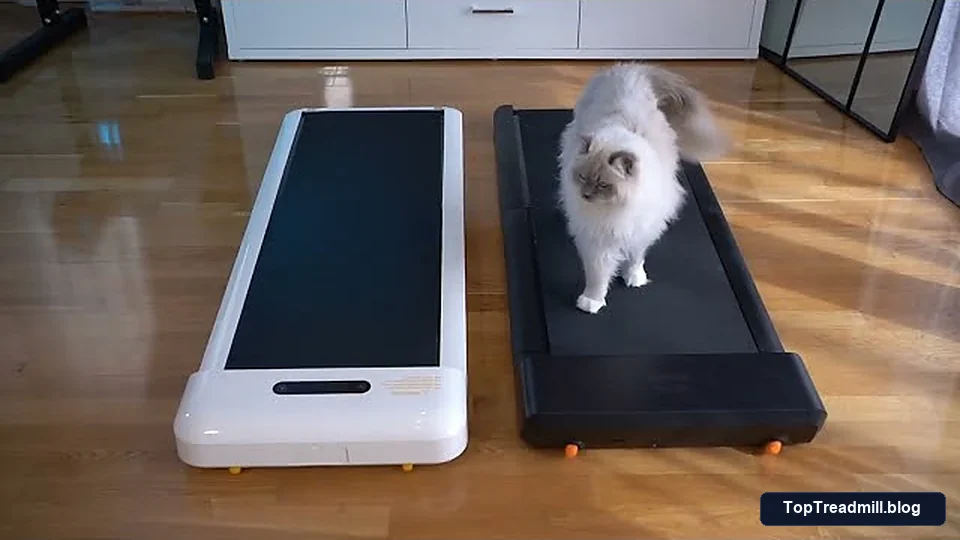
Conversely, the A1 relies on a heavier steel foundation that prioritizes absolute structural rigidity. This traditional construction approach provides a noticeably more grounded feel underfoot, though it increases the physical effort required to reposition the equipment.
Both models incorporate innovative folding designs, yet their execution varies significantly. The C2 utilizes a smoother hinge geometry that folds flat for seamless storage, whereas the A1 maintains a slightly bulkier folded profile due to its reinforced joints.
- Chassis material composition varies between lightweight alloy and heavy steel.
- Folding hinges feature distinct geometric tolerances affecting storage profiles.
- Overall unit weight differs significantly between both walking pad models.
Frame Materials and Foldability
Material selection dictates how easily you can maneuver these walking pads around your workspace. The alloy construction of the C2 reduces dead weight, making vertical and horizontal storage much simpler for daily users.
Meanwhile, the heavy steel framework of the A1 delivers exceptional load-bearing confidence. Users who value absolute frame immobility often prefer this heavier structural design despite the added heft during transport tasks.
- Alloy frames reduce daily lifting strain.
- Steel foundations maximize long-term frame rigidity.
Real-World Performance and Motor Specs
Motor engineering dictates the auditory profile and smooth operation of fitness equipment. Detailed insights within our kingsmith walkingpad r2 review show how advanced brushless motors minimize noise during calls.
The A1 employs a traditional brushed motor configuration that generates a slightly higher acoustic footprint under load. While both motors handle standard walking speeds effectively, their long-term thermal efficiency and power delivery curves show noticeable differences.
Evaluating continuous horsepower ratings reveals how each unit handles sustained daily usage. The C2 manages low-speed torque efficiently, preventing micro-stutters during slow walking paces, while the A1 maintains steady momentum under maximum loads.
- Brushless motors reduce operating noise significantly.
- Continuous horsepower ratings dictate sustained load capacity.
- Thermal management varies between brushed and brushless designs.
Speed Profiles and Walking Dynamics
Speed calibration directly influences user safety and comfort during long work sessions. The C2 features a finely tuned speed profile that transitions smoothly between increments, preventing jarring accelerations while you work.
The A1 offers reliable speed steps, though its acceleration curve feels slightly more abrupt. Users must remain mindful of these responsiveness variances when adjusting speeds via remote controls or automated foot sensors.
- Smooth acceleration prevents unexpected slips.
- Step calibration ensures precise speed control.
Ergonomics and Deck Construction
Deck design is paramount for reducing joint impact during prolonged walking sessions at your standing desk. The C2 incorporates a multi-layer cushioning system that absorbs heel strikes effectively, protecting your knees and lower back.
The A1 utilizes a firmer deck composition that favors responsive push-off over deep shock absorption. While this firmer surface feels closer to outdoor pavement, it requires proper footwear to prevent fatigue during extended walking blocks.
Surface traction also plays a crucial role in preventing slips during brisk walking speeds. Both walking pads feature textured running belts, but their rubber compounds react differently to moisture and dust accumulation over time.
- Multi-layer cushioning reduces impact shock on joints.
- Firm deck compositions favor responsive stride mechanics.
- Textured running belts maintain reliable grip underfoot.
Step Height and Surface Traction
Low step-on heights are essential for preventing tripping hazards when mounting under-desk treadmills. The C2 boasts a remarkably low deck height, making it exceptionally easy to step onto from a standard office chair.
The A1 sits slightly higher off the floor to accommodate its internal motor housing and folding mechanisms. Users should measure their clearance limits to ensure comfortable ergonomics beneath low-set standing desks.
- Low step-on heights improve user safety.
- Deck clearance impacts under-desk ergonomics.
Smart Features and Control Interfaces
Modern walking pads rely heavily on intuitive control systems and automated sensor technologies. The C2 integrates responsive foot-sensing zones that automatically adjust belt speed based on your natural positioning along the running deck.
The A1 pioneered similar adaptive speed algorithms, but its sensitivity thresholds feel slightly less refined. Both units allow manual overrides using minimalist handheld remotes or dedicated smartphone applications for tracking workout metrics.
Display integration varies, with LED panels embedded directly beneath the running belt surface. These bright readouts show elapsed time, distance traveled, and current speed without cluttering your immediate workspace environment.
- Foot-sensing zones automate speed adjustments intelligently.
- Minimalist remotes provide manual control options.
- Embedded LED displays show essential workout metrics.
Remote Control and Foot-Sensing Modes
Operating these compact treadmills should feel effortless during busy workdays. The C2 features an upgraded remote transmitter with improved signal reliability, reducing input lag during quick speed adjustments.
The A1 relies on a standard handheld remote that performs adequately within normal office range limits. Both models require clear line-of-sight positioning to ensure responsive communication with the internal control board.
- Improved remotes reduce command input lag.
- Clear line-of-sight ensures reliable signal transmission.
Maintenance, Efficiency, and Longevity
Routine maintenance ensures your walking pad remains operational through years of daily use. The C2 simplifies belt upkeep with an accessible lubrication port and self-centering rollers that minimize periodic alignment adjustments.
The A1 requires slightly more attentive manual belt tensioning to prevent lateral drift during long walking sessions. Both machines demand regular cleaning beneath the deck to prevent dust accumulation from fouling the motor.
Power efficiency is another critical factor for equipment running continuously in home offices. The C2 draws minimal electrical current during low-speed operation, helping keep utility costs manageable over extended monthly periods.
- Accessible lubrication ports simplify routine belt maintenance.
- Self-centering rollers reduce the need for alignment tweaks.
- Low electrical draw supports sustainable home office setups.
Lubrication and Belt Tensioning
Proper lubrication preserves the friction coefficient between the running belt and walking deck. The C2 features a streamlined lubrication system that distributes silicone oil evenly across internal friction points.
The A1 requires standard manual oil application using included applicator bottles and careful tracking schedules. Neglecting these fundamental upkeep tasks can lead to premature motor strain and excessive belt wear.
- Silicone oil preserves friction coefficients effectively.
- Manual application requires strict maintenance scheduling.
Operating Footprint and Storage Solutions
Space-saving engineering drives buyers toward compact pads. As highlighted in our kingsmith walkingpad c2 review, this unit excels in tight environments by folding completely in half for effortless storage.
The A1 also features a folding chassis, but its heavier dead weight makes vertical storage slightly more cumbersome. Both units include transport wheels to help you roll them out of the way when your workday ends.
Evaluating your available storage space will dictate which model fits your room layout best. Urban apartments with limited square footage benefit greatly from the lighter, more agile folding profile of the C2.
- Complete folding mechanisms reduce storage footprints drastically.
- Integrated transport wheels simplify room repositioning tasks.
- Vertical storage options free up valuable floor space.
Under-Desk Integration and Vertical Storage
Integrating a walking pad into your existing office layout requires careful spatial planning. The C2 fits effortlessly beneath most adjustable standing desks without obstructing your chair or foot placement.
The A1 offers similar under-desk compatibility, though its slightly bulkier frame demands more clearance space. Always measure your office dimensions carefully before committing to either specific treadmill model.
- Standing desk compatibility prevents workspace bottlenecks.
- Accurate spatial measurements ensure comfortable office integration.
Which Option Fits Your Setup
Selecting the ideal walking pad depends heavily on your unique daily workflow and physical requirements. The C2 suits remote workers seeking a lightweight, quiet, and easily storable fitness solution for busy urban apartments.
The A1 appeals to users prioritizing maximum structural rigidity and a traditional industrial feel beneath their feet. Assessing your personal preferences for motor noise, weight, and folding ease will guide your final purchasing choice.
Ultimately, both machines deliver reliable low-impact cardio directly to your home workspace. Weighing the engineering trade-offs outlined in this guide ensures you invest in equipment matching your lifestyle.
- Match treadmill specs to your specific daily workflow.
- Consider workspace weight and storage constraints carefully.
- Evaluate noise tolerance levels for shared office environments.
Final Buying Recommendations
Making the final decision comes down to balancing portability with structural sturdiness. If you prioritize effortless storage and quiet brushless operation, the Walkingpad C2 is your ideal choice.
If you prefer a heavier, ultra-rigid chassis that stays planted during intense sessions, explore our best walkingpad guide to find alternative models for your home office fitness setup.
- Portability favors the C2 model.
- Structural mass favors the A1 chassis.
Frequently Asked Questions
Can I run on the Walkingpad C2 or A1?
Neither model is designed for running. Both walking pads are strictly engineered for walking speeds up to six kilometers per hour, featuring low-profile decks optimized exclusively for low-impact office movement.
How do I lubricate the running belt?
You apply silicone oil directly beneath the center of the running belt using the provided applicator bottle. Regular maintenance every few months ensures smooth motor operation and prevents premature friction wear.
Do these walking pads require professional assembly?
Both models arrive fully assembled right out of the box with zero complex tools required. You simply unpack the unit, plug it into a standard wall outlet, and begin immediate setup.
Can I store them vertically upright?
Yes, both walking pads feature folding mechanisms that allow them to stand upright against a wall. However, users should utilize built-in support feet to prevent accidental tipping hazards.
How does the automatic speed control work?
Integrated foot sensors detect your position on the front, middle, or rear of the deck. Walking near the front accelerates the belt, while moving backward triggers gradual deceleration automatically.