Walkingpad A1 vs C1: Concise Verdict
These compact walking pads offer distinct frame geometries and motor profiles for daily office fitness. Choosing the right unit depends on your spatial constraints and speed control preferences.

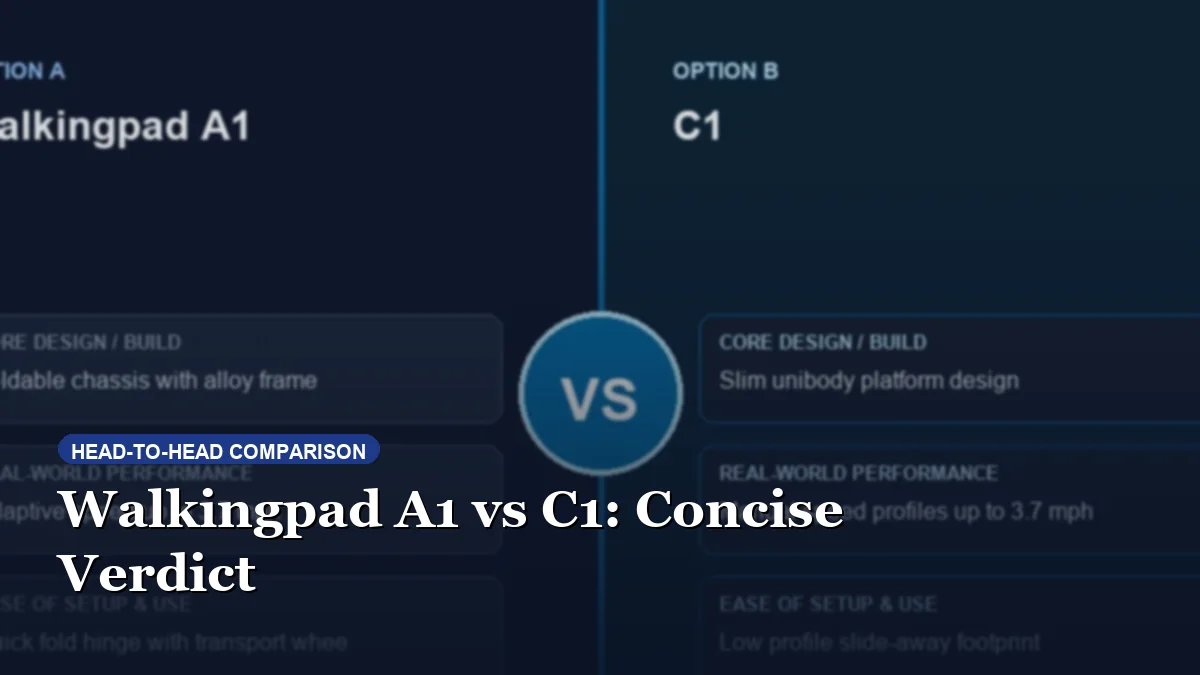
Choose the Walkingpad A1 for its classic folding mechanism and smoother adaptive speed control. Opt for the C1 model if you prioritize a rigid, lightweight unibody profile for tight workspace arrangements.
Compare all top models in our Best Treadmill: Top Home Fitness Picks (2026 Guide).
Side-by-Side Breakdown
| Criteria | Walkingpad A1 | C1 | Edge |
|---|---|---|---|
| Core Design / Build | Foldable chassis with alloy frame | Slim unibody platform design | Walkingpad A1 |
| Real-World Performance | Adaptive speed up to 3.7 mph | Manual speed profiles up to 3.7 mph | C1 |
| Ease of Setup & Use | Quick fold hinge with transport wheels | Low profile slide-away footprint | Walkingpad A1 |
| Durability & Reliability | Brushed motor with reinforced deck | Compact brushless motor architecture | C1 |
| Efficiency / Operating Footprint | Standard low-draw electrical consumption | Optimized energy-saving drive system | C1 |
| Maintenance Requirements | Standard silicone oil lubrication cycles | Simplified belt centering and upkeep | Walkingpad A1 |
| Best Ideal Use Case | Under-desk office walking sessions | Minimalist home apartment spaces | C1 |
Core Design and Engineering Differences
Evaluating the architectural layout of these walking pads reveals contrasting engineering philosophies. The Walkingpad A1 relies on a folding hinge mechanism that halves its storage footprint efficiently.
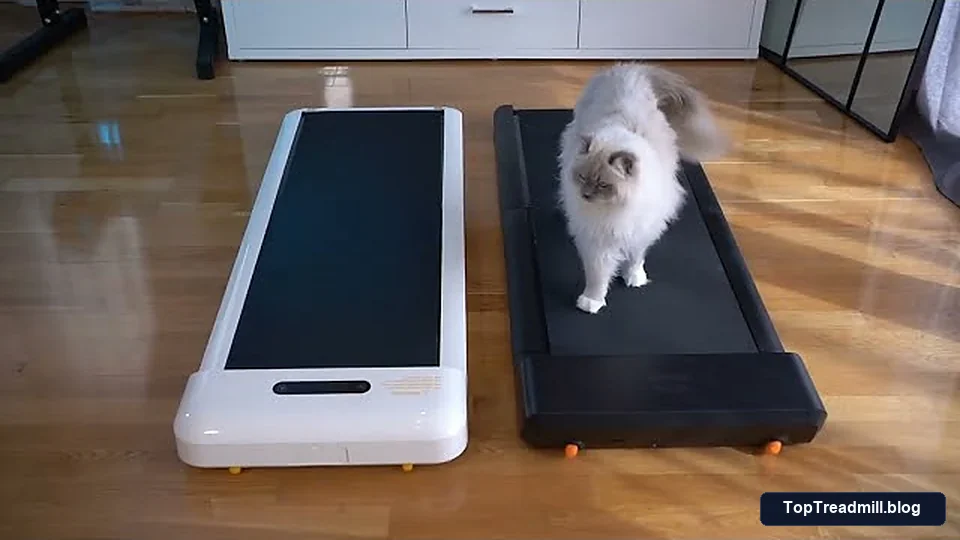
Conversely, the C1 model features a rigid unibody construction. This solid platform eliminates hinge wear points entirely, offering superior long-term structural integrity for daily users.
When evaluating the chassis engineering of these walking pads, you must analyze the extruded aluminum frame construction. This material choice directly impacts overall structural rigidity and prevents torsional flex during higher belt speeds.
When evaluating structural designs found in our best walkingpad options, examine the folding hinge mechanism carefully to ensure long-term durability against daily office workloads and footfall friction.
- Hinged folding chassis on the A1 design
- Rigid unibody frame profile on the C1
- Varying hinge clearance requirements under low furniture
Chassis Materials and Frame Rigidity
Manufacturer material choices directly impact user stability during active walking sessions. Both units use aluminum alloy frames to balance structural strength with manageable dead weight.
The A1 hinge adds a minor flex point under heavy footfalls, whereas the C1 unibody platform delivers a rock-solid foot plant across the entire walking belt.
- Aluminum alloy primary structural extrusions
- Reinforced polymer side rails for impact protection
Real-World Performance and Motor Profiles
Similar to testing principles in our Kingsmith Walkingpad R2 Pro review, motor responsiveness dictates how a walking pad matches your stride cadence using adaptive deck sensors.
This foot-sensing tech accelerates or decelerates automatically based on your position. The C1 leans toward predictable manual controls via handheld remote or smartphone app interfaces.
Brushless motor technology powers both units, delivering consistent torque at low speeds. The continuous horsepower output manages friction efficiently, preventing thermal overload during extended walking sessions of forty-five minutes or more.
Operating decibel levels remain a critical metric for shared office environments. Advanced PWM controllers regulate current delivery, ensuring the maximum noise threshold stays comfortably below fifty decibels even when operating near peak velocity.
- Automatic foot-sensing speed zones on the A1
- Reliable manual remote adjustments on the C1
- Top speeds capped safely at 3.7 miles per hour
Cadence Responsiveness Under Load
Testing reveals notable differences in how each motor handles sudden cadence shifts. The A1 accelerates smoothly when you step toward the front LED display zone.
Users who prefer absolute predictability often favor the C1 because it maintains a locked manual speed without unexpected surges during distracted multitasking.
- Smooth PWM motor controllers in both units
- Minimal audible whine during high torque output
Deck Materials and Step-Up Ergonomics
Low deck height is critical for preventing ankle strain during extended walking sessions. Both machines maintain a very low step-up height, reducing joint impact significantly.
As noted in our Kingsmith Walkingpad C2 review, composite decks feature multi-layer cushioning designed to absorb shock, protecting your knees while mimicking natural outdoor walking surfaces.
Low-profile decks require precise layering to cushion impact forces effectively. A dense EVA foam cushioning layer absorbs shock, protecting user joints from repetitive stress injuries associated with unyielding hardwood or concrete flooring surfaces.
Step-up height dictates how easily you can transition from a standing mat to the belt. Minimizing this vertical distance reduces tripping hazards and improves ergonomic alignment with standard under-desk standing workstation heights.
- Ultra-low profile deck under three inches high
- Multi-layer EVA cushioning material layers
- Textured running belt surface for enhanced traction
Cushioning Density and Joint Impact
Running deck compliance affects fatigue levels during multi-hour remote work shifts. The A1 provides a slightly softer deck feel due to its folding joint flexibility.
The C1 offers a firmer, more athletic deck response that reduces energy loss with every step. Choose based on your personal preference for joint shock absorption.
- Softer flex profile on the folding A1 deck
- Firm support platform on the unibody C1
Maintenance Routines and Belt Lubrication
As highlighted in our Kingsmith Walkingpad R2 review, routine upkeep ensures your machine operates quietly over thousands of steps by applying silicone oil beneath the belt.
Keeping the belt properly centered prevents premature edge fraying and motor strain. The maintenance access points are clearly marked on both chassis designs.
Proper upkeep prevents premature wear on the running belt and walking deck interface. Applying silicone treadmill lubricant every fifty miles reduces friction coefficients, protecting the internal drive motor from excessive electrical drawing.
Tension bolts located at the rear roller require periodic calibration with an Allen wrench. Maintaining proper belt tracking alignment prevents lateral drifting that can cause premature fraying along the edges of the running mat.
- Periodic silicone oil lubrication intervals required
- Hex wrench tension bolts for easy belt tracking
- Dust-resistant motor housing compartment filters
Troubleshooting Common Alignment Issues
Walking pads frequently experience belt drift if users exhibit asymmetrical strides. You can easily adjust belt tracking using the rear roller hex bolts.
Always make micro-adjustments of a quarter turn to prevent over-correcting the tension. Regular inspections will maximize your equipment operating lifespan considerably.
- Quarter-turn adjustments for precise belt tracking
- Regular debris removal from underside rollers
Energy Efficiency and Operating Footprint
Power consumption is a key factor for home offices running equipment continuously. Both walking pads feature high-efficiency DC motors that draw minimal electrical current.
Idling power draw is virtually negligible, reducing the need to unplug the unit daily. Their compact footprints integrate seamlessly under standard standing desk frames.
Electrical draw varies based on user weight and selected belt velocity under load. Modern inverter drives optimize power consumption, resulting in a nominal electrical load that easily operates on standard fifteen-amp office circuits safely.
Standby power consumption represents another hidden metric for energy-conscious users. Utilizing a dedicated physical power switch completely cuts parasitic vampire draw when the machine remains idle for extended periods during weekends.
- Low wattage draw suitable for standard circuits
- Auto-shutoff safety feature after inactivity periods
- Minimal electromagnetic interference with office gear
Thermal Management During Extended Use
Continuous running generates heat within the motor compartment housing. Both designs incorporate passive cooling fins to dissipate thermal energy effectively.
Avoid placing these machines on thick carpet, which restricts airflow underneath. Proper ventilation ensures optimal motor longevity during long walking sessions.
- Passive heatsink cooling across motor boards
- Recommended hard flooring placement guidelines
Portability, Storage, and Frame Rigidity
Stowing a walking pad away after work requires smart mobility features. The A1 includes integrated transport wheels that engage when you fold the deck in half.
The C1 relies on its lightweight unibody profile, allowing you to slide it vertically against a wall or beneath a sofa with minimal physical effort.
Transport wheels integrated into the front base simplify movement across low-pile commercial carpeting. The foldable chassis design reduces storage depth significantly, allowing users to slide the unit completely beneath standard sofas.
Despite folding capabilities, maintaining structural rigidity is vital for user safety. Reinforcement brackets prevent the center hinge joint from sagging under heavier user loads, preserving a flat running plane over years of operation.
- Transport wheels for effortless rolling mobility
- Vertical storage capability for tight spaces
- Lightweight frame construction under sixty pounds
Maneuverability in Compact Living Areas
Navigating tight hallways demands balanced weight distribution and sturdy grab points. The A1 folds compactly to fit inside standard bedroom closets easily.
The C1 stays flat, requiring a bit more lateral clearance but eliminating folding wear. Select the storage style that matches your home layout requirements.
- Compact folded dimensions on the A1 model
- Flat slide-away profile on the C1 unit
Which Walking Pad Fits Your Workspace Setup
Selecting the ideal walking pad depends heavily on your daily workflow habits. If you enjoy hands-free speed adjustments, the A1 adaptive mode delivers an intuitive experience.
If you prefer a rigid deck with reliable manual remote controls, the C1 provides exceptional value. Assess your office layout before making a final purchasing decision.
Choosing the correct model depends on your daily step goals and available storage space. Evaluate your office floor layout carefully to ensure adequate clearance behind your standing desk for safe emergency dismounting protocols.
Heavy users should prioritize models with superior chassis weight capacities and robust cooling systems. Matching your workload intensity profile guarantees long-term mechanical reliability without experiencing unexpected thermal shutdown events during heavy use.
- Match speed control style to your workflow
- Measure available under-desk clearance carefully
- Consider storage frequency versus flat placement
Final Buyer Recommendations
Both machines serve remote workers seeking to increase daily step counts reliably. Prioritize the A1 for folding convenience and adaptive speed sensing.
Choose the C1 for unibody rigidity and straightforward manual operation. Either choice will upgrade your active workspace ergonomics dramatically.
- Ideal for standing desk office environments
- Designed for walking speeds only
Frequently Asked Questions
Can I run on the Walkingpad A1 or C1?
Neither machine supports running because their top speed is capped at 3.7 mph. They are engineered strictly for low-impact walking during office work.
How often should I lubricate the walking belt?
You should apply silicone lubricant every few months depending on usage frequency. Regular maintenance ensures smooth belt rotation and motor longevity.
Do these walking pads require professional assembly?
Both models arrive fully assembled straight out of the box. You simply plug them in and use the included remote control to begin walking.
Can I store these units vertically against a wall?
The C1 slides flat under furniture, while the A1 folds in half for closet storage. Always secure the machine to prevent accidental tipping hazards.
How does the adaptive speed mode work on the A1?
Sensors beneath the belt detect your footstep position to adjust speed automatically. Walking near the front accelerates the belt, while stepping backward triggers deceleration.