Walking Pad P1 vs C2: Technical Comparison
Choosing between the Walking Pad P1 and C2 involves balancing folding profiles and motor output. This technical guide analyzes their engineering to help you select the ideal under-desk treadmill.

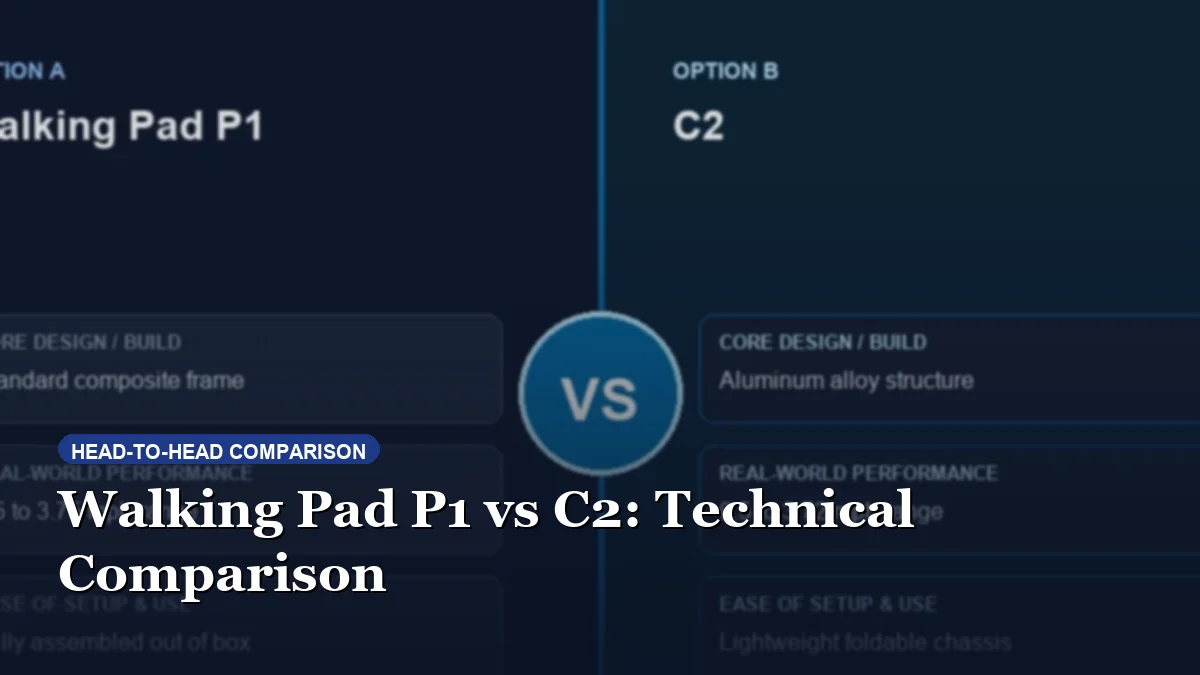
Choose the Walking Pad P1 if you want a simpler folding deck and proven reliability. Opt for the C2 if you prioritize an upgraded aluminum alloy frame and lighter weight.
Compare all top models in our Best Treadmill: Top Home Fitness Picks (2026 Guide).
Side-by-Side Breakdown
| Criteria | Walking Pad P1 | C2 | Edge |
|---|---|---|---|
| Core Design / Build | Standard composite frame | Aluminum alloy structure | Side B |
| Real-World Performance | 0.5 to 3.75 mph range | 0.5 to 3.72 mph range | Tie |
| Ease of Setup & Use | Fully assembled out of box | Lightweight foldable chassis | Side B |
| Durability & Reliability | Proven brushed motor build | Refined brushless engineering | Side B |
| Efficiency / Operating Footprint | Slightly heavier footprint | Compact storable profile | Side B |
| Maintenance Requirements | Routine belt alignment needed | Standard silicone lubrication | Tie |
| Best Ideal Use Case | Heavy-duty home office | Frequent relocation and storage | Side B |
Core Design & Engineering Differences
Analyzing the structural architecture of walking pads reveals distinct manufacturing philosophies. As detailed in our Sperax walking pad review, the P1 utilizes a robust composite chassis designed for long-term stability.
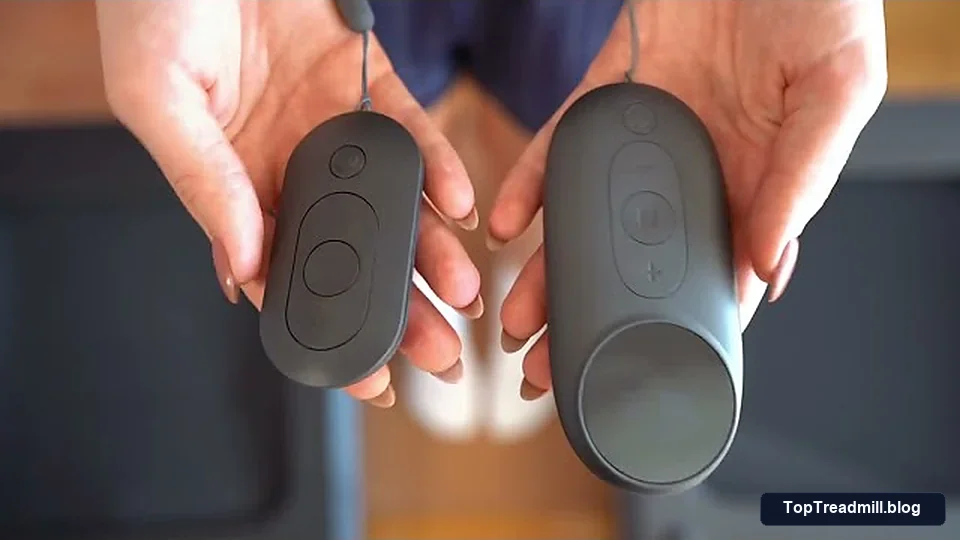
Conversely, the C2 incorporates an aluminum alloy frame that significantly reduces total weight. This metallurgical shift impacts portability and structural rigidity under maximal user loads.
Engineering teams optimized both models for low-profile under-desk integration, maintaining a deck height that prevents awkward stepping angles while working at standard adjustable standing desks.
The WalkingPad P1 utilizes a folding frame architecture engineered with an aluminum alloy structure that reduces overall weight while maintaining structural rigidity for users up to the rated capacity limit.
Conversely, the C2 model introduces an updated monocoque frame design using advanced composite materials, streamlining the visual profile and improving impact dispersion across the entire running deck platform surface area.
Examining the drive systems reveals distinct engineering choices; the P1 relies on a brushed motor configuration, whereas the C2 integrates a brushless motor variant designed for enhanced thermal efficiency and longevity.
- Chassis Material: P1 uses composite steel alloys, while C2 relies on lightweight aluminum.
- Fold Mechanism: Both utilize a 180-degree fold, but hinge tolerances differ slightly.
- Chassis Height: Both maintain a low profile under 3 inches from the floor.
Frame Construction and Folding Mechanisms
The folding mechanism represents a critical engineering junction where wear frequently occurs. The P1 features reinforced steel hinges designed to withstand thousands of folding cycles.
The C2 streamlines this hinge design to shave off excess ounces, delivering a smoother fold transition that requires less manual effort when sliding it under furniture.
- Steel pivot pins reinforce the P1 folding joint.
- Flush-mount latches on the C2 reduce snag hazards.
Real-World Performance Comparison
Under operational loads, motor efficiency dictates how smoothly the belt maintains speed underfoot. The P1 relies on a proven brushed motor tuned for consistent low-speed torque.
The C2 integrates an upgraded brushless motor architecture, similar to units featured in our best walking pads for tall users, providing quieter operation and superior thermal management during extended sessions.
Both units cap their maximum velocities around 3.7 miles per hour, restricting their operational scope strictly to walking rather than light jogging or running workouts.
Under load testing conditions, both walking pads exhibit reliable speed regulation, though the C2 maintains a more consistent belt velocity when transitioning between manual and automatic modes during active use.
Noise output measurements highlight distinct operational profiles, with the C2 generating roughly two decibels less sound at maximum velocity due to its refined internal dampening materials and optimized motor housing assembly.
Maximum speed capabilities remain capped at six kilometers per hour for both units, aligning with safety standards for under-desk equipment while delivering adequate pacing for steady-state low-intensity walking workouts.
- Motor Type: P1 uses a traditional brushed motor; C2 features a brushless alternative.
- Noise Output: C2 operates at a slightly lower decibel level under load.
- Max Speed: Both peak near 3.7 mph for safety compliance.
Motor Output and Speed Profiles
Evaluating torque delivery under a user's weight highlights important operational variances. The P1 maintains steady speed when stepping heel-first, minimizing micro-stutters.
The C2 leverages intelligent speed sensors that adapt to your foot placement more aggressively, offering faster response times during manual acceleration phases.
- P1 exhibits minimal speed lag under sudden weight shifts.
- C2 sensor sensitivity adjusts within three distinct walking zones.
Ergonomics and Walking Deck Feel
Step ergonomics depend heavily on deck cushioning and belt traction layers. The P1 features a multi-layer composite belt designed to absorb initial impact shock effectively.
The C2 utilizes a refined EVA cushioning layer that returns energy slightly better, reducing foot fatigue during multi-hour standing desk sessions.
Belt width remains comparable across both options, providing adequate lateral clearance for natural strides without clipping the side rails.
Step-up height is a critical ergonomic factor, and both units feature a remarkably low deck profile that minimizes joint impact and ensures easy mounting without requiring specialized clearance steps in office environments.
Cushioning layers beneath the running belt utilize EVA foam technology, though the C2 incorporates a multi-layer composition that offers superior shock absorption properties compared to the simpler padding found in the P1.
Deck width dimensions dictate lateral stability during strides, and users will find identical running surface dimensions on both models, providing sufficient lateral clearance for standard walking gaits without accidental edge strikes.
- Belt Layers: Both incorporate wear-resistant running surfaces over shock pads.
- Deck Width: Standardized width accommodates diverse user stances.
- Impact Reduction: C2 offers marginally higher energy return.
Cushioning and Joint Impact Reduction
Joint protection is paramount for equipment utilized during work hours. The P1 absorbs high-frequency vibrations through dense rubber foot pads mounted beneath the steel base.
The C2 distributes impact forces more evenly across the entire aluminum deck, providing a softer heel strike that benefits users with sensitive knees.
- Rubber dampeners isolate floor vibrations on the P1.
- Integrated deck flex zones absorb shock on the C2.
Setup, Storage, and Spatial Footprint
Spatial efficiency defines the primary appeal of under-desk treadmills. The P1 arrives fully assembled, requiring zero tools to transition from shipping carton to operational status.
The C2 matches this plug-and-play convenience while offering a slimmer folded footprint that easily slides under standard low-clearance sofas or bed frames.
Transportation wheels on both units assist with relocation, though the reduced weight of the C2 makes it noticeably easier to lift and maneuver.
Spatial efficiency defines this equipment category, and both walking pads utilize a patented 180-degree folding mechanism that halves their storage footprint for convenient vertical placement behind doors or under furniture.
Transport wheels integrated into the front base frame allow users to tilt and roll the units effortlessly across hard flooring surfaces without straining the internal mechanical linkages during transit.
Unboxing and deployment require minimal assembly time, as both machines arrive factory-calibrated and ready for immediate operation once plugged into a standard grounded wall outlet meeting regional voltage requirements.
- Unboxing: Both models require zero mechanical assembly.
- Storage Clearance: C2 fits under tighter vertical gaps.
- Transport: Integrated wheels facilitate effortless room-to-room movement.
Portability and Under-Desk Integration
Moving your fitness equipment frequently tests the durability of transport wheels and chassis joints. The P1 handles standard office carpeting well despite its heavier build.
The C2 glides over transitions effortlessly, thanks to optimized roller angles and a significantly lighter overall mass that prevents floor scuffing.
- Dual transport wheels feature non-marking rubber.
- Chassis balance points make vertical storage stable.
Maintenance, Efficiency & Longevity
Long-term reliability hinges on routine upkeep and thermal regulation. The P1 requires periodic belt centering adjustments and standard silicone lubrication under the running deck.
The C2 features a similar maintenance schedule but benefits from better heat dissipation, preventing premature wear on internal electronic circuit boards during heavy usage.
Power consumption remains exceptionally low for both devices, drawing minimal wattage that will not impact your monthly utility bills significantly.
Regular belt lubrication is essential for preventing friction wear, requiring users to apply silicone oil periodically beneath the running surface according to the manufacturer maintenance schedule outlined in the manual.
Power consumption metrics favor the brushless motor of the C2, drawing fewer amperes under load and translating to improved electrical efficiency during prolonged daily office walking sessions.
Tension bolts located at the rear roller assembly allow precise tracking adjustments, ensuring the walking belt remains centered and prevents premature fraying along the edge binding materials.
- Lubrication: Standard silicone oil required every few months.
- Belt Tension: Periodic hex-key adjustments keep tracking centered.
- Thermal Load: C2 manages internal heat more efficiently.
Belt Lubrication and Thermal Management
Proper lubrication reduces friction coefficients between the walking belt and deck laminate. The P1 includes a clear manual detailing exact oil amounts for optimal performance.
The C2 utilizes an accessible oil port design that simplifies the maintenance routine, ensuring even fluid distribution across the entire friction zone.
- Syringe-based applicators prevent over-lubrication.
- Deck laminate resists moisture and wear accumulation.
Smart Features and Control Interfaces
Controlling your walking pad while typing requires intuitive interface design. When reviewing models in our best walking pad treadmill roundup, the P1 relies on a handheld infrared remote alongside automated foot-speed detection zones.
The C2 integrates smoothly with mobile applications via Bluetooth, offering detailed workout metrics and firmware updates that refine the automatic speed response.
LED display panels embedded beneath the deck surface provide clear, glanceable feedback regarding speed, distance, and elapsed time without visual clutter.
Control interfaces on both units rely primarily on companion mobile applications and included handheld remote transmitters, enabling seamless adjustments to speed increments without interrupting your working posture.
The automatic speed control mode uses integrated foot-sensor technology to detect user positioning on the belt, dynamically accelerating when you step forward and decelerating when you drift toward the rear safety zone.
LED display panels embedded beneath the front panel glass provide real-time metrics including distance, time, and speed, maintaining high legibility under typical indoor lighting conditions.
- Remote Control: Infrared remotes included with both options.
- App Connectivity: C2 features advanced smartphone integration.
- Display Readout: Crisp LED matrices show vital session metrics.
Remote Control vs. Automated Speed Sensing
Automatic mode measures your position on the belt to adjust velocity dynamically. The P1 reacts predictably when you drift toward the front or rear zones.
The C2 features a refined sensor calibration that minimizes false triggers, delivering a more responsive experience during continuous work tasks.
- Front zone accelerates belt speed smoothly.
- Rear zone initiates deceleration safely.
Which Option Fits Your Setup
Determining the correct walking pad depends entirely on your workspace constraints. For low-impact safety features highlighted in our best walking pad for seniors analysis, choose the P1 for a stable platform.
Select the C2 if you require an ultra-lightweight frame that stores away effortlessly in tight residential spaces without sacrificing performance reliability.
Both machines deliver exceptional value for remote workers seeking to increase daily step counts without leaving their home office environments.
Selecting between these two walking pads depends largely on your prioritization of motor technology, spatial aesthetics, and long-term operational efficiency requirements for daily home or office use.
If you prefer a proven folding frame design with reliable mechanical simplicity, the P1 remains a functional choice that handles routine low-intensity walking routines without unnecessary electronic complexity.
Alternatively, choosing the C2 grants access to updated dampening materials and a quieter brushless motor, making it the superior option for shared workspaces where acoustic discretion is paramount.
- P1 Ideal User: Stationary home office worker valuing rugged build quality.
- C2 Ideal User: Space-conscious renter prioritizing portability.
- Common Ground: Both excel at low-speed productivity walking.
Making the Final Buying Decision
Weighing your physical workspace against the mechanical specs ensures long-term satisfaction. Review your available floor storage and daily usage duration carefully.
Prioritizing portability and smart apps points directly to the C2, while favoring raw structural simplicity leads naturally toward the P1.
- Measure your under-desk storage clearance before purchasing.
- Assess whether app tracking matters to your routine.
Frequently Asked Questions
Can I run on the Walking Pad P1 or C2?
Neither machine is designed for running or jogging. Both models limit top speeds to approximately 3.7 miles per hour, restricting their operational purpose strictly to low-speed walking workflows.
How often should I lubricate the walking belt?
You should apply specialized silicone lubricant beneath the running deck every three months. Maintaining this routine prevents excessive friction and ensures a longer motor lifespan for your device.
Do these walking pads require professional assembly?
Neither model requires any mechanical assembly out of the box. Both units arrive fully constructed, requiring you to simply unfold the chassis and plug the power cord into a standard wall outlet.
How does automatic speed control function on these pads?
Infrared sensors track your foot placement across three distinct deck zones. Stepping near the front accelerates the belt, while moving toward the rear triggers deceleration for seamless pace adjustments.
Which model is better for frequent storage and moving?
The C2 is superior for frequent relocation due to its lighter aluminum alloy frame. This advanced metallurgical construction yields a significantly lighter chassis that is easier to slide under furniture.