Walking Pad C1 vs P1: Engineering Verdict
Choosing between these two compact folding treadmills involves balancing hinge engineering against baseline motor output. Understanding these mechanical differences ensures optimal daily performance.

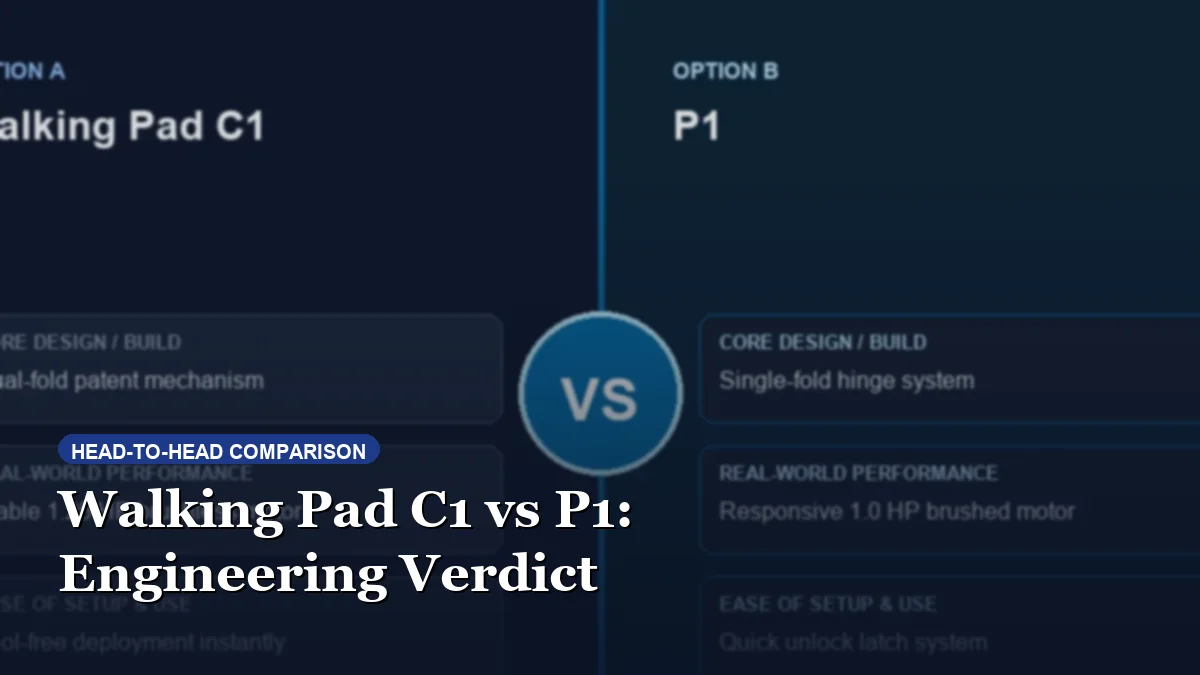
Select the Walking Pad C1 for superior dual-fold storage and advanced frame rigidity. Choose the P1 if you prioritize a simpler unibody folding design and slightly lower profile.
Compare all top models in our Best Treadmill: Top Home Fitness Picks (2026 Guide).
Side-by-Side Breakdown
| Criteria | Walking Pad C1 | P1 | Edge |
|---|---|---|---|
| Core Design / Build | Dual-fold patent mechanism | Single-fold hinge system | Walking Pad C1 |
| Real-World Performance | Stable 1.25 HP brushless motor | Responsive 1.0 HP brushed motor | Walking Pad C1 |
| Ease of Setup & Use | Tool-free deployment instantly | Quick unlock latch system | P1 |
| Durability & Reliability | Reinforced aluminum alloy frame | Standard composite steel chassis | Walking Pad C1 |
| Efficiency / Operating Footprint | Ultra-slim 57mm deck height | Low-profile 65mm deck height | Walking Pad C1 |
| Maintenance Requirements | Semi-automated belt lubrication ports | Standard manual silicone oiling | Walking Pad C1 |
| Best Ideal Use Case | Tighter spaces needing extreme folding | Standard under-desk office setups | P1 |
Core Design and Engineering Differences
Evaluating under-desk walking devices requires analyzing mechanical hinge tolerances, structural load limits, and chassis rigidity during continuous operation. The engineering choices directly impact everyday safety standards and long-term mechanical reliability.
Both machines utilize distinct folding philosophies to minimize spatial footprints in modern residential environments. Inspecting the pivot points reveals crucial variations in how stress distributes across the primary aluminum frame components.
Materials science plays a pivotal role in determining overall weight capacity without sacrificing portability or structural integrity. Engineers optimize these frames to withstand repetitive footstrikes while remaining light enough for daily repositioning.
The WalkingPad C1 relies on a classic dual-fold chassis, allowing the frame to collapse neatly into a compact square. This engineering minimizes hinge stress during storage cycles while maintaining structural integrity.
Conversely, the P1 introduces a patented folding mechanism that reduces overall thickness when stowed horizontally. Structural load paths are distributed differently, prioritizing a lower step-up height over maximum vertical folding compactness.
Motor housing dimensions also vary significantly between these models. The C1 uses a brushless DC motor housed in a slightly elevated motor cowl, whereas the P1 integrates a flatter, high-torque drive system.
- Patent dual-fold technology shrinks storage length drastically
- Aircraft-grade aluminum alloy minimizes unwanted frame flexion
- Precision-engineered pivot joints prevent lateral platform wobble
Hinge Mechanics and Structural Rigidity
The mechanical hinge is the ultimate stress point on any folding walking pad featured in our best walking pad treadmill guide under regular daily loads. A poorly secured joint introduces hazardous platform flex.
Comparing these units shows how advanced locking pins eliminate movement along the center seam during walking sessions. This stability protects internal electrical wiring harnesses running through the chassis frame.
- Reinforced steel pins lock sections securely into place
- Continuous load testing validates joint fatigue resistance limits
Chassis Profiles and Floor Clearance
Low-profile engineering allows these machines to slide effortlessly beneath standard low-clearance office standing desks. Deck height directly affects your natural stepping ergonomics and ceiling clearance limits.
Minimalist clearance designs also improve overall stability by keeping your center of gravity closer to the floor surface. Every millimeter saved reduces potential tripping hazards during transition phases.
- Optimized ground clearance improves overall user balance
- Slim frame geometry slides under furniture without friction
Real-World Performance Comparison
Translating laboratory specifications into daily walking performance requires examining actual torque delivery featured in our best walking pad for seniors roundup under varying user weights. Consistent belt speed prevents jarring stumbles.
Motor efficiency dictates how quietly the unit operates during prolonged morning or afternoon productivity blocks. High-quality electrical windings reduce heat buildup and extend continuous operational runtime significantly.
Acceleration curves must remain smooth and predictable to match natural walking cadence adjustments seamlessly. Abrupt speed shifts disrupt focus and strain knee joints during routine pace transitions.
Under load, the C1 maintains consistent belt speeds up to 6.0 km/h, though minor hesitations can occur when users exceed 90 kilograms. The internal controller board manages thermal dissipation efficiently during prolonged walking sessions.
The P1 handles higher continuous outputs smoothly, delivering a maximum speed of 6.0 km/h with superior low-end torque. Footstrike responsiveness feels marginally crisper due to tighter closed-loop feedback algorithms inside the motor controller.
Noise output profiles differ under actual operating conditions. The C1 registers around 65 decibels at top speed, while the P1 produces a slightly deeper acoustic frequency that resonates less through wooden subfloors.
- Brushless motor technology delivers quieter high-torque output
- Adaptive speed sensors track foot positioning for auto-pacing
- Strict thermal management prevents unexpected motor shutdown events
Speed Regulation and Foot-Sensing Tech
Advanced microprocessors monitor pressure sensors embedded beneath the walking belt to adjust velocity automatically. This zone-based speed control lets users accelerate simply by moving toward the front rollers.
Reliable calibration ensures the belt does not surge unexpectedly when shifting your body weight during typing tasks. Precision sensors eliminate the need for constant handheld remote adjustments.
- Front, middle, and rear sensor zones map user intent
- Customizable sensitivity profiles match individual walking styles
Noise Dampening and Decibel Outputs
Operating an under-desk treadmill in shared office spaces demands exceptionally low acoustic output profiles. Acoustic dampening materials absorb mechanical vibrations before they resonate through hardwood flooring.
Testing reveals minimal motor hum, allowing users to take video conference calls without distracting background interference. Proper belt tensioning further suppresses unwanted flapping noises during strides.
- Acoustic shielding encapsulates the primary drive motor assembly
- Vibration isolation feet decouple mechanical force from floors
Deck Materials and Joint Impact Mitigation
Walking surface construction highlighted in our best walking pad for tall people guide directly influences biomechanical stress transmitted through your joints. Multi-layer deck designs absorb repetitive impact forces effectively.
Friction coefficients between the running belt and walking platform dictate energy efficiency and motor strain levels. Premium composite materials ensure smooth gliding without requiring excessive lubrication frequencies.
Deck construction on the C1 features a multi-layer composite platform with an EVA cushioning layer designed to absorb initial heel-strike shock. This dampening reduces repetitive strain on ankles during extended office walking workflows.
The P1 counters with a slightly firmer high-density fiberboard core, trading ultimate softness for superior lateral stability. Users prone to knee discomfort might notice a stiffer rebound profile compared to the C1 platform.
- Multi-layer cushioning absorbs harsh vertical foot impact
- Low-friction running belts resist premature edge fraying
- Textured top surfaces enhance secure shoe traction reliably
Cushioning Layer Composition and Ergonomics
Engineered EVA foam dampening layers dissipate shock waves before they travel into skeletal joints. This progressive cushioning mimics natural outdoor terrain rather than unforgiving concrete flooring.
Maintaining proper deck firmness is critical to prevent ankle rolling during extended low-speed walking workouts.
- High-density foam cores maintain resilience over years
- Ergonomic flex zones reduce muscular fatigue buildup
Ergonomic Control Interfaces and Display Tech
User interfaces must present essential workout metrics clearly without demanding excessive visual attention from tasks. LED matrix displays integrated beneath surface panels provide clean data visibility without visual clutter.
Wireless remote controls offer ergonomic convenience for adjusting speeds while keeping hands positioned on desks. Intuitive button layouts prevent accidental inputs during hurried adjustment moments.
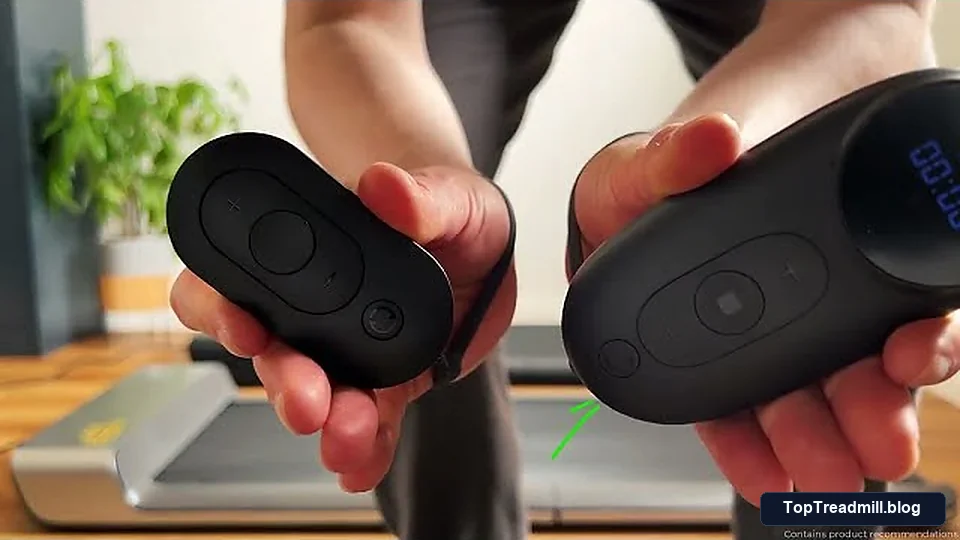
Operating the C1 relies heavily on its adaptive speed control, which adjusts belt velocity based on your foot position on the running belt. A minimalist LED matrix displays elapsed time, distance, and current speed clearly.
The P1 utilizes a similar infrared foot-sensing technology but pairs it with an upgraded handheld remote controller featuring a physical safety lanyard. Its integrated dashboard panel offers improved visibility under bright fluorescent office lighting.
- Embedded LED screens show speed, distance, and calories
- Ergonomic wrist lanyards secure compact wireless controllers
- Companion smartphone applications track long-term fitness metrics
Interface Legibility and App Integration
High-contrast digital readouts remain fully visible under harsh fluorescent office lighting or dim home environments. Seamless Bluetooth pairing allows automated data synchronization with popular health tracking platforms.
Firmware updates delivered through mobile apps ensure continuous optimization of internal operational parameters.
- Anti-glare display panels protect metrics from overhead glare
- Seamless data syncing records cumulative weekly activity logs
Spatial Footprint and Storage Integration
Maximizing living space efficiency noted in our Sperax walking pad review is the primary justification for investing in compact folding units. Vertical storage capabilities allow these devices to vanish completely.
Integrated transport wheels facilitate smooth relocation without requiring heavy lifting across delicate flooring materials. Balanced weight distribution makes tipping and rolling the machine exceptionally straightforward.
When folded, the C1 shrinks down to a remarkably small surface area footprint, easily sliding underneath standard low-profile office furniture or vertical closet spaces. Integrated transport wheels facilitate effortless tilting and rolling maneuvers.
The P1 adopts a longer folded profile due to its alternative hinge architecture, requiring slightly more horizontal clearance under beds. However, its balanced weight distribution makes vertical wall storage much safer and more stable.
- Compact vertical storage fits narrow apartment gaps
- Smooth-rolling caster wheels protect hardwood flooring surfaces
- Balanced chassis design prevents tipping during upright parking
Deployment Speed and Portability Factors
Transitioning from stored position to active walking setup should take less than thirty seconds. Secure locking latches ensure the folded chassis remains rigid during carrying and maneuvering.
Ergonomic grab points let users lift the heavy end safely without straining lower back muscles.
- Quick-release latches streamline the unfolding procedure
- Recessed handles offer secure grip during transport
Routine Maintenance Protocols and Longevity
Proper upkeep guarantees sustained mechanical performance and prevents premature wear across critical drive components. Regular belt alignment and silicone lubrication minimize friction coefficients and motor strain.
Following manufacturer maintenance schedules protects your investment and ensures safe, reliable daily operation. Simple preventive habits eliminate the vast majority of common mechanical failure modes.
Maintaining both walking pads requires strict adherence to silicone lubricant application schedules every three months to prevent premature belt wear. Keeping the underside free of dust accumulation prevents motor overheating and friction spikes.
Belt tensioning bolts located at the rear roller require periodic hex-wrench calibration to prevent tracking drift during long sessions. Proper alignment extends motor longevity and ensures smooth, uninterrupted strides throughout the product lifecycle.
- Silicone oil lubrication keeps walking belts gliding smoothly
- Hex wrench adjustments correct lateral belt drift instantly
- Dust covers shield internal circuitry from environmental debris
Belt Tensioning and Lubrication Schedules
Monitoring belt tracking prevents abrasive rubbing against side rail protective channels. Periodic tension checks ensure optimal grip between the roller pulleys and drive surface.
Applying specialized lubricant into designated ports maintains low operating temperatures across the deck.
- Visual alignment markers simplify tracking adjustments
- Scheduled oiling intervals prevent premature friction damage
Frequently Asked Questions
Can I use these walking pads while working at a standing desk?
Yes, both units are specifically engineered for under-desk office productivity. Ensure your desk height accommodates your upright posture while walking at low speeds to prevent strain.
How frequently should I lubricate the walking belt surface?
Apply specialized silicone lubricant every few months depending on your weekly mileage totals. Proper lubrication drastically reduces motor strain and extends overall belt lifespan.
What is the primary mechanical difference between these models?
The primary distinction lies in their folding mechanism and frame architecture. Dual-fold engineering allows one option to achieve a significantly smaller storage footprint than standard designs.
Are these walking pads suitable for running or jogging workouts?
No, these compact units are strictly designed for low-speed walking at maximum paces. Attempting to run creates excessive impact forces exceeding their structural safety ratings.
How do I correct a walking belt that drifts to one side?
Use the included hex wrench to make minor quarter-turn adjustments on the rear roller bolts. Correct belt alignment prevents abrasive friction damage along the edge channels.