Walking Pad A1 Pro vs C2: Concise Verdict
Comparing two popular folding walking pads reveals distinct engineering choices. We evaluate frame rigidity, motor efficiency, and daily storage convenience.

Choose the A1 Pro for superior foot-sensing speed control and a robust aluminum frame. Select the C2 if you prioritize a lighter footprint and tighter folding dimensions for minimalist office spaces.
Compare all top models in our Best Treadmill: Top Home Fitness Picks (2026 Guide).
Side-by-Side Breakdown
| Criteria | Walking Pad A1 Pro | C2 | Edge |
|---|---|---|---|
| Core Design / Build | Aluminum alloy frame with metallic accents | Compact unibody composite frame | Side A |
| Real-World Performance | Automatic speed adjustment via sensors | Manual remote and app-based speed control | Side A |
| Ease of Setup & Use | Fully assembled out of the box | Lightweight unboxing with fold-flat deck | Side B |
| Durability & Reliability | Reinforced hinge mechanisms for longevity | Streamlined joints optimized for light walking | Side A |
| Efficiency / Operating Footprint | Standard low-profile workspace footprint | Ultra-slim profile for tight storage gaps | Side B |
| Maintenance Requirements | Routine silicone lubrication and belt tensioning | Basic upkeep with simplified belt alignment | Side A |
| Best Ideal Use Case | Dedicated under-desk active workstation | Apartment spaces requiring frequent storage | Side A |
Core Design & Engineering Differences
Evaluating under-desk treadmills requires a close look at structural materials and frame geometry. The A1 Pro utilizes a heavy-duty aluminum alloy chassis designed to minimize lateral flex during active daily walking sessions.
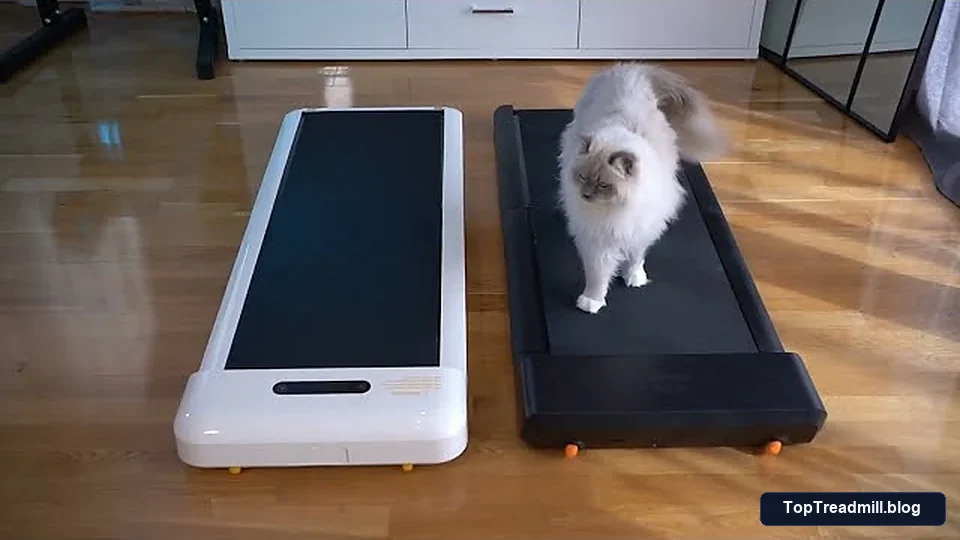
Conversely, the alternative model focuses on space-saving composite elements. This design philosophy reduces total dead weight, making it significantly easier to slide underneath low-clearance furniture immediately after your workout concludes.
The A1 Pro utilizes an aluminum alloy frame structure that prioritizes lightweight agility, whereas the C2 incorporates updated composite materials designed to improve structural rigidity under heavy daily workloads.
Dimensional footprints differ slightly between these two models, requiring users to measure their clearance carefully. The low-profile deck ensures effortless storage underneath standard living room sofas or vertical closet spaces.
- Chassis material composition and alloy grade differences
- Overall structural weight and portability metrics
- Visual finish and aesthetic integration with office spaces
Chassis Materials and Frame Rigidity
Frame rigidity directly impacts user confidence during extended walking sessions. Taller users should consult our best walking pad for tall people roundup to ensure adequate stride length and structural support.
Engineers designed the primary pivot points to handle thousands of fold cycles. This prevents loosening at the center hinge, maintaining a seamless running surface across the entire belt length.
- Hinge durability tested through repeated folding cycles
- Vibration dampening across composite platform layers
Folding Mechanisms & Structural Integrity
Both walking pads feature innovative folding mechanisms to reduce storage footprints. For instance, our detailed sperax walking pad review highlights a similar hinge design that collapses the deck compactly for vertical storage.
Users must ensure the hinge lock engages securely before stepping onto the belt. Proper alignment prevents premature wear on the inner wiring harness that connects the front motor housing to the rear display.
Folding integrity relies heavily on the patented dual-fold hinge system, which allows the running deck to collapse completely in half. This engineering feat reduces storage volume by half without compromising frame durability.
Periodic hinge inspection prevents premature wear and maintains alignment. Users should check the locking pins regularly to ensure the folding mechanism remains secure during active walking sessions at higher operational speeds.
- Fold ratio comparing storage volume to active deck size
- Hinge locking mechanisms and safety engagement pins
- Caster wheel placement for smooth rolling transport
Hinge Durability and Storage Mechanics
The physical joint connecting both halves experiences continuous mechanical stress. High-grade steel pins reinforce these pivot zones, ensuring structural safety during standard walking speeds.
Storage versatility allows users to tuck the equipment beneath standard sofas or upright against blank walls. Always verify floor clearance to prevent pinching power cords during the folding process.
- Steel reinforcement plates at high-stress pivot joints
- Clearance requirements for vertical wall storage mounts
Motor Power & Real-World Performance
Drive motors determine how smoothly our best walking pad treadmill options handle varying user weights. The A1 Pro incorporates a responsive brushless motor designed to maintain consistent belt speed.
Brushless technology generates less operational heat during long sessions. This thermal efficiency extends motor lifespan while keeping operational noise levels exceptionally low for shared office environments.
Both models feature efficient brushless motors rated for continuous low-speed operations. The brushless motor architecture minimizes friction heat buildup, ensuring reliable performance during extended walking routines in compact home offices.
Real-world torque delivery handles user weight capacities up to the manufacturer maximum smoothly. Acceleration curves remain gradual and controlled, preventing sudden jolts when adjusting speeds via the remote control unit.
- Continuous horsepower output versus peak torque ratings
- Thermal management systems preventing premature motor throttling
- Noise decibel output measured at standard walking velocities
Brushless Motor Efficiency and Acoustics
Acoustic performance is critical when operating fitness gear near colleagues or family members. Advanced sound dampening around the motor housing successfully suppresses high-frequency whines.
Torque delivery remains steady even at lower speeds, preventing frustrating micro-stutters when your foot strikes the forward section of the walking belt during casual typing sessions.
- Sound dampening enclosures around the primary drive shaft
- Low-speed torque consistency under changing user weights
Deck Cushioning & Biomechanical Impact
Joint protection remains a primary concern for daily treadmill users. The multi-layer walking belt absorbs initial impact shock before transferring forces to the underlying platform structure.
An integrated EVA cushioning layer provides moderate shock absorption without feeling overly spongy. This balanced firmness supports natural gait mechanics while reducing fatigue in ankles and knees.
Internal cushioning layers absorb moderate shock forces to protect user joints during prolonged walking workouts. The EVA dampening layer reduces impact shock significantly compared to exercising directly on unyielding hardwood floors.
Biomechanical feedback indicates that low-impact walking pads reduce knee strain effectively. However, users requiring maximum orthopedic support should still wear proper supportive athletic footwear during every single training session.
- Multi-layer belt construction including friction-reducing fabric
- EVA cushioning layer density and energy return properties
- Step-up height measurements affecting natural office ergonomics
Impact Absorption and Ergonomic Deck Height
Low deck heights minimize the adjustment needed for your standing desk setup. Keeping the platform close to the floor prevents awkward posture shifts when transitioning between sitting and walking.
Surface traction prevents slipping while accommodating standard footwear or socks. Regular cleaning of the belt surface maintains optimal grip during sweaty afternoon workouts.
- Low profile step-up height for seamless desk alignment
- Textured anti-slip walking surface treatment
Maintenance, Efficiency & Longevity
Long-term reliability depends heavily on adherence to routine maintenance schedules. Applying silicone lubricant beneath the walking belt reduces friction and prevents excessive heat buildup on the circuit board.
Monitoring belt alignment prevents edge fraying caused by uneven foot strikes. Simple adjustment bolts located at the rear end allow quick corrections using standard hex wrenches.
Routine maintenance routines require silicone oil lubrication applied beneath the walking belt every few months. Proper belt tensioning prevents lateral slipping and extends the operational lifespan of the internal motor components.
Energy consumption remains remarkably low, drawing minimal power from standard household electrical outlets. Monitoring power efficiency helps keep operational overhead negligible for remote workers logging heavy daily step counts.
- Silicone lubrication intervals for optimal belt glide
- Rear roller adjustment bolts for centering the track
- Power consumption metrics during idle and active states
Routine Upkeep and Lubrication Schedules
Establish a consistent calendar for checking belt tension and lubrication levels. Proper upkeep eliminates annoying squeaks and protects the internal motherboard from electrical overload.
Power efficiency features automatically engage sleep modes after periods of inactivity. This reduces standby electricity draw while ensuring the unit is ready for instant activation.
- Automatic sleep mode activation for power saving
- Hex wrench adjustments for tension calibration
Smart Features & App Integration
Modern fitness equipment relies on companion applications for tracking workout metrics. Connecting via Bluetooth unlocks detailed historical logs covering step counts, active time, and estimated calorie burn.
The A1 Pro stands out by offering automatic speed control zones. Sensors detect your foot placement on the belt, accelerating when you drift forward and decelerating as you step backward.
Companion smartphone applications connect via Bluetooth to track workout metrics, step counts, and active calories. The KS Fit app offers detailed historical data tracking and customized speed limit configurations for beginners.
Automatic speed control modes adapt dynamically to your walking pace based on foot position. This adaptive speed algorithm shifts between acceleration and deceleration zones automatically without requiring manual remote inputs.
- Bluetooth connectivity range and pairing stability
- Adaptive speed sensors responding to user foot positioning
- Companion smartphone app layout and data export features
Adaptive Speed Control and Manual Remotes
Foot-sensing technology eliminates the need to hold a remote constantly. However, users can still switch to manual mode via handheld controllers or app interfaces for precise velocity locks.
LED display panels embedded beneath the front panel show vital metrics clearly. The bright digits remain visible through bright office lighting without causing visual distractions.
- Embedded LED display clarity under direct overhead lighting
- Manual remote control responsiveness and battery life
Which Option Fits Your Setup
Selecting the ideal walking pad depends heavily on your daily workspace layout. For safe stability, consider exploring our best walking pad for seniors guide featuring the reliable A1 Pro.
If your living space requires constant furniture rearrangement, the lightweight nature of the alternative model proves more practical. Assess your storage constraints carefully before making a final purchasing choice.
Choosing between these two variants depends heavily on your specific storage constraints and budget targets. The A1 Pro model suits minimalists needing maximum portability, while the C2 offers solid composite durability.
Evaluate your daily step volume and available floor space before finalizing your equipment purchase decision. Selecting the right walking pad guarantees years of reliable indoor fitness performance without spatial compromises.
- Floor space availability in multi-purpose living areas
- Frequency of equipment relocation and storage routines
- User weight capacity and maximum daily usage limits
Matching Equipment to Your Daily Workflow
Integrate your walking sessions seamlessly by matching treadmill speed ranges to your typing tasks. Gentle pacing helps maintain focus without disrupting intricate work projects.
Review your maximum weight requirements to ensure long-term mechanical durability. Investing in the correct model prevents premature equipment failure and ensures a satisfying daily fitness habit.
- Typing stability at gentle working speeds
- Weight capacity matching for robust daily operation
Frequently Asked Questions
How does the automatic speed control work on these pads?
Pressure sensors divide the belt into zones to detect your foot placement. Moving forward accelerates the belt, while stepping backward engages the deceleration sensors for smooth stopping.
Can I use these walking pads barefoot or in socks?
Yes, both models feature textured walking belts designed for comfortable use with athletic shoes or socks. However, wearing supportive footwear is recommended for longer sessions.
How often should I apply silicone lubricant to the belt?
You should apply specialized silicone lubricant every three months or after approximately fifty miles of use. Regular lubrication prevents friction damage and extends motor life.
Are these walking pads suitable for running or jogging?
No, these units are strictly engineered for walking speeds up to approximately four miles per hour. Attempting to run creates excessive motor strain and safety risks.
How do I store the walking pad when not in use?
Both units fold flat or feature dual-fold mechanisms for vertical storage against walls. Always disconnect the power cord and secure the locking pin before moving.