Treadmill Deck vs Running Track Impact: Impact Analysis
Understanding impact forces helps runners protect joints. This technical comparison weighs mechanical treadmill decks against outdoor polyurethane running tracks.


Choose a treadmill deck for controlled, adjustable cushioning during winter conditioning. Select a running track for authentic outdoor biomechanics and lower surface stiffness.
Compare all top models in our Best Treadmill: Top Home Fitness Picks (2026 Guide).
Side-by-Side Breakdown
| Criteria | Treadmill Deck | Running Track Impact | Edge |
|---|---|---|---|
| Core Design / Build | Composite wood layers with elastomer dampers | Engineered polyurethane over concrete | Treadmill Deck |
| Real-World Performance | Precise electronic speed and incline control | Manual pacing with authentic resistance | Running Track |
| Ease of Setup & Use | Plug-and-play indoor motorized operation | Requires traveling to an outdoor facility | Treadmill Deck |
| Durability & Reliability | Requires frequent belt and deck lubrication | Weather-resistant municipal construction | Running Track |
| Efficiency / Operating Footprint | Occupies dedicated indoor floor space | Zero indoor footprint required | Running Track |
| Maintenance Requirements | High upkeep for motors and friction reduction | Minimal routine maintenance needed | Running Track |
| Best Ideal Use Case | Joint protection and controlled interval training | Outdoor race simulation and speed work | Tie |
Core Design and Engineering Differences
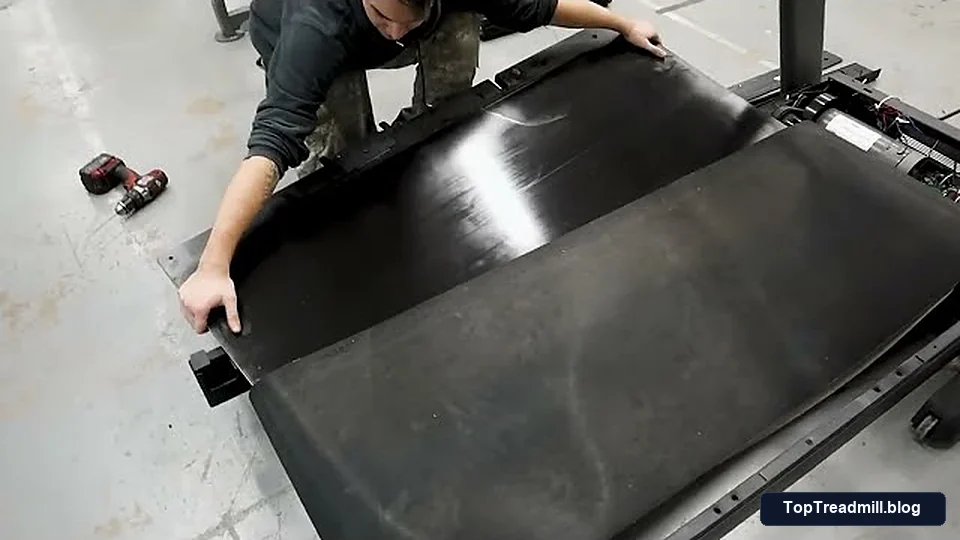
Modern treadmill decks utilize composite wood layers mounted on elastomer cushioning systems to absorb shock. These components work together to dissipate repetitive footstrike energy before it reaches your skeletal system.
Unlike models featured in our best budget treadmill for running guide, outdoor running tracks employ multi-layer polyurethane poured over asphalt bases, yielding uniform energy return without mechanical flex.
Modern motorized treadmills rely on multi-ply belts stretched over a low-friction deck, while outdoor tracks feature engineered vulcanized rubber surfaces designed for consistent structural integrity and all-weather traction.
Indoor units integrate complex frame architectures with elastomer cushions beneath the running board, whereas outdoor tracks utilize a poured polyurethane layer bonded directly to asphalt or concrete substrates.
- Treadmill decks feature variable elastomer suspension.
- Running tracks use seamless polyurethane surfaces.
- Indoor motors drive continuous belt motion.
- Outdoor tracks rely entirely on runner propulsion.
Mechanical Composition of Decks
Deck manufacturers typically use high-density phenolic resin coatings atop medium-density fiberboard. This ensures low friction and high durability under heavy footstrike loads during daily running routines.
- Phenolic resin reduces surface friction.
- Fiberboard provides structural rigidity.
Shock Absorption Mechanics
Any quality best folding treadmill for running unit incorporates sophisticated shock absorbers designed to mimic natural terrain while reducing peak impact forces, effectively lowering physical stress on your joints.
Running tracks provide passive shock attenuation through dense rubberized layers bonded to rigid subfloors. The surface compresses minimally, returning stored kinetic energy directly back to the runner during toe-off.
Treadmill decks use mechanical suspension systems to dissipate vertical ground reaction forces, actively reducing peak impact stress transmitted through your ankles, knees, and lower lumbar regions.
Synthetic running tracks provide uniform energy return via cellular foam layers, storing kinetic energy upon foot strike and releasing it smoothly during the toe-off propulsion phase.
- Decks actively deflect under body weight.
- Tracks offer stiff, consistent energy return.
- Elastomers mitigate high knee stress.
Surface Deflection Physics
Engineers measure surface deflection to quantify how much a running platform yields beneath an athlete. Decks offer higher compliance, whereas tracks maintain a firm feel for maximal speed.
- Compliance reduces peak tibial shock.
- Stiffness enhances anaerobic speed output.
Biomechanical Stress Profiles
Runners experience distinct joint loading patterns depending on whether they train indoors or outdoors. Treadmill cushioning alters your natural stride frequency and contact times due to the moving belt.
Outdoor tracks preserve natural biomechanics by offering unyielding stability. Your muscles must absorb more initial impact force, which builds superior connective tissue strength over months of consistent training.
Running on a motorized belt forces a slightly altered gait cycle because the surface moves underneath your feet, changing hamstring activation patterns compared to standard overground locomotion.
Outdoor track configurations demand higher propulsive effort from your calves and Achilles tendons, generating unique shear stress forces that require robust muscular conditioning over time.
- Moving belts encourage shorter stride lengths.
- Tracks demand full muscular force absorption.
- Joint loading varies by surface stiffness.
Ankle and Calf Loading
Rigid outdoor tracks place higher eccentric loads on your calves and Achilles tendons. Treadmill decks reduce this immediate strain through localized dampening elements placed beneath your feet.
- Achilles strain increases on firm tracks.
- Cushioned decks lessen calf fatigue.
Real-World Performance Comparison
Evaluating performance requires analyzing how velocity and incline affect your running mechanics. Treadmills maintain precise paces, whereas tracks demand strict manual pacing and mental focus during speed workouts.
Weather independence gives indoor decks a massive consistency advantage for marathon preparation. Conversely, outdoor tracks expose runners to wind resistance and temperature variations that mimic race-day environments much better.
Mechanical friction and motor calibration dictate treadmill speed accuracy, whereas outdoor tracks offer certified exact distances that eliminate calibration discrepancies common in indoor electronics.
Environmental variables like wind resistance and temperature fluctuations alter outdoor pacing dynamics, whereas indoor setups provide a controlled ambient climate for precise interval workouts.
- Treadmills guarantee exact split times.
- Tracks build natural pacing intuition.
- Weather factors alter outdoor exertion.
Pacing Accuracy and Control
Digital motor controllers force you to maintain a strict velocity profile throughout your interval session. Outdoor running relies entirely on your internal clock and GPS watch feedback.
- Motors eliminate pacing drift entirely.
- GPS watches track outdoor splits.
Maintenance, Efficiency and Longevity
Mechanical treadmill components demand routine belt lubrication and deck waxing to prevent excessive friction. Neglecting these maintenance tasks ruins the motor and warps the composite board.
Running tracks require virtually zero daily maintenance from individual athletes. Municipalities occasionally resurface these polyurethane ovals after several years of heavy weather exposure and athletic club usage.
Treadmill decks require periodic lubrication with silicone-based fluids to minimize friction, protect the drive motor, and prevent premature wear on the running belt material.
Outdoor tracks demand minimal routine upkeep beyond power washing and inspecting for drainage blockages, though extreme weather can cause surface cracking over extended decades.
- Decks require regular silicone lubrication.
- Tracks need zero individual upkeep.
- Motors experience long-term mechanical wear.
Upkeep Demands
Preventative maintenance keeps indoor exercise equipment running smoothly for many years. Neglected friction strips will quickly overheat the motor controller and destroy the main drive belt.
- Inspect drive belts every six months.
- Clean dust beneath the running platform.
Training Specificity and Weather Adaptability
Controlled gym environments protect you from severe storms, ice, and excessive summer heat waves. You can dial in exact inclines to simulate hilly road courses without leaving your air-conditioned room.
Outdoor track sessions prepare your body for the physical realities of road racing. Cornering on a curved oval also trains asymmetrical ankle stability that straight treadmills simply cannot replicate.
Indoor equipment guarantees uninterrupted training sessions regardless of severe rain, snow, or excessive heat, helping maintain strict marathon preparation schedules without suffering meteorological training delays.
Outdoor tracks prepare competitive runners for actual race-day conditions by incorporating natural wind resistance and varying tactical cornering angles across standard athletic oval turns.
- Gyms offer climate-controlled training.
- Tracks build cornering and ankle stability.
- Incline controls simulate outdoor hills.
Environmental Control Factors
Controlling ambient temperature and humidity prevents heat exhaustion during high-intensity threshold runs. Outdoor athletes must adapt their training schedules around unpredictable weather patterns and daylight hours.
- Air conditioning lowers heart rate stress.
- Daylight dictates outdoor session timing.
Which Option Fits Your Setup
Home fitness enthusiasts with limited space and joint sensitivity should prioritize high-end treadmills. Their adjustable cushioning systems safeguard vulnerable knees against chronic overuse injuries during intense winter blocks.
Athletes reviewing the best treadmill for long distance running models also benefit greatly from dedicated running track sessions, gaining precise distance measurements and authentic terrain feedback for peak race-day readiness.
Selecting the ideal training environment depends directly on your orthopedic health history, available local facilities, and specific race distance goals that dictate your weekly mileage structure.
Combining both training modalities offers a highly balanced approach, leveraging treadmill cushioning for high-volume recovery runs and utilizing tracks for speed development sessions.
- Joint-sensitive runners prefer cushioned decks.
- Racers benefit from outdoor track ovals.
- Space limitations favor folding machines.
Making Your Final Decision
Weigh your primary fitness goals against your local climate and personal injury history before purchasing. Blending both training modalities often yields the most balanced athletic development.
- Assess local weather conditions first.
- Consider personal orthopedic health needs.
Frequently Asked Questions
Are treadmill decks softer on joints than outdoor tracks?
Yes, high-end treadmill decks utilize advanced elastomer cushioning systems that actively absorb and dissipate repetitive footstrike shock, whereas outdoor running tracks rely on relatively unyielding polyurethane surfaces.
This means your musculoskeletal system must absorb significantly higher initial impact forces during every single high-speed running stride you take outdoors.
Do running tracks provide better energy return than treadmills?
Yes, outdoor tracks feature dense polyurethane layers engineered to return kinetic energy directly to the runner without mechanical dampening. Treadmill decks absorb more energy to protect joints, which slightly reduces the explosive bounce you feel during outdoor sprints.
How often do treadmill decks require maintenance?
Treadmill decks require regular lubrication every few months to prevent friction buildup and premature wear on the drive motor. Outdoor running tracks need zero personal maintenance since municipal crews handle all major resurfacing projects.
Can running on a treadmill prevent shin splints?
Yes, the shock-absorbing properties of a cushioned treadmill deck significantly reduce repetitive tibial impact forces compared to running on hard outdoor tracks. This makes treadmills an excellent tool for runners recovering from lower leg injuries.
Why do competitive runners still use outdoor tracks?
Outdoor tracks provide authentic biomechanical feedback and unyielding surfaces that prepare connective tissues for race-day conditions. They also offer exact distance measurements for track intervals that motorized belts cannot fully replicate.