Technogym Myrun vs Peloton Tread: Direct Comparison
Two elite cardio machines offer starkly different engineering philosophies. Buyers must weigh minimalist European biomechanics against immersive instructor-led studio ecosystems.

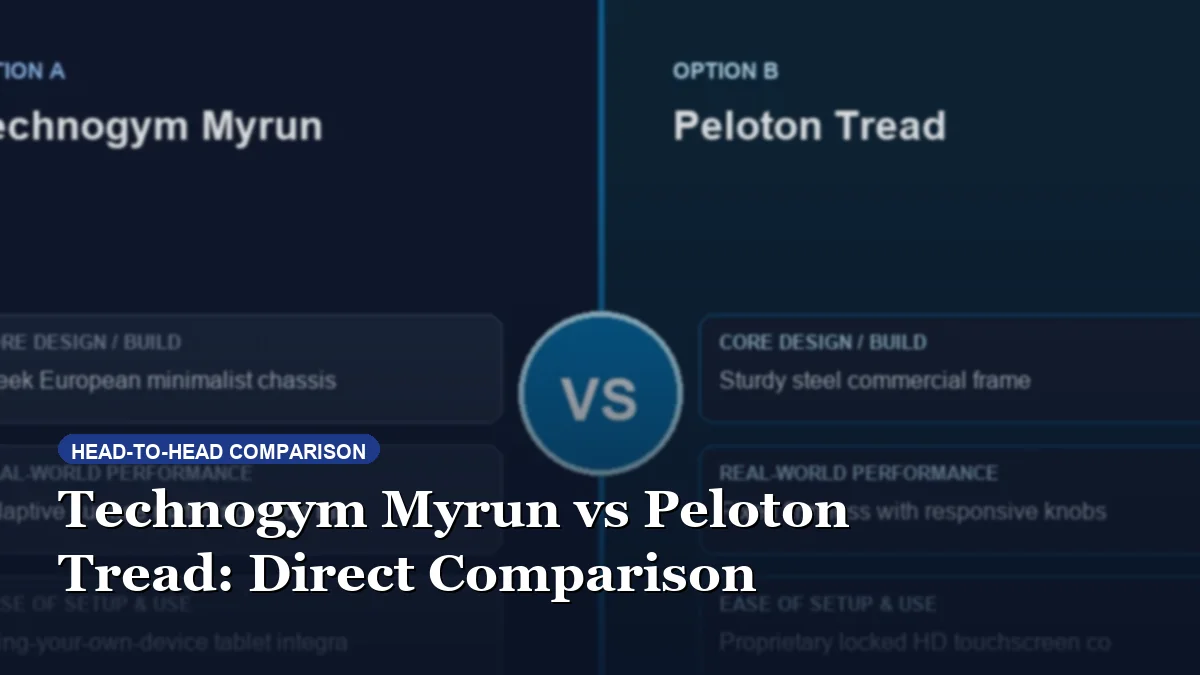
Choose the Technogym Myrun for whisper-quiet mechanical refinement and adaptive cushioning. Select the Peloton Tread if you want immersive instructor-led classes and integrated touchscreen entertainment.
Compare all top models in our Best Treadmill: Top Home Fitness Picks (2026 Guide).
Side-by-Side Breakdown
| Criteria | Technogym Myrun | Peloton Tread | Edge |
|---|---|---|---|
| Core Design / Build | Sleek European minimalist chassis | Sturdy steel commercial frame | Peloton Tread |
| Real-World Performance | Adaptive surface matching stride rate | Fixed firmness with responsive knobs | Technogym Myrun |
| Ease of Setup & Use | Bring-your-own-device tablet integration | Proprietary locked HD touchscreen console | Technogym Myrun |
| Durability & Reliability | Commercial-grade bearings and belt | Heavy-duty commercial deck construction | Peloton Tread |
| Efficiency / Operating Footprint | Compact footprint with low draw | Larger structural footprint and console | Technogym Myrun |
| Maintenance Requirements | Standard belt lubrication schedule | Regular slat or belt tension checks | Technogym Myrun |
| Best Ideal Use Case | Data-driven runners using custom apps | Class-driven enthusiasts wanting community | Peloton Tread |
Architectural Design and Structural Engineering
When evaluating high-end home cardio hardware, engineers focus on frame integrity, continuous horsepower ratings, and interface flexibility to ensure long-term reliability under intense daily training regimens across diverse user profiles.
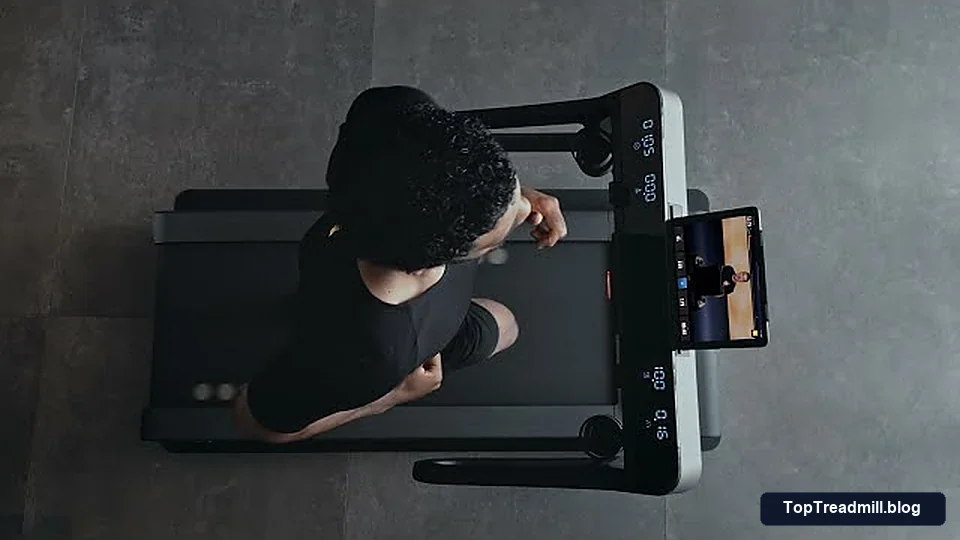
The Technogym Myrun utilizes a streamlined, minimalist Italian aesthetic that prioritizes floor space efficiency while maintaining robust structural rigidity during high-speed interval training sessions and steep incline climbs.
The Technogym MyRun utilizes a minimalist steel frame architecture designed for residential spaces. Its structural rigidity supports a maximum user weight of 220 pounds while maintaining a remarkably compact mechanical footprint.
Conversely, our Peloton Tread Plus review details how the machine employs a heavy-duty welded steel chassis weighing nearly 290 pounds to absorb high-impact strides and ensure absolute stability.
- Minimalist chassis reduces visual clutter in modern home fitness spaces.
- Advanced steel reinforcement prevents frame flex at top speeds.
- Open console design accommodates various tablet sizes seamlessly.
Chassis Rigidity and Materials
Heavy-gauge steel weldments form the backbone of both machines, yet their architectural execution differs significantly to accommodate distinct user expectations regarding spatial footprint and aesthetic integration.
Technogym keeps structural bulk low without sacrificing stability, whereas the competitor leans into a traditional heavy commercial build that demands dedicated real estate within your home environment.
- Powder-coated finishes resist sweat corrosion and everyday scuffing.
- Optimized weight distribution prevents rocking during intense sprinting.
Motor Dynamics and Belt Performance
Motor efficiency dictates how smoothly a running belt transitions under sudden speed adjustments, heavy footstrikes, and steep incline modifications during demanding interval training programs.
The Technogym Myrun features a responsive motor that adjusts rapidly to changing pace demands, minimizing lag and maintaining fluid belt velocity across all operational speed thresholds.
Driving the Technogym MyRun is a continuous 2.8 horsepower motor capable of delivering responsive speed adjustments. The multi-layer running belt minimizes friction, pairing seamlessly with precision rollers for smooth mechanical rotation.
As highlighted in our New Peloton Tread review, the machine features a robust 3.0 horsepower continuous duty motor designed to manage rapid pace fluctuations and sustained loads.
- High torque output delivers seamless belt movement at low walking speeds.
- Advanced cooling systems prevent thermal overload during extended endurance runs.
- Precision roller alignment minimizes lateral belt drift over time.
Continuous Horsepower and Torque
Continuous horsepower ratings establish a treadmill's ability to sustain heavy loads without overheating its internal armature or slipping under aggressive heel strikes from larger runners.
Both platforms deliver ample raw power, but their internal speed controllers interpret user input through distinct software tuning algorithms that alter the tactile feel of acceleration.
- Low electrical harmonic distortion ensures quiet motor operation.
- Optimized flywheel weight balances momentum and emergency stopping safety.
Display Interfaces and Software Ecosystems
User interface philosophy represents the widest chasm between these two premium running machines, forcing buyers to choose between open platform versatility and closed ecosystem immersion.
The Peloton Tread locks users into a proprietary high-definition touchscreen console designed exclusively for streaming instructor-led classes, virtual scenic routes, and community leaderboard challenges.
Technogym relies on an external tablet integration model, utilizing your personal device via Bluetooth. The proprietary MyRun application communicates directly with the console to adjust incline and belt velocity instantly.
Peloton integrates a massive 23.8-inch HD touchscreen running a closed Android-based operating system. This immersive display streams live instructor-led classes while continuously tracking precise cadence, power output, and resistance metrics.
- Integrated HD touchscreens deliver crisp graphics and immersive audio.
- Proprietary software subscriptions are required for full feature access.
- Bring-your-own-device setups let you run third-party apps freely.
Connected Fitness vs Open Integration
Opting for a closed software ecosystem guarantees seamless streaming quality and frequent content updates, but it restricts your freedom to utilize alternative training applications without extra hardware.
Conversely, utilizing a tablet-reliant console empowers you to run any training software, watch media streams, or track metrics across multiple independent fitness tracking platforms seamlessly.
- Bluetooth connectivity pairs effortlessly with external heart rate monitors.
- Automatic firmware updates introduce new training metrics over time.
Biomechanics and Deck Cushioning Profiles
Deck cushioning absorbs impact shock to protect runner joints, while surface firmness directly influences energy return and running economy during long-distance endurance training blocks.
In our comprehensive Technogym Myrun review, we note how the adaptive surface automatically adjusts its firmness based on your current running speed for optimal shock absorption.
Adaptive surface technology defines the Technogym deck elasticity, which dynamically adjusts firmness based on your running speed. Softer cushioning absorbs impact at lower velocities, while stiffer profiles enhance propulsion during sprints.
Peloton opts for a traditional fixed slat-belt architecture or a shock-absorbing deck design depending on the exact generation. This provides a consistent road-like feel that rewards proper biomechanical form without excessive bounce.
- Adaptive elastomer decks reduce impact forces on sensitive knee joints.
- Consistent deck firmness mimics outdoor road running mechanics closely.
- Low step-up heights ensure safe mounting and dismounting procedures.
Joint Protection and Energy Return
Runners recovering from lower-body injuries require higher impact dampening, whereas competitive marathoners often prefer a firmer deck to maximize propulsive force transfer with every stride.
Engineers carefully balance elastomer density to prevent the excessive bounce that compromises running form and causes premature calf fatigue during extended training sessions.
- Uniform shock absorption across the entire running surface area.
- Durable deck laminates withstand millions of cumulative footstrikes.
Maintenance Protocols and Longevity Factors
Protecting your equipment investment requires understanding routine upkeep demands, including belt lubrication intervals, deck flipping schedules, and electronic component cooling maintenance procedures.
The Technogym Myrun simplifies upkeep through accessible lubrication points and clear digital diagnostic prompts that alert users when routine mechanical servicing becomes necessary.
Routine maintenance for the MyRun involves occasional belt lubrication using silicone-based fluids to prevent thermal degradation. Keeping the motor compartment free of dust ensures prolonged electronic component lifespan and stable operations.
The Peloton Tread requires regular tension calibration checks to prevent premature tracking drift on the running surface. Vacuuming beneath the heavy-duty hood assembly monthly prevents particulate accumulation on the motor brushes.
- Silicone lubrication schedules prevent premature belt and deck wear.
- Dust-resistant motor housings protect internal electrical components effectively.
- Easy-access leveling feet compensate for uneven residential flooring.
Wear Components and Servicing
Drive belts, running belts, and incline motors represent the primary wear components that eventually require replacement after years of heavy residential or light commercial usage.
Proactive cleaning routines, such as vacuuming motor dust and wiping down side rails, dramatically extend the operational lifespan of both drive systems and electronic consoles.
- Replaceable drive belts maintain optimal power transmission efficiency.
- Sealed ball bearings eliminate the need for manual greasing.
Operational Footprint and Spatial Requirements
Allocating dedicated real estate for home fitness equipment involves analyzing overall machine dimensions, ceiling height clearances, and electrical power outlet accessibility within your chosen room.
The Technogym Myrun boasts a compact footprint that easily integrates into multi-purpose rooms without dominating the surrounding living space or obstructing interior pathways.
Measuring roughly 69 inches in length, the Technogym spatial footprint fits easily into multi-purpose home gym layouts. Its lightweight build allows for straightforward repositioning when floor space is required for other activities.
The Peloton Tread demands a dedicated permanent installation area due to its immense structural weight. Adequate clearance zones of at least 78 inches behind the rear roller are strictly mandated for safe dismounts.
- Compact length dimensions fit comfortably in smaller spare bedrooms.
- Low profile heights accommodate rooms with limited ceiling clearance.
- Dedicated power switches prevent vampire electrical draw when idle.
Spatial Optimization in Home Gyms
Careful measurement of doorways, hallways, and stairwells prevents delivery complications when bringing heavy cardio equipment into upper-level or basement workout spaces.
Considering your ceiling clearance during maximum incline settings ensures taller runners never strike overhead light fixtures or architectural soffits while climbing steep grades.
- Stable transport wheels facilitate occasional room reconfiguration.
- Ergonomic handrail placement maintains safety without restricting arm swing.
Selecting the Optimal Platform
Choosing between these two elite machines depends entirely on your personal training style, software preferences, and budget constraints for ongoing subscription services and hardware maintenance.
The Technogym Myrun suits data-focused runners who prefer using their own tablets, while the competitor excels for households seeking structured, highly motivating instructor-led group fitness classes.
Choose the Technogym MyRun if you prioritize a streamlined architectural aesthetic and prefer using your own entertainment tablet. It suits apartments and rooms where heavy, industrial-grade machinery is impractical.
As noted in our Peloton Tread class review, select this machine if you thrive on immersive class content and require a heavy, gym-quality running deck that withstands relentless usage.
- Assess your reliance on instructor-led classes before purchasing.
- Verify tablet compatibility if choosing the open-console platform.
- Consider long-term software subscription costs in your budget.
Final Purchasing Considerations
Evaluating warranty coverage, customer service responsiveness, and local technician availability ensures peace of mind throughout the entire ownership lifecycle of your cardio equipment.
Investing time in testing both user interfaces helps confirm whether a locked studio ecosystem or an open device-agnostic display better aligns with your long-term fitness goals.
- Comprehensive structural warranties protect your capital investment.
- Responsive support channels simplify troubleshooting electronic anomalies.
Frequently Asked Questions
Can I use third-party apps on both treadmills?
The Technogym Myrun easily accommodates your own tablet for flexible app usage. Conversely, the Peloton Tread locks you into its proprietary instructor ecosystem.
Which treadmill offers better joint protection during long runs?
The Technogym Myrun features an adaptive surface that adjusts firmness based on your speed. This provides excellent shock absorption for walking and firmer support for sprinting.
Do both machines require ongoing subscription fees?
The Peloton Tread requires an active monthly subscription for full class access. The Technogym Myrun operates without mandatory ongoing fees for basic manual use.
How do their motor power and performance compare?
Both models deliver robust continuous horsepower for intense interval training. The Technogym Myrun excels with rapid speed adjustments, while Peloton offers smooth instructor-controlled speed knobs.
What maintenance is required to keep them running smoothly?
Regular belt lubrication and dust removal are essential for both units. Following a consistent preventative maintenance schedule ensures long-term mechanical reliability in your home.