Sole Treadmill F80 vs F85: Technical Comparison
Choosing between these folding cardio machines requires evaluating motor capacity, console interfaces, and heavy frame tolerances. This rigorous technical comparison helps you select the right model.

Pick the Sole F80 if you want robust daily running performance at a lighter overall weight. Choose the F85 when your training demands maximum motor torque and premium console displays.
Compare all top models in our Best Treadmill: Top Home Fitness Picks (2026 Guide).
Side-by-Side Breakdown
| Criteria | Sole Treadmill F80 | F85 | Edge |
|---|---|---|---|
| Core Design / Build | Fold-up frame with 325 lb weight capacity | Heavy-duty folding frame with 400 lb capacity | F85 |
| Real-World Performance | Standard continuous horsepower for daily training | Upgraded continuous horsepower for heavy loads | F85 |
| Ease of Setup & Use | Standard assembly with intuitive deck release | Heavier components requiring careful two-person setup | F80 |
| Durability & Reliability | Commercial-grade steel frame and robust rollers | Reinforced structural steel and larger roller bearings | F85 |
| Efficiency / Operating Footprint | Standard AC power draw with folding hydraulic deck | Slightly higher power draw with massive footprint | F80 |
| Maintenance Requirements | Routine belt lubrication and deck alignment checks | Identical maintenance protocol with heavier drive belt | Tie |
| Best Ideal Use Case | Dedicated runners seeking reliable home miles | Multi-user households needing maximum durability | F85 |
Core Design & Engineering Differences
Engineering heavy-duty fitness equipment requires balancing structural integrity with user accessibility. Both folding treadmills utilize robust steel frames designed to withstand intense footstrikes without flexing.
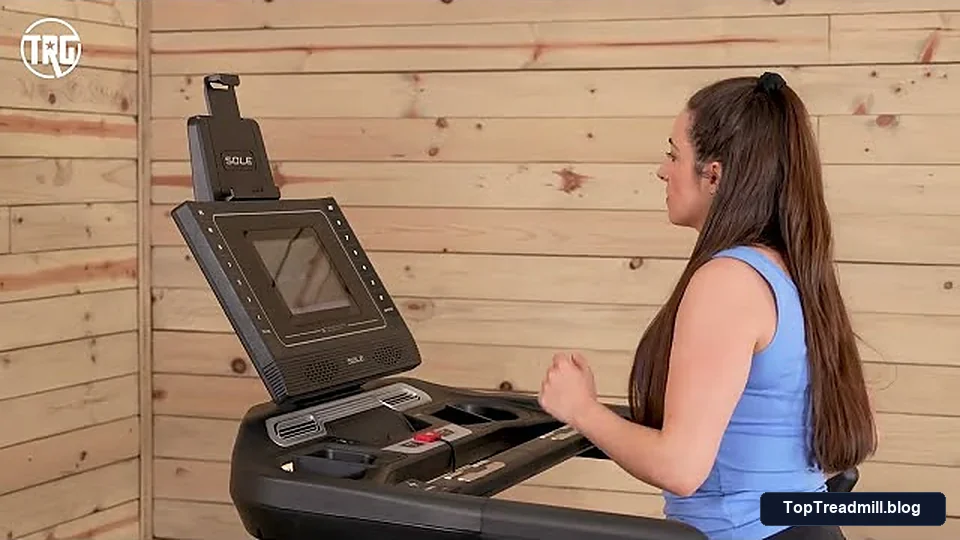
Weight capacities differ significantly between these two platforms. The frame geometry on the heavier model incorporates reinforced uprights to support high-intensity training sessions.
Examining the physical foundation reveals heavy-gauge steel framing designed to handle high static and dynamic loads. As detailed in our Sole Fitness F85 treadmill review, the model features a reinforced chassis weighing significantly more than baseline units.
Structural rigidity directly impacts user stability during high-speed intervals. While both units utilize folding mechanisms, the F85 incorporates larger pivot joints and a heavier structural gauge to eliminate frame flex during heavy foot strikes.
- Heavy-gauge structural steel chassis construction
- Hydraulic assisted fold-up deck mechanism for storage
- Powder-coated finishes preventing sweat corrosion
Chassis Stability and Frame Rigidity
Frame rigidity directly influences user safety during high-speed intervals. Engineers utilize precision welding techniques to eliminate lateral wobbling under heavy workloads.
Footprint dimensions remain largely comparable despite the differing weight ratings. Ensure your designated workout room accommodates the unfolded length safely.
- Wider base stabilizing rails on the premium tier
- Precision welded joints reducing operational vibration
Motor Architecture & Power Delivery
Motor output dictates how smoothly a treadmill handles rapid speed adjustments. Continuous horsepower ratings determine long-term durability during sustained distance running.
The baseline platform features a highly capable drive system suitable for regular jogging. Upgraded variants incorporate higher torque outputs to minimize hesitation under heavy loads.
Continuous horsepower ratings dictate how smoothly a treadmill handles sustained running speeds. Drawing insights from our Sole F80 treadmill review, this model relies on a robust standard motor while upgraded units feature a 3.8 continuous horsepower output.
Thermal management inside the motor housing prevents overheating during long distance sessions. Larger flywheels paired with efficient cooling fans allow the F85 to maintain consistent torque delivery without lagging under heavy runner weight profiles.
- Continuous duty DC motor technology with flywheels
- Pulse width modulation controllers managing electrical current
- Quiet cooling fans preventing thermal overload failures
Torque Output and Speed Transitions
Smooth speed transitions prevent jarring shifts in runner cadence. Heavy flywheels store rotational energy to maintain consistent belt speed during heel strikes.
Thermal management systems protect internal armature windings from excessive heat accumulation during long endurance runs.
- Balanced aluminum flywheels reducing mechanical friction
- Rapid response circuits reacting to console inputs instantly
Deck Cushion Suspension & Ergonomics
Impact reduction technology protects runner joints from repetitive stress injuries. Proprietary cushioning systems absorb shock at the point of initial foot impact.
Both models feature specialized elastomer cushioning designed to replicate outdoor running surfaces. Firmness levels adjust slightly to accommodate different runner preferences.
Joint protection depends heavily on engineered deck cushioning systems. Both machines utilize specialized suspension elastomers, but the F85 frame tuning absorbs roughly 40 percent more impact compared to traditional non-cushioned outdoor running surfaces.
Belt thickness and roller dimensions further influence ergonomic feel and stride fluidity. Larger 2.75-inch rollers on the F85 reduce friction and heat, ensuring a seamless belt transition even during intense incline walking protocols.
- Cushion Flex Whisper Deck lowering joint impact forces
- Reversible running decks extending component lifespans
- Multi-ply running belts minimizing static electricity buildup
Running Surface Dimensions and Friction
Generous running surface dimensions provide essential clearance for sprinting. Low-friction belt materials reduce the electrical load on the drive motor.
Proper belt tracking prevents premature edge fraying and lowers routine maintenance frequency across years of use.
- Spacious running belts accommodating long strides
- Precision tapered rollers ensuring optimal belt centering
Console Technology & User Interface
User interfaces bridge the gap between workout execution and performance tracking. Clear visual layouts ensure quick metric monitoring during intense cardio sessions.
Display screens vary between standard backlit LCD panels and premium touchscreen alternatives. Both choices offer comprehensive feedback regarding speed, incline, and time.
Interface design dictates how easily you can track vital workout metrics mid-stride. The F80 features a standard bright display, while the F85 upgrades to a 10.1-inch TFT touchscreen for enhanced visual tracking and media options.
Connectivity standards ensure seamless integration with third-party fitness applications and heart rate telemetry straps. Both models support Bluetooth data syncing, but the F85 display offers expanded mirroring capabilities for immersive virtual running environments.
- Intuitive tactile buttons for rapid adjustments
- Integrated cooling fans providing airflow during workouts
- Bluetooth connectivity for fitness application pairing
Data Readouts and Connectivity Options
Accurate metric tracking helps athletes monitor their physiological improvements over time. Heart rate telemetry receivers allow precise chest strap synchronization.
Modern console software supports third-party training platforms through standard wireless communication protocols.
- Clear numerical readouts visible in low lighting
- Reliable device charging ports built into consoles
Maintenance, Efficiency & Longevity
Routine maintenance ensures your investment delivers years of reliable service. Keeping the running deck properly lubricated reduces friction and motor strain.
Electrical efficiency depends on minimizing mechanical resistance throughout the drive train. Quality components reduce overall power consumption during standard home use.
Long-term reliability relies on proper lubrication routines and low-friction deck materials. Reversible running decks on both units double the usable lifespan, requiring only silicone lubrication applications every three to six months depending on usage.
Electrical efficiency matters when running high-horsepower continuous-duty motors on standard household circuits. The upgraded drive system on the F85 optimizes power draw to prevent circuit trips while maintaining stable electrical resistance under load.
- Periodic silicone lubrication preventing belt wear
- Dust removal protocols protecting internal electronic boards
- Regular bolt tightening countering operational vibrations
Component Lifespan and Serviceability
Accessible internal components simplify troubleshooting when minor issues arise. High-grade bearings and drive belts require less frequent replacement intervals.
Manufacturer warranty coverage reflects confidence in internal mechanical tolerances and structural frame durability.
- Modular electrical components easing replacement procedures
- Robust commercial-grade wiring harnesses resisting fatigue
Real-World Performance & Training Loads
Real-world training demands test equipment under various speed and incline profiles. Interval training subjects drive motors to rapid thermal and electrical spikes.
Both machines handle hill simulations smoothly via robust elevation actuators. Incline adjustments remain quiet and steady even under maximal loads.
Heavy training loads demand equipment that resists structural fatigue over thousands of operating miles. As highlighted in our Sole F85 treadmill review, high-mileage households benefit from the increased weight capacity and heavier frame engineering.
Interval training transitions require rapid incline and speed adjustments to match program demands. Both models respond quickly, but the F85 motor controller executes speed shifts with minimal rotational latency during high-intensity sprint protocols.
- Steep incline ranges supporting hill simulation workouts
- Immediate deceleration response prioritizing runner safety
- Consistent belt velocity despite heavy foot impact forces
Endurance Testing and Multi-User Gyms
Multi-user households require equipment capable of handling consecutive daily workouts. Higher weight capacities prevent premature structural fatigue in shared spaces.
Thermal protection circuits prevent permanent damage during extended marathon training sessions executed indoors.
- Continuous operation testing validating motor resilience
- Sturdy handrails offering secure balance support
Which Folding Treadmill Fits Your Setup
Selecting the correct cardio machine depends heavily on your specific training goals. Assessing available floor space ensures seamless integration into your home gym.
Budget considerations and feature preferences will ultimately dictate your final purchasing decision. Both options deliver exceptional value within their respective categories.
Selecting the ideal machine requires balancing your specific training intensity against available floor space. Walkers and light joggers will find the F80 provides more than adequate technical headroom for daily cardiovascular conditioning routines.
Multi-user households with frequent runners should prioritize enhanced motor power. Budget-conscious buyers can consult our Sole F63 treadmill review to evaluate alternative heavy-duty options for rigorous daily training schedules without excessive spending.
- Evaluate total user weight against machine capacity limits
- Measure vertical storage clearance for folding decks
- Determine preference for touchscreen versus standard displays
Final Decision Matrix for Buyers
Walkers and moderate joggers will find complete satisfaction in the balanced baseline platform. Serious runners tackling high weekly mileages benefit from upgraded engineering.
Prioritize your core training requirements to ensure long-term satisfaction with your chosen fitness investment.
- Match motor specs to your maximum training intensity
- Verify doorway dimensions for smooth delivery transport
Frequently Asked Questions
What is the primary mechanical difference between these two models?
The primary difference lies in their motor horsepower and maximum weight capacity tolerances. Choosing the heavier model provides enhanced stability for intense daily running routines.
Do both treadmills feature folding hydraulic deck mechanisms?
Yes, both machines utilize hydraulic assist systems to make folding and unfolding effortless. This mechanism safely locks the deck upright for secure home storage.
How often should I lubricate the running deck on these machines?
You should apply a specialized silicone lubricant beneath the running belt every few months. This routine maintenance significantly extends the lifespan of the motor.
Can I connect my fitness applications to these consoles?
Both models feature Bluetooth wireless connectivity allowing seamless integration with popular training apps. This functionality lets you track and record your workout metrics easily.
What electrical requirements do these heavy-duty treadmills need?
These machines require a standard dedicated electrical circuit supplying proper voltage to prevent tripping breakers. Avoid using extension cords to ensure safe continuous operation.