Sole F80 vs NordicTrack: Heavy-Duty Performance Clash
Choosing between these legendary machines defines your home cardio routine. We analyze build quality and engineering specs.

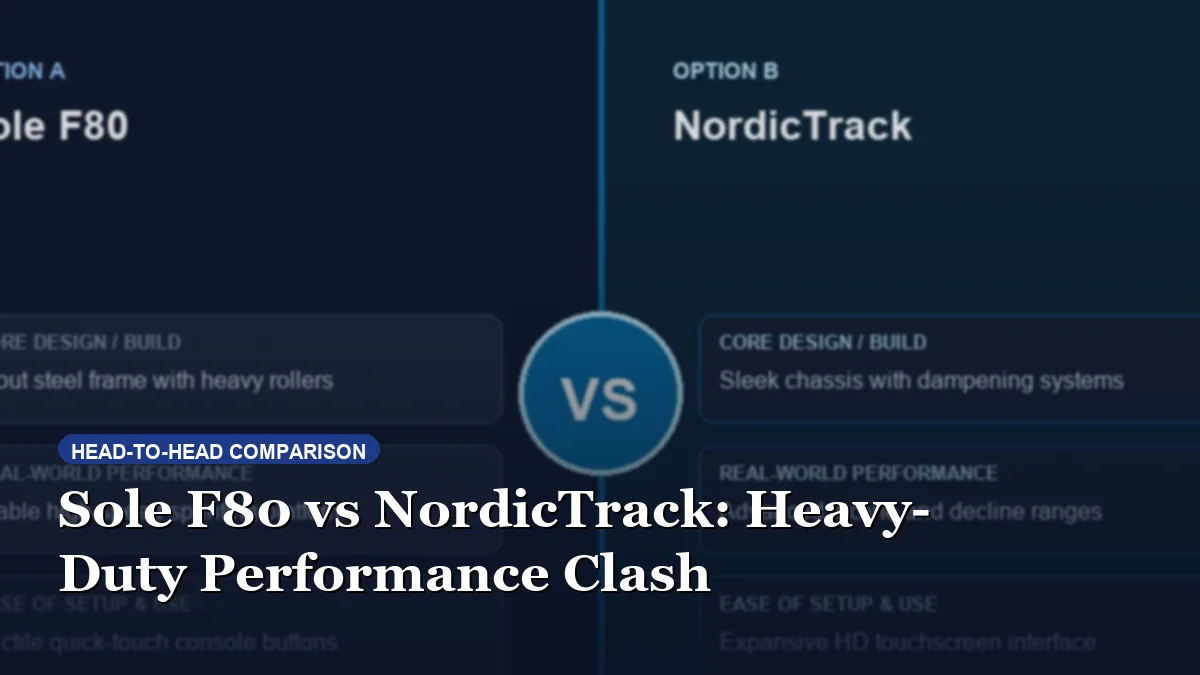
Choose the Sole F80 for unmatched mechanical durability and straightforward controls. Select NordicTrack if immersive, trainer-led digital programming motivates your daily runs.
Compare all top models in our Best Treadmill: Top Home Fitness Picks (2026 Guide).
Side-by-Side Breakdown
| Criteria | Sole F80 | NordicTrack | Edge |
|---|---|---|---|
| Core Design / Build | Stout steel frame with heavy rollers | Sleek chassis with dampening systems | Sole F80 |
| Real-World Performance | Stable high-speed sprinting platform | Advanced incline and decline ranges | NordicTrack |
| Ease of Setup & Use | Tactile quick-touch console buttons | Expansive HD touchscreen interface | NordicTrack |
| Durability & Reliability | Commercial-grade mechanical components | Software-integrated durable hardware | Sole F80 |
| Efficiency / Operating Footprint | Hydraulic folding assist design | Space-saving upright storage lock | Tie |
| Maintenance Requirements | Periodic silicone belt lubrication | Routine dust clearance and alignment | Sole F80 |
| Best Ideal Use Case | Traditional heavy-duty run training | Interactive virtual route running | Split |
Introduction to Heavy-Duty Home Treadmills
Selecting a high-end running machine requires balancing mechanical robust engineering against interactive digital training platforms. Both brands dominate the market by offering distinct philosophies tailored to serious home athletes.
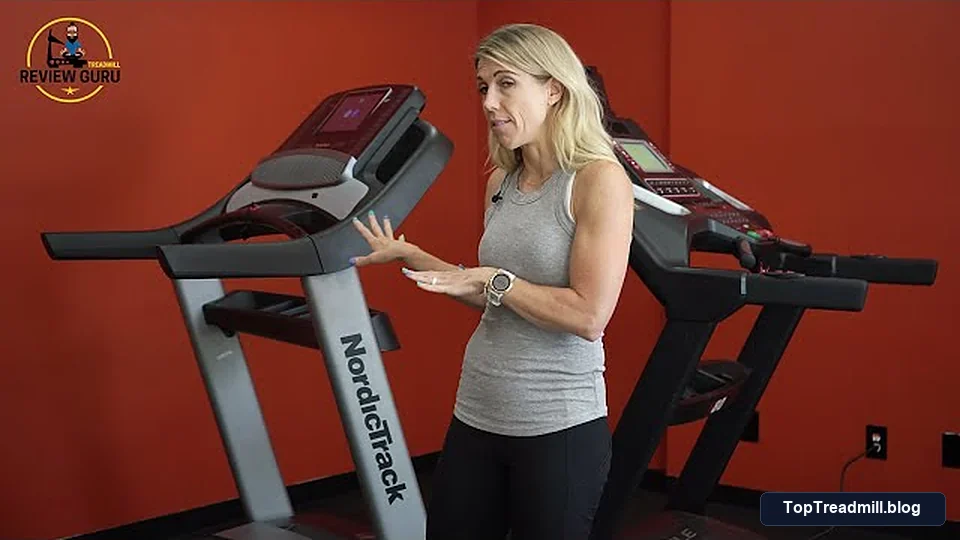
Navigating the crowded fitness equipment market can feel overwhelming without clear technical metrics. Understanding structural foundations helps ensure your investment withstands intense daily usage without unexpected mechanical failures.
Heavy-duty home treadmills require robust structural steel frames to handle continuous high-impact running without flexing. Selecting a machine with a high maximum user weight ensures long-term structural integrity and user safety during intensive workouts.
In our Sole Fitness F80 review, we analyze distinct engineering priorities. Buyers must evaluate continuous motor torque and deck cushioning density to match their specific biomechanical training requirements at home.
- Heavy-duty frames support aggressive training intervals.
- Digital consoles offer deeply immersive virtual route simulations.
- Commercial-grade motors handle sustained runner weight limits.
Brand Philosophies and Engineering Goals
Sole prioritizes traditional gym durability featuring lifetime frame warranties and mechanical simplicity. Conversely, NordicTrack integrates cutting-edge touchscreen interfaces powered by iFit software to keep users mentally engaged.
- Sole focuses on long-term mechanical reliability.
- NordicTrack emphasizes interactive software integration.
Engineering Specifications and Mechanical Builds
Examining core hardware reveals significant differences in deck construction and motor capacity. For a closer look, our Sole F80 YouTube review details a robust chassis designed to reduce friction.
NordicTrack builds sleek frames incorporating advanced cushioning systems that absorb impact effectively. Both machines utilize strong horsepower motors capable of maintaining consistent speeds under heavy runner loads.
Frame durability depends on heavy-gauge welded steel construction and corrosion-resistant powder coatings. A thick running belt thickness reduces friction against the phenolic deck, extending overall component lifespan under heavy daily usage patterns.
Drive systems rely on continuous horsepower motors paired with large balanced flywheels. This mechanical setup prevents thermal overloading and maintains steady belt speeds even during demanding incline interval training sessions.
- Motor continuous duty ratings impact sustained speeds.
- Roller diameters dictate bearing lifespan and belt friction.
- Deck thickness influences overall structural load capacities.
Motor Output and Deck Cushioning Systems
Motor reliability dictates how smoothly the running belt transitions during speed adjustments. Cushioning adjustments on these platforms alter joint impact levels significantly during long distance workouts.
- Adjustable dampening mimics outdoor road running surfaces.
- High torque motors prevent hesitation during rapid acceleration.
Console Technology and Digital Ecosystems
Modern runners demand advanced tracking metrics alongside seamless entertainment options during workouts. NordicTrack leads this category with expansive HD touchscreens running integrated proprietary workout software effortlessly.
Sole adopts a more traditional approach utilizing bright LCD screens and device ledges. This method allows users to stream personal entertainment via tablets without mandatory subscription lock-ins.
Modern fitness consoles integrate touchscreens with advanced operating systems for real-time telemetry tracking. Users benefit from clear metrics display and reliable Bluetooth heart rate connectivity during complex endurance programming.
Proprietary software ecosystems offer immersive virtual workouts and automated resistance adjustments. However, buyers should check if the hardware supports offline manual modes when internet connectivity fails unexpectedly.
- Subscription platforms provide automated trainer speed control.
- Standalone consoles eliminate ongoing monthly software fees.
Interface Usability and Software Flexibility
Navigating menus should remain intuitive while your heart rate spikes during intense intervals. Physical quick-touch buttons on the Sole console offer faster adjustments than complex touchscreen menus.
- Tactile buttons prevent accidental input errors mid-stride.
- Immersive landscapes motivate users through scenic virtual trails.
Performance Under Load and Ergonomics
Evaluating real-world stride dynamics ensures the running surface accommodates various user heights comfortably. Highlighted in our Sole F80 review, this model provides a stable platform that minimizes shaking during sprinting.
NordicTrack excels in incline and decline ranges, simulating steep outdoor mountain terrain accurately. Both treadmills offer generous belt lengths suitable for tall runners requiring expansive stride zones.
Deck cushioning systems absorb significant kinetic energy to protect runner joints from high-impact shock. Effective shock absorption technology reduces cumulative lower-extremity stress without sacrificing the responsive push-off needed for fast sprinting.
Ergonomic handlebar placement and emergency stop lanyard accessibility dictate safe operational boundaries. Proper handrail positioning assists balance during steep elevation changes while preserving natural running arm swing mechanics.
- Incline capabilities build targeted lower body strength.
- Belt width provides lateral safety clearance for runners.
Stride Stability and Incline Versatility
Heavy structural bracing prevents unwanted lateral movement when runners strike the belt forcefully. Automated decline features further enhance hill simulation realism during immersive interactive training sessions.
- Robust stabilizers eliminate dangerous frame wobble.
- Wide running belts accommodate natural arm swings.
Setup, Maintenance, and Spatial Footprints
Assembling a heavy fitness machine demands careful attention to spatial planning and doorway clearances. Folding mechanisms on both models utilize hydraulic assist cylinders to simplify safe storage tasks.
Regular lubrication and belt tension checks ensure long-term operational health in home gyms. Understanding these routine maintenance requirements prevents premature wear on critical moving mechanical components.
Assembling heavy running equipment requires careful floor space planning and proper lifting techniques. Folding mechanisms with hydraulic assist cylinders simplify vertical deck storage while safeguarding domestic flooring from accidental impact drops.
Routine preventive maintenance involves lubricating the running belt and cleaning dust from motor compartments. Applying pure silicone lubricant oil every few months prevents excessive friction and protects electronic controller boards.
- Hydraulic lifts reduce folding effort significantly.
- Routine belt alignment prevents premature edge fraying.
Folding Mechanisms and Routine Upkeep
Space-saving designs allow users to fold the running deck upright when floor space is needed. Proper cleaning prevents dust accumulation inside the motor hood and roller housing areas.
- Locking deck latches ensure secure vertical storage.
- Silicone lubricant applications maintain smooth belt gliding.
Comprehensive Pros, Cons, and Final Verdict
Weighing the distinct advantages of each machine clarifies which model suits your lifestyle. Sole appeals to traditionalists valuing longevity, while NordicTrack captivates tech-focused runners seeking immersive engagement.
Making the final purchasing decision ultimately rests on your personal fitness motivation strategies. Reviewing warranty coverage and hardware specifications solidifies your choice for long-term satisfaction.
Assessing mechanical advantages helps users weigh long-term durability against digital feature sets. As noted in our Sole F63 review, heavy-duty frames offer exceptional structural warranty coverage for home gyms.
Ultimately, your final decision depends on whether you prioritize robust mechanical simplicity or interactive coaching software. Careful alignment with your personal fitness goals ensures lasting satisfaction with your heavy-duty home investment.
- Sole offers superior mechanical warranty protections.
- NordicTrack delivers unmatched digital training variety.
Making Your Final Buying Decision
Assess your budget constraints and preference for subscription-based training before finalizing your order. Selecting the correct treadmill guarantees years of reliable cardiovascular training inside your home.
- Prioritize motor strength for heavy daily usage.
- Match console features to your entertainment preferences.
Frequently Asked Questions
Can I use the NordicTrack without an active internet subscription?
Yes, the machine operates in a basic manual mode without connecting to Wi-Fi. However, you miss out on interactive trainer-led workouts and automated terrain adjustments.
Does the Sole F80 require professional assembly assistance?
Most users assemble the heavy unit with two people within a couple of hours using included tools. Professional delivery services remain available if you prefer hassle-free setup.
Which treadmill handles heavier runners more securely?
The Sole F80 features a notoriously stout steel frame and higher weight capacity ratings. This robust construction delivers exceptional long-term structural stability for intense training.
Are the running decks foldable on both of these models?
Both machines utilize hydraulic folding mechanisms to lift the running deck safely upright. This practical design significantly reduces spatial footprints when the equipment is idle.
What kind of routine maintenance do these treadmills require?
Regular cleaning around the motor hood and periodic silicone belt lubrication ensure optimal performance. Following these simple steps prevents friction and extends component lifespans considerably.