Running Outside vs Treadmill Weight Loss: Technical Verdict
Outdoor running provides natural wind resistance while treadmills offer controlled motorized assistance. Choosing the right modality depends entirely on biomechanical goals and consistent environmental access.

Choose outdoor running for maximum natural calorie burn and varied terrain adaptation, or select treadmill workouts for precise speed intervals and reliable year-round training consistency.
Compare all top models in our Best Treadmill: Top Home Fitness Picks (2026 Guide).
Side-by-Side Breakdown
| Criteria | Running Outside | Treadmill Weight Loss | Edge |
|---|---|---|---|
| Core Design / Build | Unstructured natural asphalt or concrete paths | Motorized deck with cushioned elastomer slats | Treadmill |
| Real-World Performance | Variable wind resistance and uneven grade changes | Exact digital speed control and preset inclines | Outdoor |
| Ease of Setup & Use | Requires immediate weather check and proper routing | Simple console startup with immediate belt motion | Treadmill |
| Durability & Reliability | Relies entirely on runner biomechanics and footwear | Dependent on motor horsepower and belt maintenance | Outdoor |
| Efficiency / Operating Footprint | Zero electricity required for human propulsion | High continuous electrical draw during heavy loads | Outdoor |
| Maintenance Requirements | Minimal upkeep restricted to running shoe replacements | Regular silicone lubrication and belt tension calibration | Outdoor |
| Best Ideal Use Case | Athletes seeking maximum functional caloric expenditure | Users needing controlled pacing for weight reduction | Treadmill |
Core Aerodynamic & Biomechanical Fundamentals
Human locomotion outdoors requires overcoming aerodynamic drag that increases exponentially with velocity. This constant resistance shifts energy expenditure upward compared to stationary belt running.
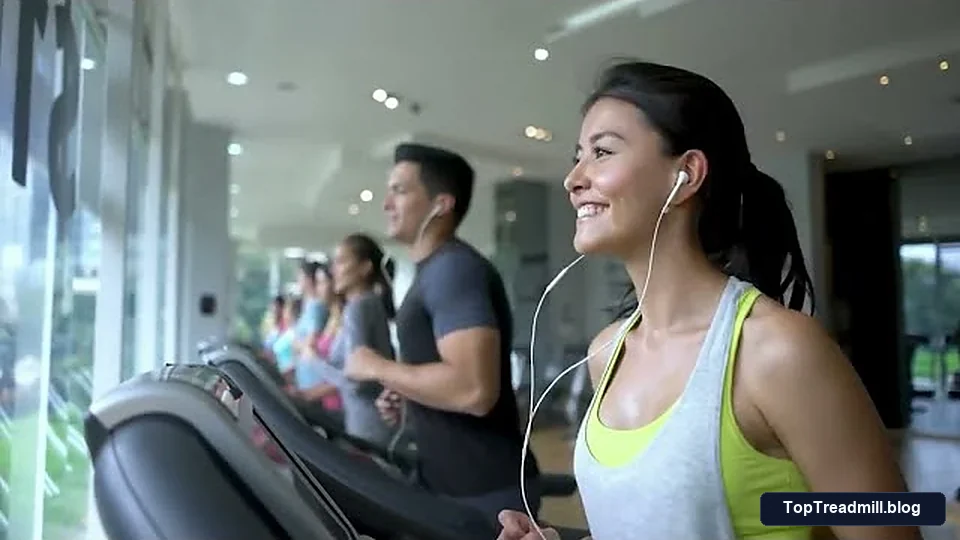
Standard treadmills eliminate headwind resistance entirely, lowering the overall metabolic cost of exercise. Review our best home treadmill for running models to find decks capable of simulating natural outdoor drag.
Outdoor running requires overcoming frontal wind resistance, which demands roughly five percent more metabolic energy at moderate speeds. Treadmills eliminate this resistance unless you manually apply a one percent incline to simulate drag.
Biomechanically, motorized belts assist leg turnover by actively pulling the foot backward after footstrike. This reduces the propulsive ground reaction force needed compared to pushing off against a stationary asphalt or concrete surface.
- Aerodynamic drag forces outdoor runners to generate higher relative power.
- Moving belts assist leg turnover, reducing the natural hamstring propulsion phase.
- Surface compliance differs significantly between hard asphalt and rubberized belts.
Surface Compliance & Impact Forces
Outdoor concrete surfaces present rigid impact forces that test joint stability. Conversely, modern treadmills utilize elastomer decks to absorb shock and protect connective tissues during high-mileage blocks.
- Concrete produces peak impact loads up to three times body weight.
- Deck cushioning reduces repetitive strain injuries during weight loss phases.
Energy Expenditure & Caloric Deficit Mechanics
Achieving consistent fat loss demands a sustained caloric deficit driven by reliable energy expenditure. Outdoor running naturally forces adjustments in stride length to accommodate varying terrain contours.
Treadmill workouts maintain a locked belt velocity, forcing users to keep a steady pace. Review our best incline on treadmill for weight loss guide to optimize your daily caloric burn.
Weight loss relies on sustaining an energy deficit regardless of whether you train indoors or outside. However, calculating caloric expenditure requires adjusting for motorized belt assistance to avoid overestimating your total daily energy burn.
Standard equations from the American College of Sports Medicine estimate oxygen consumption accurately for flat ground running. Indoor units require verified belt calibration and accurate user weight inputs to prevent significant metric distortion during sessions.
- Calorie burn depends on total body mass, velocity, and grade.
- Fixed belt speeds prevent fatigue-induced pace degradation over time.
- Terrain micro-adjustments outdoor engage stabilizing muscles more thoroughly.
Metabolic Cost Equivalency
Matching outdoor caloric burn on a machine requires specific adjustments. Setting the incline parameter to one percent effectively bridges the metabolic gap caused by zero wind resistance.
- One percent incline compensates for missing wind resistance.
- Heart rate zones remain more stable on calibrated machines.
Mechanical Deck Design Versus Natural Terrain
Outdoor terrain features natural undulations, sharp turns, and cambered roads. These structural variations recruit diverse muscle groups throughout the lower extremities during every single training session.
Indoor machines offer uniform surface consistency without unexpected obstacles. Discover our best treadmill run for weight loss options to maintain a steady target heart rate effortlessly.
Outdoor terrain features irregular asphalt compositions, changing cambers, and variable soil compaction that challenge stabilization muscles. Treadmill decks utilize elastomer cushioning systems to absorb shock, reducing peak impact forces on your skeletal joints.
While shock absorption protects runners from repetitive strain injuries, overly soft decks can reduce running economy. Choosing a machine with adjustable deck firmness helps replicate the tactile feedback of firm outdoor asphalt surfaces.
- Asphalt routes demand lateral stabilization across uneven road shoulders.
- Treadmill belts provide a completely flat, predictable mechanical plane.
- Grade transitions happen instantly via digital motor controls.
Variable Grade & Elevation Control
Simulating outdoor hills outdoors requires finding actual geographic inclines. Treadmills let users program precise hill repeats with exact percentages for targeted caloric burn.
- Digital elevation changes mimic steep mountain climbing safely.
- Descent training is limited on standard motorized equipment.
Cardiovascular Tracking & Heart Rate Precision
Monitoring cardiovascular exertion is vital for optimizing fat oxidation during prolonged exercise. Outdoor runners rely on GPS watches and chest straps to track performance metrics accurately.
Treadmills integrate stationary pulse grips and wireless telemetry receivers directly into the console. This continuous feedback helps users stay within their optimal fat-burning zone without guessing.
Maintaining target heart rate zones is critical for optimizing fat oxidation during long endurance sessions. Integrated pulse grips often provide erratic telemetry due to motion artifacts, making a dedicated chest strap monitor much more reliable.
Outdoor GPS watches can suffer from signal lag in urban canyons or dense tree cover, distorting pace metrics. Indoor machines provide consistent internal sensor data, though console heart rate receivers must maintain clear radio frequency transmission paths.
- GPS watches track outdoor distance using satellite triangulation data.
- Console sensors offer instant heart rate monitoring during workouts.
- Pacing consistency is easier to audit on digital displays.
Sensor Accuracy & Telemetry
Handgrip heart rate sensors often fluctuate based on sweat and grip pressure. Chest straps paired with machine consoles deliver superior telemetry accuracy for weight management tracking.
- ECG chest straps provide clinical-grade heart rate data.
- Console feedback eliminates guesswork during interval training.
Environmental Control Versus External Elements
Outdoor runners must contend with ambient temperature extremes, precipitation, and poor visibility. These environmental hurdles can disrupt consistency and jeopardize long-term weight loss goals.
Indoor equipment provides a climate-controlled sanctuary shielded from inclement weather. Exercisers can maintain strict training routines regardless of seasonal storms or oppressive heat waves.
Environmental temperature directly impacts cardiovascular drift and perceived exertion during extended workouts. Climate-controlled indoor spaces prevent extreme heat stress, allowing you to sustain higher training volumes without dangerous core temperature spikes.
Conversely, outdoor training exposes your body to thermal regulation challenges that increase total energy expenditure. Exercising in cold or humid conditions forces the body to expend extra calories on thermoregulation processes beyond locomotion.
- Outdoor elements test mental resilience and require specialized gear.
- Indoor cooling fans help regulate core body temperature effectively.
- Weatherproofing eliminates seasonal fitness interruptions completely.
Thermal Regulation & Hydration Access
Natural breezes cool outdoor runners through convective heat loss. Indoor users need adequate room ventilation and accessible hydration to prevent early dehydration during fat-burning sessions.
- Indoor humidity requires supplemental cooling fans for safety.
- Water bottle holders keep fluids within arm reach indoors.
Long-Term Equipment Maintenance & Wear Factors
Maintaining fitness gear ensures long-term reliability and prevents unexpected workout interruptions. Outdoor running incurs zero machinery maintenance costs aside from regular running shoe replacements.
Motorized fitness equipment requires periodic silicone lubrication under the running belt. Neglecting this crucial maintenance step causes premature motor burnout and expensive mechanical failures.
Motorized running machines demand rigorous routine maintenance to ensure safe mechanical operation and consistent belt speed. Applying silicone lubricant under the deck prevents excessive friction, protects the drive motor, and preserves calibration.
Outdoor running equipment subjects only your footwear to heavy mechanical wear, requiring sneaker replacement every four hundred miles. Indoor units experience cumulative stress on drive belts and rollers, necessitating periodic tension adjustments and alignment checks.
- Footwear loses midsole cushioning after designated mileage limits.
- Treadmill belts demand routine tension checks and deck cleaning.
- Electrical components require surge protection to prevent damage.
Lubrication & Belt Tensioning
Proper friction management protects both the running belt and the drive motor. Users must apply manufacturer-approved lubricants every few months to sustain smooth operational efficiency.
- Silicone oil reduces friction between belt and deck.
- Tension adjustments prevent dangerous belt slipping issues.
Programming Practicality & Behavioral Adherence
Consistency remains the ultimate driver of successful weight loss and fat reduction. Some individuals thrive on the changing scenery of outdoor routes while others prefer indoor distractions.
Treadmills incorporate built-in entertainment screens, virtual courses, and interval programs. These digital features combat workout monotony and encourage longer training durations for beginners.
Long-term weight management depends on maintaining a consistent exercise routine. Explore our best speed for weight loss on treadmill picks to calibrate your intervals for maximum fat burning.
Outdoor running provides psychological benefits through changing scenery and exposure to natural sunlight, boosting mental health. Combining both modalities based on weather constraints ensures year-round adherence without interrupting your caloric deficit goals.
- Outdoor scenery provides natural mental stimulation during runs.
- Virtual training apps integrate immersive video simulations indoors.
- Habit formation depends entirely on personal psychological preferences.
Distraction Versus Focus Factors
Running outside demands constant spatial awareness of traffic and pedestrians. Indoor environments allow users to watch media or listen to podcasts without safety hazards.
- Outdoor routes require vigilance regarding uneven paving stones.
- Indoor training enables safe multitasking with entertainment media.
Frequently Asked Questions
Does running outside burn more calories than using a treadmill?
Outdoor running generally burns slightly more calories due to aerodynamic drag and natural terrain changes. However, setting a treadmill to a one percent incline effectively equalizes this energy expenditure difference.
How does treadmill cushioning affect joint health during weight loss?
Built-in elastomer cushioning systems absorb significant impact shock compared to rigid outdoor concrete. This design feature reduces repetitive stress on knees and ankles for heavier individuals.
Can I achieve serious weight loss goals using only an indoor machine?
Consistent caloric deficits drive successful weight loss regardless of whether you train outside or indoors. Maintaining regular workout frequency on a calibrated treadmill yields exceptional fat reduction results.
What specific maintenance do treadmills require for long-term reliability?
Regular upkeep involves applying silicone lubricant beneath the running belt and checking tension calibration. Keeping the deck clean prevents premature motor wear and ensures safe operation.
Why do experts recommend a one percent incline on motorized decks?
A one percent grade compensates for the complete lack of headwind resistance indoors. This adjustment accurately mimics the metabolic cost and muscle activation profile of outdoor running.