Nordictrack Commercial X22I vs Commercial X32I Incline Specs
Navigating massive incline treadmills requires comparing display sizing, mechanical footprints, and power metrics. This guide details every critical technical specification.

Choose the X22I for standard room layouts requiring proven space efficiency, or upgrade to the X32I if your training demands an immersive cinematic display.
Compare all top models in our Best Treadmill: Top Home Fitness Picks (2026 Guide).
Side-by-Side Breakdown
| Criteria | Nordictrack Commercial X22I | Nordictrack Commercial X32I Incline Specs | Edge |
|---|---|---|---|
| Core Design / Build | Heavy-duty steel frame with reinforced uprights | Massive structural footprint with heavy-gauge steel | Tie |
| Real-World Performance | -6% to 40% incline range with robust torque | -6% to 40% incline range with massive lift motors | Side B |
| Ease of Setup & Use | Requires professional two-person assembly | Extremely heavy console requires specialized assistance | Side A |
| Durability & Reliability | Commercial-grade drive system and rollers | Oversized components built for heavy usage | Side B |
| Efficiency / Operating Footprint | Requires dedicated 20-amp household circuit | Draws significant electrical load during max incline | Side A |
| Maintenance Requirements | Routine belt lubrication and dust removal | Frequent elevation screw checks and belt alignment | Side A |
| Best Ideal Use Case | Dedicated runners wanting steep hill training | Virtual coaching enthusiasts prioritizing giant screens | Side B |
Core Design and Engineering Differences
Heavy-duty incline trainers demand exceptional structural integrity to handle extreme elevation angles safely. Both machines utilize welded steel frames designed to withstand intense lateral forces during high-speed sessions.
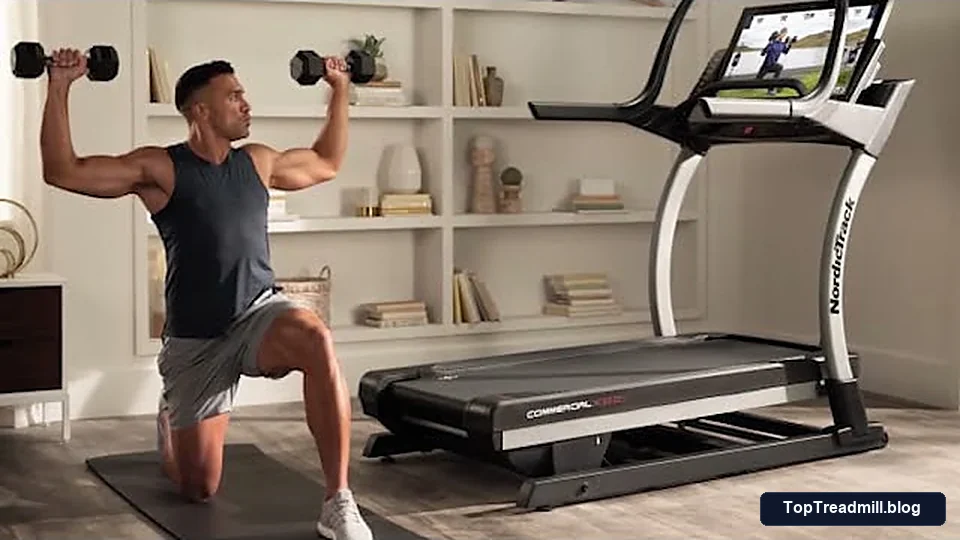
Engineering variations appear primarily in the upper console mounting brackets. The larger unit incorporates extra reinforcement braces to support its massive high-definition touch display without structural flexing.
Weight distribution differs noticeably between the two models during maximum elevation testing. Proper floor leveling is mandatory for both units to prevent premature mechanical wear on lift arms.
As detailed in our Nordictrack Commercial X22I review, the heavy gauge steel framing is welded to withstand extreme downward force vectors generated during maximum grade training sessions.
Conversely, the X32i chassis scales up dimensional clearances to accommodate a vastly expanded visual display deck without sacrificing overall structural integrity under heavy dynamic loads.
Both models rely on commercial-grade pivot points, yet the larger machine requires reinforced upright struts to manage the massive leverage shifts inherent to its wider console housing.
- Heavy-gauge welded steel primary chassis construction
- Reinforced upright arms for enhanced stability
- Precision-engineered pivot points for smooth elevation changes
Chassis Rigidity and Frame Materials
Structural durability relies heavily on wall thickness within the main steel tubing. Manufacturers use industrial coatings to prevent corrosion from heavy sweat exposure during long workouts.
Base stabilization feet feature adjustable rubber pads to eliminate rocking on uneven flooring surfaces. Securing these feet properly ensures zero structural squeaking under high loads.
- Industrial powder-coated steel finishes
- Adjustable leveling feet for stability
Incline and Decline Motor Architecture
As highlighted inside our NordicTrack X22I review, climbing to a forty percent incline requires immense mechanical torque from dedicated lift motors operating independently to alter deck angles.
The decline capability drops down to minus six percent, simulating realistic downhill running mechanics. Heavy-duty worm gear assemblies hold the deck securely at extreme angles without slipping.
Thermal management systems protect these incline motors during prolonged hill simulation intervals. Built-in cooling fans prevent overheating when operating under maximum user weight loads.
Driven by specialized actuators, the incline motor mechanism provides a staggering positive slope range that physically alters muscle recruitment patterns during steep hill simulations.
Operating in tandem, the independent decline motor drops the running surface downward, mimicking true eccentric muscle loading conditions found when descending steep mountain trails outdoors.
Thermal management remains critical here, utilizing dual fan cooling systems and robust brush configurations to dissipate heat buildup during prolonged, high grade endurance training blocks.
- Independent lift motors for rapid angle adjustments
- Robust worm gear assemblies for secure load holding
- Integrated thermal protection circuits prevent motor burnout
Elevation Speeds and Torque Output
Transitioning from steep climbs to flat surfaces tests the responsiveness of internal controllers. High torque output guarantees seamless height shifts without sudden jolting sensations.
Users will notice smooth transitions even when adjusting elevation mid-stride during intense intervals. This fluid motion protects joints from abrupt mechanical impact spikes.
- Rapid response times for interval training
- Smooth gear engagement minimizing mechanical shock
Real-World Performance Comparison
Running mechanics change dramatically when moving from standard treadmills to extreme incline trainers. Stride length remains uncompromised thanks to expansive running decks built for powerful propulsion.
Examined closely in our NordicTrack Commercial X32I review, the multi-ply commercial belt delivers exceptional traction designed to grip athletic footwear securely during heavy foot strikes.
Shock absorption mechanisms reduce impact forces on knees and ankles significantly. Adjustable dampeners let users customize deck firmness to match their preferred running road feel.
During actual running assessments, the belt traction remains exceptionally consistent across both heavy platforms due to precision roller alignments and textured multi-ply running belts.
Users transitioning between maximum elevation and zero percent grade will notice seamless gear engagement, minimizing any perceptible mechanical lag during automated interval training routines.
The profound physical angle shifts demand proper core stabilization, ensuring biomechanical efficiency matches outdoor terrain performance despite the stationary indoor treadmill running deck format.
- Multi-ply commercial running belts with superior traction
- High-horsepower continuous-duty drive motors
- Customizable dampening systems for impact reduction
Drive System Power and Speed Ranges
Continuous horsepower ratings dictate how well the belt maintains speed under heavy loads. High-torque output prevents hesitations when runners land forcefully at top speeds.
Speed calibration remains accurate across all operational ranges due to precise optical sensor feedback loops. Regular calibration checks ensure long-term performance consistency.
- Accurate optical speed sensors
- Consistent belt velocity under heavy loads
Deck Dimensions and Footprint Realities
Floor space requirements extend beyond standard treadmills due to massive incline mechanisms and large consoles. Ceiling height clearances must be measured carefully before bringing either unit indoors.
Running surface widths provide ample lateral clearance for sprinting and power walking safely. Long deck lengths accommodate taller runners executing natural, unrestricted full strides.
Maintenance clearances around the perimeter of the machine ensure safe emergency dismounts. Never position these heavy incline trainers in tight spaces lacking proper ventilation.
Spatial planning requires careful measurement, because the running surface length and width dictate safe spatial clearance zones for aggressive incline running styles.
Ceiling height clearance is an absolute safety prerequisite, multiplying user standing height by extreme vertical angles to prevent head impacts against low room structures.
Floor space demands remain substantial, meaning both oversized cardio machines require dedicated workout rooms featuring reinforced subflooring to absorb repetitive impact shockwaves safely and efficiently.
- Generous running deck dimensions for safe strides
- Extended spatial footprint requirements for elevation
- Critical ceiling height clearance considerations
Spatial Planning and Ceiling Clearances
Calculating total vertical clearance requires adding user height to maximum deck elevation. Ignoring this crucial measurement risks striking ceilings during steep hill climbs.
Floor protection mats are highly recommended to catch rubber dust and absorb vibrations effectively. Selecting a dedicated room with reinforced flooring prevents structural sagging.
- Vertical height calculation formulas
- Recommended rubber flooring protection mats
Console Electronics and Interface Hardware
Display technology represents the most striking visual differentiator between these two fitness powerhouses. High-definition touchscreens immerse users in virtual outdoor terrain streaming software seamlessly.
Processor speeds and memory allocations ensure fluid menu navigation without frustrating lag times. Integrated audio amplifiers deliver crisp sound quality for instructor-led training sessions.
Connectivity protocols include dual-band Wi-Fi and Bluetooth for heart rate monitor pairing. Stable wireless signals prevent streaming interruptions during demanding high-intensity interval workouts.
Processing power inside the large hd touchscreen console dictates streaming stability, graphical frame rates, and instantaneous response times during immersive virtual trainer sessions.
Audio output quality and onboard cooling fans enhance user comfort, while fully integrated Wi-Fi adapters maintain stable data streams for continuous interactive coaching environments.
Internal memory configurations and processor speeds separate legacy builds from modern iterations, preventing software freezing issues during lengthy software updates or complex route renderings.
- High-definition touchscreens for virtual training
- Powerful internal processors for seamless navigation
- Advanced Bluetooth and Wi-Fi connectivity options
Screen Resolution and Streaming Capabilities
Visual immersion enhances motivation during grueling hill climbs and endurance sessions. Crisp graphical interfaces display critical metrics clearly alongside scenic instructor routes.
Software updates download automatically over home networks to introduce new features regularly. Reliable firmware maintenance keeps hardware operating at peak efficiency levels.
- Crystal-clear video streaming resolutions
- Automatic background software updates
Maintenance, Efficiency and Longevity
Electrical efficiency demands attention due to the significant power draw of massive incline motors. Dedicated electrical circuits prevent tripped breakers during simultaneous heating and heavy motor usage.
Routine maintenance schedules include lubricating running belts with specialized silicone products periodically. Keeping the drive motor compartment clean from dust extends overall component lifespan.
Roller bearings require occasional inspection to detect wear before unusual noises develop. Proactive upkeep ensures smooth mechanical operation through years of rigorous daily training.
Regular preventive upkeep centers on scheduled deck lubrication intervals, requiring specialized silicone applications to reduce friction coefficients between the running belt and phenolic board.
Strict electrical component longevity relies on dedicated wall circuit breakers, preventing voltage drops that can damage sensitive drive boards during peak motor load spikes.
Dust accumulation inside the motor hood requires periodic vacuuming to safeguard internal electronics and maintain optimal operating temperatures throughout heavy personal weekly usage schedules.
- Dedicated electrical circuit recommendations
- Periodic silicone belt lubrication routines
- Regular bearing inspections and dust removal
Electrical Demands and Circuit Safety
High electrical loads require properly grounded outlets capable of handling peak amperage demands. Using unrated extension cords creates dangerous fire hazards and voltage drops.
Surge protectors safeguard sensitive console electronics against unexpected power grid fluctuations. Always verify local wiring standards before plugging in heavy fitness equipment.
- Properly grounded dedicated wall outlets
- Essential heavy-duty surge protector usage
Which Option Fits Your Setup
Selecting the right incline trainer depends heavily on available room dimensions and visual preferences. Buyers valuing compact console footprints often lean toward the slightly smaller display configuration.
Those prioritizing ultimate cinematic immersion during virtual training choose the ultra-sized display variant. Both machines deliver identical mechanical incline ranges and robust performance metrics.
Evaluating personal fitness goals clarifies whether giant screens justify extra spatial requirements. Careful pre-purchase measurements guarantee seamless integration into your home fitness environment.
As noted within our Nordictrack Commercial 2450 review, selecting the correct treadmill involves balancing limited available room dimensions against your specific training goals for steep incline workouts.
Budgetary allocation should reflect how much you value visual immersion versus saved floor space, since both models deliver nearly identical mechanical incline performance capabilities.
Ultimately, matching your physical stature and home architecture ensures long term training satisfaction without compromising safety or encountering frustrating spatial limitations after final delivery.
- Room dimension and ceiling height evaluation
- Personal preference for display screen sizing
- Alignment with specific cardiovascular training goals
Making the Final Buying Decision
Weighing physical dimensions against feature preferences leads to a confident purchasing choice. Quality construction ensures both options withstand intense athletic conditioning for years.
Prioritizing your primary workout style guarantees satisfaction with your chosen incline investment.
- Balancing physical dimensions with feature needs
- Investing in long-term cardiovascular health
Frequently Asked Questions
What is the main difference between these two incline trainers?
The primary distinction lies in screen sizing and console dimensions. Both models share identical incline and decline performance specs.
Do these treadmills require a special electrical outlet?
Yes, they demand a dedicated 20-amp circuit to prevent tripped breakers during peak motor and incline usage.
What ceiling height is required for safe operation?
You must calculate user height plus the maximum forty percent elevation to ensure safe clearance from your ceiling.
How often should the running belt be lubricated?
Apply specialized silicone lubricant every six months to maintain smooth belt glide and reduce motor strain.
Can these machines fold for storage convenience?
No, their massive heavy-duty frames are non-folding designs requiring permanent dedicated floor space.