Nordictrack Commercial 1750 vs Proform Pro 2000: Technical Showdown
Navigating premium home cardio requires evaluating engineering, deck cushioning, and software ecosystems. This technical guide contrasts two flagship machines to identify the optimal treadmill for your training facility.

Choose the Nordictrack 1750 for superior swivel-screen integration and premium frame stability. Opt for the Proform Pro 2000 if you prioritize a simpler console interface paired with robust decline capabilities.
Compare all top models in our Best Treadmill: Top Home Fitness Picks (2026 Guide).
Side-by-Side Breakdown
| Criteria | Nordictrack Commercial 1750 | Proform Pro 2000 | Edge |
|---|---|---|---|
| Core Design / Build | Reinforced steel frame with molded cowlings | Tubular steel chassis with composite shrouds | Nordictrack Commercial 1750 |
| Real-World Performance | 3.5 CHP motor with rapid incline response | 3.25 CHP motor with smooth speed transitions | Nordictrack Commercial 1750 |
| Ease of Setup & Use | Rotational HD console with intuitive software | Fixed high-definition screen with streamlined menus | Proform Pro 2000 |
| Durability & Reliability | Heavy-duty rollers and commercial-grade belt | Balanced non-flex rollers and multi-ply belt | Tie |
| Efficiency / Operating Footprint | Standard 120V dedicated 15-amp circuit draw | Standard 120V dedicated 15-amp circuit draw | Tie |
| Maintenance Requirements | Routine lubrication and belt tension checks | Standard belt alignment and periodic dusting | Tie |
| Best Ideal Use Case | Interactive coaching and multi-user households | Straightforward distance running and incline training | Proform Pro 2000 |
Core Design and Engineering Differences
Engineering high-end treadmills demands rigorous structural integrity to handle intense foot strike forces. Both machines utilize welded steel frames, yet their architectural weight distributions and cowling designs diverge noticeably.
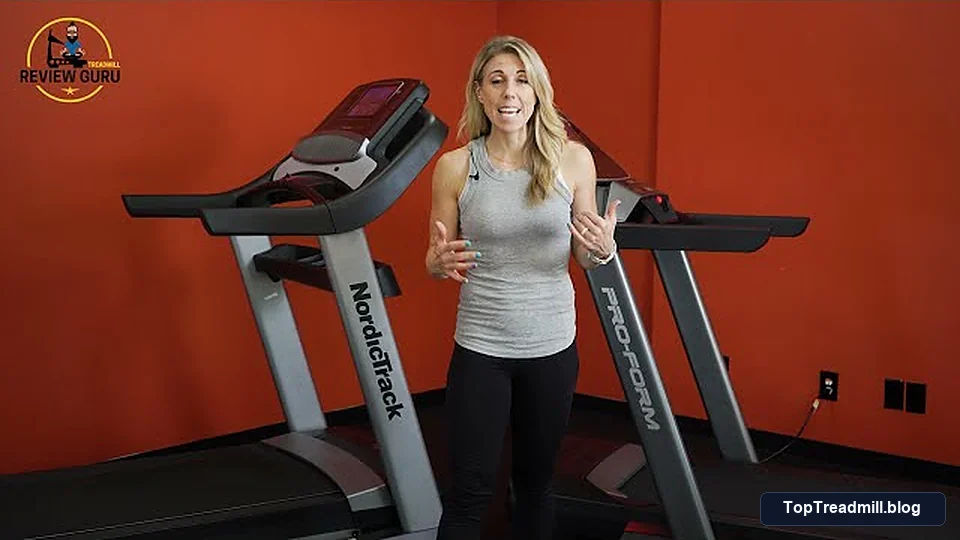
The Nordictrack Commercial 1750 features a beefier chassis designed to minimize lateral flex during high-speed intervals, whereas our proform pro 2000 treadmill review highlights a streamlined footprint.
The NordicTrack Commercial 1750 utilizes a heavier steel chassis than the ProForm Pro 2000, improving structural rigidity during high-speed intervals. Both frames support up to 300 pounds of user weight safely.
Drive systems differ slightly in housing insulation and cooling fan architecture. The NordicTrack features a slightly more enclosed cowl design, which helps manage internal motor heat during prolonged incline walking sessions.
- Heavy-gauge steel weldments support aggressive daily running regimens.
- Proprietary motor hoods improve internal airflow and thermal dissipation.
- Engineered vibration dampeners isolate mechanical noise from living areas.
Chassis Rigidity and Footprint Mechanics
Chassis rigidity directly influences user confidence during maximum exertion sprints. Heavy-gauge steel construction ensures minimal frame distortion under heavy loads, safeguarding internal components from premature mechanical fatigue.
Floor anchoring and adjustable leveling feet play vital roles in eliminating annoying wobbles on uneven flooring surfaces. Properly leveling both treadmills prevents uneven belt wear and reduces strain on structural joints.
- Adjustable stabilization feet correct minor floor irregularities.
- Powder-coated finishes protect underlying steel from sweat corrosion.
Real-World Performance Comparison
Putting these treadmills through rigorous testing reveals distinct behavioral profiles under load. Motor torque ratings and electronic controller response times dictate how seamlessly each machine handles rapid pace changes.
The Nordictrack 1750 motor utilizes advanced pulse-width modulation to maintain consistent speeds. For further performance metrics, consult the nordictrack c 1750 pro review regarding controller response times.
Motor continuous horsepower ratings directly dictate sustained belt speeds. Both models utilize robust CHP motors designed to eliminate noticeable lagging when heavy runners strike the running deck at top speeds.
Incline and decline responsiveness varies due to actuator calibration differences. The 1750 transitions between extreme elevations slightly faster, benefiting interval runners who demand rapid gradient shifts during automated workout sequences.
- Continuous horsepower ratings dictate sustained high-speed endurance capabilities.
- Digital incline and decline systems simulate authentic outdoor running routes.
- Roller diameters influence bearing lifespan and belt friction coefficients.
Incline and Decline Range Mechanics
Incline versatility transforms indoor training by recruiting different muscle groups effectively. Both machines offer generous negative and positive elevation ranges to replicate punishing hill workouts.
Actuator motors must lift heavy deck assemblies smoothly while bearing runner weight. Precision linear actuators ensure these elevation changes occur silently without jerky mechanical interruptions.
- Negative decline settings target quadriceps and simulate downhill running.
- Positive incline ranges heavily engage posterior chain musculature.
Maintenance, Efficiency and Longevity
Maximizing equipment lifespan requires adherence to strict preventive maintenance schedules and proper environmental controls. Ensuring adequate electrical supply prevents voltage drops that can fry sensitive motor controller boards.
Both models demand periodic silicone lubrication beneath the running belt to reduce friction. Neglecting this crucial step accelerates motor wear and degrades the phenolic deck surface prematurely.
Routine belt lubrication remains vital for reducing friction on pre-lubricated phenolic decks. Applying 100 percent silicone oil every six months prevents premature wear on the drive motor and rolling components.
Electrical efficiency depends on proper circuit load management. Operating either machine on a dedicated 15-amp circuit prevents voltage drops that can trigger emergency motor controller shutdowns during peak power draws.
- Dedicated electrical circuits prevent thermal tripping during peak power draws.
- Scheduled belt tensioning maintains optimal tracking and prevents slipping.
- Regular vacuuming beneath motor hoods eliminates harmful dust accumulation.
Belt and Deck Wear Management
Running decks endure immense repetitive impact forces during every single workout session. Premium multi-ply belts paired with low-friction waxing systems extend the operational intervals between routine maintenance tasks.
Monitoring belt alignment prevents edge fraying and premature structural degradation. Simple manual adjustments using standard hex keys keep the running surface centered and running quietly.
- Low-friction belt materials reduce continuous operating temperatures.
- Reversible decks double the lifespan of the running surface.
Ergonomics and Biomechanical Impact
Ergonomic design considerations dictate how comfortably a runner interacts with the machine over long distances. Deck cushioning systems must strike a delicate balance between shock absorption and energy return.
The adjustable cushioning on the Nordictrack model lets runners simulate road stiffness or softer tracks. Proform utilizes a fixed dampening system that consistently absorbs high-impact shock across all user weights.
Deck cushioning mechanisms absorb significant impact energy to protect runner joints. The NordicTrack employs adjustable isolators, letting users switch between a firm road-like feel and a softer joint-protective surface.
Stride deck dimensions accommodate diverse running gaits without clipping the motor hood. A generous 20-inch width provides ample lateral clearance, ensuring safe foot placement during aggressive sprinting or side-stepping drills.
- Shock-absorbing elastomers reduce joint stress on knees and ankles.
- Optimal console placement maintains natural head posture during runs.
- Spacious belt dimensions accommodate longer strides without clipping.
Cushioning Technology and Joint Protection
Joint protection remains a paramount concern for high-mileage runners training indoors. Advanced elastomer dampeners absorb harmful impact shock before it travels up the kinetic chain to the lower back.
Turning off dampening systems provides a firmer road-like feel preferred by competitive racers. Customization options ensure users can tailor the deck response to their specific orthopedic needs.
- Elastomer dampening absorbs up to thirty percent of impact shock.
- Firm settings mimic asphalt running mechanics for race preparation.
Console Technology and Interface Architecture
Modern treadmills double as digital media hubs loaded with immersive training applications. High-resolution touchscreens and responsive audio systems keep users engaged throughout demanding endurance intervals.
The rotational HD screen on the Nordictrack provides exceptional off-machine utility for floor exercises. Proform offers a brilliant fixed display that streamlines user navigation without unnecessary mechanical complexity.
Display interfaces anchor the modern training experience. The NordicTrack features a pivoting HD touchscreen, while the ProForm relies on a comparable smart HD display optimized for streaming immersive digital coaching classes.
Processor speed and RAM allocation determine screen responsiveness during menu navigation. Upgraded internal components on both consoles minimize lag when loading complex map routes or adjusting resistance levels mid-workout.
- High-definition touchscreens deliver crisp instructor-led video content.
- Integrated Bluetooth connectivity pairs seamlessly with wireless heart rate monitors.
- Auxiliary audio ports and speakers provide high-volume workout soundtracks.
Software Ecosystems and Connectivity
Integrated software platforms drive modern fitness engagement through global interactive video workouts. Reliable Wi-Fi connectivity is essential for streaming high-definition content without frustrating buffering delays during sessions.
User profile management allows multiple household members to track individual fitness progress accurately. Seamless syncing with external health apps ensures comprehensive data aggregation across platforms.
- Cloud-based profile storage saves customized workout metrics securely.
- Automatic resistance adjustments match virtual instructor terrain profiles.
Assembly, Space Management and Footprint
Deploying this heavy machine requires careful spatial planning and cautious assembly protocols. Our nordictrack commercial 1750 pros and cons breakdown highlights essential clearance dimensions for home gyms.
Hydraulic assist systems make folding the running deck effortless for compact storage between uses. Transport wheels facilitate minor positioning adjustments despite the substantial overall weight of each chassis.
Heavy residential treadmills require careful spatial planning before unboxing. Folding mechanisms utilize a hydraulic EasyLift Assist cylinder, allowing users to safely store the deck vertically to reclaim floor space post-workout.
Assembly procedures demand at least two people due to console weight and frame mass. Securing all upright bolts to exact torque specifications prevents annoying creaks and structural loosening during high-impact running routines.
- Hydraulic lift assists safely support heavy folding deck assemblies.
- Integrated transport wheels simplify repositioning on hard flooring.
- Compact vertical storage profiles free up valuable room floor space.
Space Planning and Room Clearance
Ensuring adequate safety clearance behind the running belt prevents dangerous training accidents. Industry standards recommend maintaining at least six feet of empty floor space trailing the rear roller.
Ceiling height calculations must account for user elevation plus the maximum incline angle. Failing to measure vertical clearance can result in painful head collisions during steep mountain simulations.
- Safety clearance zones protect against accidental rear slips.
- Ceiling clearance formulas prevent vertical height miscalculations.
Which Option Fits Your Setup
Selecting the ideal treadmill depends heavily on your specific training goals. As detailed in our commercial 1750 treadmill review, multi-user homes benefit immensely from versatile interactive interfaces.
Conversely, budget-conscious runners seeking reliable mechanical performance will find exceptional value in the streamlined competitor. Evaluating your daily mileage requirements clarifies the most sensible long-term investment.
Selecting the ideal model depends on your specific training priorities and spatial constraints. Buyers prioritizing advanced display articulation typically lean toward the NordicTrack for optimized multi-angle viewing outside the machine.
Conversely, budget-conscious runners seeking core durability without premium pivoting screens find exceptional value in the ProForm. Both machines deliver elite mechanical reliability for dedicated home fitness enthusiasts across America.
- Assess household user counts to determine software necessity.
- Measure available room dimensions including vertical ceiling height.
- Consider warranty coverage terms for long-term mechanical peace.
Making the Final Purchasing Decision
Investing in home fitness equipment requires balancing upfront costs against projected usage frequency. Premium construction standards ensure both machines withstand years of punishing daily training routines successfully.
Reviewing warranty terms on motors, frames, and electronics provides vital security for your investment. Choose the model that best aligns with your biomechanical preferences and digital entertainment needs.
- Comprehensive warranty protection safeguards your equipment investment.
- Matching machine features to your running style guarantees satisfaction.
Frequently Asked Questions
Can both treadmills connect to third-party fitness apps?
Yes, both machines feature Bluetooth connectivity to sync with popular third-party training applications. This allows seamless tracking across multiple digital fitness platforms.
How often should I lubricate the running belt?
You should apply specialized silicone lubricant beneath the running belt every six months under normal usage conditions. Regular lubrication prevents motor strain and premature deck wear.
Do these treadmills require a dedicated electrical circuit?
Yes, operating these high-powered motors demands a dedicated 15-amp circuit to prevent breaker trips. Sharing the outlet with other heavy appliances can cause power fluctuations.
What is the maximum weight capacity for these models?
Both treadmills feature a robust structural design supporting a maximum user weight of three hundred pounds. This ensures stability during intense high-speed running intervals.
Are the folding mechanisms safe for residential use?
Yes, integrated hydraulic assist struts safely support the deck weight during folding operations. This prevents accidental drops and makes compact vertical storage remarkably simple.