Marathon Training Treadmill vs Outside: The Ultimate Verdict
Choosing between indoor running machines and outdoor pavement defines your marathon preparation. This technical breakdown evaluates biomechanics, environmental conditioning, and recovery metrics.

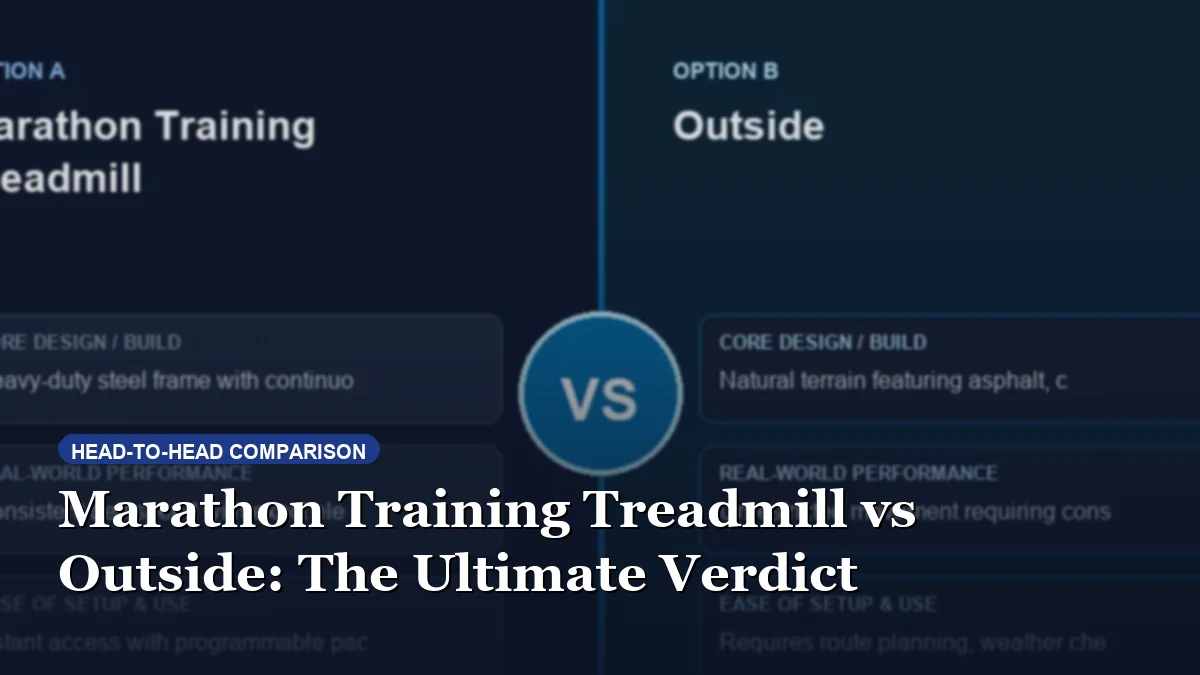
Choose a marathon training treadmill for controlled pacing and joint recovery, but pick running outside to master authentic race-day wind resistance and terrain changes.
Compare all top models in our Best Treadmill: Top Home Fitness Picks (2026 Guide).
Side-by-Side Breakdown
| Criteria | Marathon Training Treadmill | Outside | Edge |
|---|---|---|---|
| Core Design / Build | Heavy-duty steel frame with continuous horsepower motors | Natural terrain featuring asphalt, concrete, and varied trails | Outside |
| Real-World Performance | Consistent belt speed with exact electronic incline control | Unrestricted movement requiring constant neuromuscular adaptation | Outside |
| Ease of Setup & Use | Instant access with programmable pacing and automated cooling | Requires route planning, weather checks, and gear prep | Marathon Training Treadmill |
| Durability & Reliability | Requires periodic belt lubrication and motor brush checks | Zero mechanical failure points except personal wear | Outside |
| Efficiency / Operating Footprint | Consumes significant electrical power during high-speed intervals | Zero electricity consumption utilizing pure human energy | Outside |
| Maintenance Requirements | Regular deck waxing, belt alignment, and dust removal | None beyond cleaning running shoes and apparel | Outside |
| Best Ideal Use Case | Executing precise marathon pace workouts during harsh weather | Building race-specific neuromuscular endurance on actual terrain | Marathon Training Treadmill |
Core Engineering and Mechanical Design
Modern marathon treadmills feature robust continuous horsepower motors designed to sustain high speeds over multi-hour endurance sessions. Their structural integrity relies on heavy steel frames engineered to minimize deck flex under heavy footstrikes.
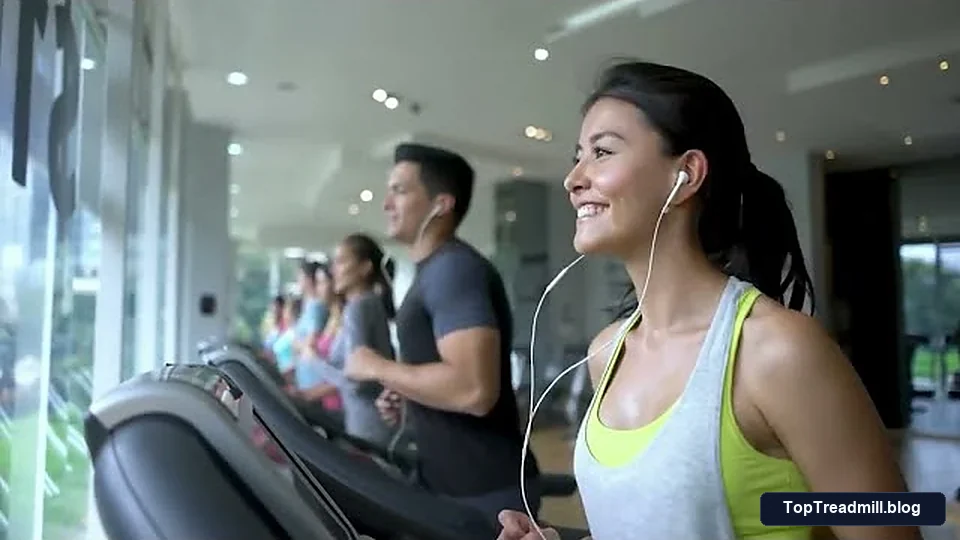
Engineering an indoor training platform requires balancing dampening elastomers with structural rigidity. Too much cushioning alters running economy, while rigid decks increase impact forces on ankles, knees, and hips during long runs.
Outdoor running eliminates mechanical assistance entirely, forcing your musculoskeletal system to absorb natural ground reaction forces. Asphalt and concrete provide zero energy return compared to specialized shock-absorbing treadmill decks.
Comparing structural differences highlights how indoor machines manipulate belt velocity while outdoor training demands self-propelled momentum. This fundamental design contrast alters how your cardiovascular and muscular systems adapt to prolonged endurance loads.
- Heavy-duty frames support prolonged high-speed endurance efforts.
- Internal drive systems maintain precise belt speeds without slipping.
- Shock-absorbing elastomers reduce peak impact force on joints.
- Outdoor terrain delivers unpredictable mechanical resistance and varied impact.
Motor Specifications and Belt Dynamics
A high-torque motor ensures the running belt does not stall when your foot impacts the surface at high velocities. Continuous horsepower ratings above three point zero are essential for serious marathon training blocks.
Belt construction involves multi-ply materials paired with low-friction wax to minimize heat buildup. Premium rollers further enhance durability by distributing tension evenly across the entire running surface during extended efforts.
- Look for continuous horsepower ratings exceeding three point zero.
- Multi-ply belts resist thermal degradation during long endurance runs.
Surface Interaction and Terrain Variance
Selecting a heavy-duty machine highlighted in our best treadmill for marathon runners review provides a completely flat, uniform surface. This consistency helps athletes lock into target paces without unexpected disruptions from potholes.
Outdoor routes present constant elevation changes, cambered roads, and unpredictable footing. Navigating these elements builds stabilizing strength in ankles and core muscles that indoor machines simply cannot replicate.
- Indoor belts provide uniform friction and predictable footing.
- Outdoor routes require dynamic stabilization across uneven pavement.
Biomechanical Stress and Gait Mechanics
Running on a moving belt alters your natural stride length and cadence compared to outdoor pavement. The motorized belt pulls your foot backward, slightly reducing the muscular effort required during the propulsion phase of running.
Comparing pavement mechanics with options in our best treadmill for sprint training guide, outdoor running requires active hip extension and hamstring engagement to drive your body forward against stationary ground.
Joint loading also differs significantly between these two environments due to deck compliance and surface rigidity. Treadmills absorb a portion of the shock, which helps runners recover faster from high-mileage marathon training weeks.
Evaluating stride mechanics reveals why some runners experience tightness when transitioning between indoor and outdoor surfaces. Maintaining a balanced training routine helps prevent repetitive strain injuries caused by identical indoor joint angles.
- Motorized belts assist the propulsion phase, altering natural stride mechanics.
- Outdoor pavement demands active hamstring engagement and hip extension.
- Indoor decks absorb impact forces, reducing acute joint inflammation.
- Transitioning abruptly between surfaces can trigger overuse injuries.
Stride Length and Cadence Adjustments
Many runners adopt a slightly shorter stride length when transitioning to indoor treadmills due to spatial constraints. Monitoring your steps per minute ensures you maintain race-specific cadence targets during structured workouts.
The absence of wind resistance indoors can also cause runners to unconsciously alter their upper body posture. Keeping your shoulders relaxed and gaze forward prevents mechanical inefficiencies from creeping into your indoor form.
- Spatial awareness on the deck often leads to shortened strides.
- Cadence monitors help preserve race-day turnover speeds indoors.
Joint Loading and Injury Prevention
High-mileage marathon blocks place immense repetitive stress on connective tissues and lower extremity joints. Utilizing a treadmill for specific recovery runs can lower peak impact forces and protect vulnerable knees.
However, relying exclusively on cushioned indoor surfaces may weaken intrinsic foot muscles and stabilizing tendons. Integrating outdoor runs ensures your musculoskeletal system adapts to unyielding real-world impact forces.
- Cushioned decks minimize peak impact forces during high-mileage weeks.
- Outdoor running strengthens intrinsic foot muscles and stabilizing tendons.
Environmental Simulation and Weather Control
Weather extremes pose significant challenges for marathon runners preparing during harsh winter or summer months. Treadmills provide a climate-controlled sanctuary where ambient temperature and humidity never disrupt a crucial long distance workout.
Indoor setups lack natural wind resistance, which alters the physiological cost of running at high speeds. To compensate for this discrepancy, many coaches recommend setting a one percent incline to mimic outdoor air drag.
Outdoor training exposes you to unpredictable wind, rain, heat, and direct sunlight that directly test your mental toughness. Experiencing these variable conditions prepares your body to thermoregulate efficiently on race day.
Balancing environmental control with authentic race preparation requires strategic planning throughout your training block. Utilizing indoor tools for safety and speed while venturing outside for heat acclimation yields optimal results.
- Indoor climate control eliminates weather-related workout cancellations entirely.
- Lack of wind resistance indoors requires a one percent incline adjustment.
- Outdoor training builds vital heat acclimation and mental toughness.
- Weather exposure prepares your physiological systems for race-day conditions.
Thermoregulation and Heat Acclimation
Running in hot outdoor environments triggers physiological adaptations like increased plasma volume and sweat efficiency. Indoor air conditioning prevents these vital heat adaptations unless you deliberately turn off fans.
Proper thermoregulation is critical for preventing heat illness during late-spring or early-autumn marathons. Training outdoors ensures your cardiovascular system learns to cool the body under high thermal stress.
- Outdoor heat exposure increases blood plasma volume and sweat rates.
- Air-conditioned indoor spaces hinder natural heat acclimation processes.
Simulating Race-Day Elevation Profiles
Advanced treadmills feature automated incline and decline capabilities to replicate specific course topography. You can program exact elevation profiles to prepare your quads for the grueling downfalls of hilly marathons.
Finding continuous matching hills outdoors requires careful route planning and geographical luck. Indoor elevation programming offers unmatched precision for targeting specific muscular adaptations ahead of race day.
- Automated elevation controls replicate exact marathon course profiles.
- Decline settings prepare quadriceps for steep downhill race segments.
Real-World Performance and Pacing Precision
Executing precise marathon goal paces is exceptionally straightforward on a motorized treadmill belt. You can lock in your exact target speed per mile and eliminate the common tendency to start workouts too fast.
This mechanical pacing enforcement prevents erratic splits during exhausting long endurance runs and tempo sessions. Runners who struggle with pacing discipline often make massive fitness gains by utilizing indoor speed controls.
Outdoor pacing relies entirely on internal feedback, GPS watches, and environmental cues. Mastering this skill outdoors ensures you do not panic when your GPS watch fluctuates under bridges or heavy tree cover.
Combining both modalities creates a comprehensive runner who possesses strict indoor discipline and intuitive outdoor pacing awareness. This dual approach translates directly to confident execution on marathon race morning.
- Motorized belts enforce strict pacing discipline during hard workouts.
- Exact speed controls eliminate common issues with starting runs too fast.
- Outdoor pacing relies on GPS watches and internal physiological cues.
- Mastering both environments builds complete racing confidence and adaptability.
Pacing Discipline and Split Consistency
Maintaining even splits throughout a twenty-miler is crucial for marathon success and metabolic efficiency. Treadmills remove pacing fluctuations caused by fatigue, wind, or distraction during deep workout states.
Learning what a specific pace feels like under controlled conditions helps calibrate your internal metronome. You can then transfer this heightened pacing awareness directly to unassisted outdoor training runs.
- Even splits protect glycogen stores during long endurance efforts.
- Indoor pacing calibration improves internal perceptual awareness.
GPS Accuracy and Course Familiarity
Outdoor runners frequently battle GPS signal dropouts, tall buildings, and winding forest trails. Relying on your internal feel helps you maintain proper effort levels when watch metrics become temporarily unreliable.
Treadmill distance tracking is calibrated through internal roller rotations, offering high mathematical consistency. However, you must ensure the belt is properly tensioned to prevent slight measurement drift over time.
- GPS signals can fail near tall buildings or heavy tree cover.
- Roller-based metrics offer consistent indoor distance tracking.
Maintenance Protocols and Equipment Longevity
Selecting the right model from options featured in our best treadmill for marathon training guide requires consistent mechanical upkeep. Routine tasks include lubricating the running belt, inspecting motor brushes, and cleaning electronic compartments.
Neglecting basic treadmill maintenance can lead to premature motor burnout, friction damage, and costly belt replacements. High-mileage runners must treat equipment care as an integral part of their overall training regimen.
Running outside incurs virtually zero equipment maintenance costs beyond replacing worn athletic footwear. Your running shoes absorb the primary wear and tear, making outdoor training remarkably straightforward from a logistical standpoint.
Weighing maintenance responsibilities helps clarify the true commitment required when choosing an indoor running setup. Runners who prefer zero mechanical upkeep will find outdoor training infinitely more appealing and hassle-free.
- Treadmills require regular belt lubrication and electronic dust removal.
- Neglecting basic maintenance causes premature motor and deck failure.
- Outdoor running eliminates mechanical upkeep aside from shoe replacement.
- Logistical simplicity makes outdoor training attractive for busy runners.
Routine Belt Lubrication and Cleaning
Applying silicone lubricant beneath the running belt prevents excessive friction and thermal breakdown. High-mileage marathoners should perform this maintenance check every few weeks to protect the drive motor.
Vacuuming dust and rubber particles from beneath the motor hood prevents electrical shorts and overheating. Keeping the machine clean significantly extends the operational lifespan of your indoor training investment.
- Silicone lubrication prevents friction damage and motor strain.
- Clearing dust from motor compartments prevents overheating.
Shoe Wear and Footwear Considerations
Treadmill belts cause unique abrasive wear on rubber outsole compounds over thousands of miles. Monitoring your shoe tread ensures you maintain adequate traction and cushioning during intense indoor training blocks.
Outdoor concrete and asphalt accelerate foam midsole degradation through hard impact compression. Tracking your outdoor mileage helps you replace shoes before protective cushioning properties completely break down.
- Treadmill belts create distinct abrasive wear on rubber outsoles.
- Outdoor pavement accelerates midsole cushioning degradation.
Energy Efficiency and Operational Footprint
Operating a heavy-duty marathon treadmill draws substantial electrical current from your household grid. High-speed motor operation, console displays, and incline actuators contribute to noticeable monthly utility cost increases.
Energy consumption scales directly with your body weight and selected belt speeds during long workouts. Runners logging double-digit miles daily will see a measurable impact on their home energy footprint.
Running outside operates entirely on human metabolic energy, requiring zero electricity or specialized infrastructure. This pure efficiency makes outdoor training environmentally friendly and completely independent of power grids.
Analyzing operational footprints highlights the hidden resource commitments associated with indoor training technology. Sustainable runners must weigh electrical consumption against the unmatched weather protection treadmills provide.
- Heavy-duty motors draw significant electrical power during operation.
- Utility costs scale with high-speed training volume and body weight.
- Outdoor running requires zero electricity and minimal infrastructure.
- Environmental sustainability favors unassisted outdoor training methods.
Power Consumption During High-Speed Workouts
Sustaining fast paces requires continuous high-amp draw from the internal drive motor. Peak electrical loads occur during acceleration phases and steep incline simulations under heavy runner weight.
Choosing energy-efficient models with eco-modes can help mitigate household power usage. However, high-performance marathon treadmills will always demand substantial electrical input to operate safely.
- Fast paces and steep inclines maximize electrical current draw.
- Eco-modes help reduce idle power consumption between running sessions.
Spatial Requirements and Room Acoustics
Treadmills occupy a permanent footprint in your home and require proper clearance for safety. Heavy footstrikes also generate low-frequency vibrations that can echo through floors into adjacent rooms.
Using high-density equipment mats helps dampen sound transmission and protect flooring surfaces. Careful room placement ensures your training sessions remain peaceful for family members and neighbors.
- Indoor machines require dedicated floor space and safety clearance.
- Equipment mats help dampen low-frequency footstrike vibrations.
Strategic Selection for Your Training Block
Choosing the ideal equipment from our best treadmill for interval training guide depends entirely on your specific race goals. Evaluating your local climate, schedule flexibility, and injury history guides you toward the optimal training environment.
A hybrid approach often yields the best results for serious marathon build-ups. Utilizing treadmills for precise weekday interval sessions and venturing outside for long weekend runs balances every performance factor.
Safety considerations, such as running in the dark during winter months, also heavily influence this decision. Indoor machines offer a secure, well-lit environment when outdoor visibility is compromised by weather.
Ultimately, your marathon training strategy should remain flexible enough to incorporate both options. Embracing the unique benefits of each training modality ensures you arrive at the start line fully prepared.
- Align your training choice with specific race goals and local climate.
- Hybrid training combines indoor precision with outdoor terrain adaptation.
- Indoor setups provide safe, well-lit running options during dark winter months.
- Flexibility ensures complete physiological preparation for marathon day.
Structuring a Hybrid Training Week
Dedicate indoor treadmill sessions to controlled tempo runs and mid-week speed intervals. This guarantees exact pacing execution without distractions from traffic, weather, or poor lighting conditions.
Reserve your weekend long runs for outdoor routes to build authentic terrain resilience. This balanced schedule protects your joints while preparing your body for real-world race conditions.
- Use indoor treadmills for controlled tempo and interval workouts.
- Reserve outdoor routes for weekend long endurance runs.
Adapting to Race-Day Conditions
Simulate race-day weather and fueling strategies during your final outdoor long runs. Practicing fluid intake on the move prepares your digestive system for actual marathon fueling stations.
Review your training logs to ensure you feel confident handling both mechanical pacing and natural terrain. Comprehensive preparation bridges the gap between indoor control and outdoor unpredictability.
- Practice race-day fueling and hydration during outdoor long runs.
- Review training logs to balance indoor control with outdoor experience.
Frequently Asked Questions
Does running on a treadmill feel identical to running outside?
No, because motorized belts assist your stride propulsion and eliminate natural wind resistance. Incorporating a one percent incline helps bridge this physiological gap.
How does treadmill training prevent common marathon overuse injuries?
Cushioned shock-absorbing decks reduce peak impact forces during high-mileage weeks. This protection helps lower acute stress on vulnerable joints and connective tissues.
Why is outdoor running essential if treadmills offer precise pacing?
Outdoor routes demand dynamic stabilization and build true neuromuscular strength. Experiencing uneven terrain prepares your body for real-world race conditions.
What maintenance does a marathon training treadmill require?
Routine upkeep includes lubricating the running belt and removing electronic dust. These simple tasks protect your motor and prevent premature mechanical failure.
Can I successfully train for a marathon using only a treadmill?
Yes, many runners achieve peak performance using indoor machines for all workouts. However, practicing outside occasionally ensures proper heat acclimation and terrain adaptation.