Curved Treadmill vs Motorised: Engineering Comparison
Navigating the mechanical differences between self-powered curved decks and traditional motorized running machines changes your entire workout dynamic. Understanding these engineering variants ensures optimal performance and injury prevention during intense training sessions.

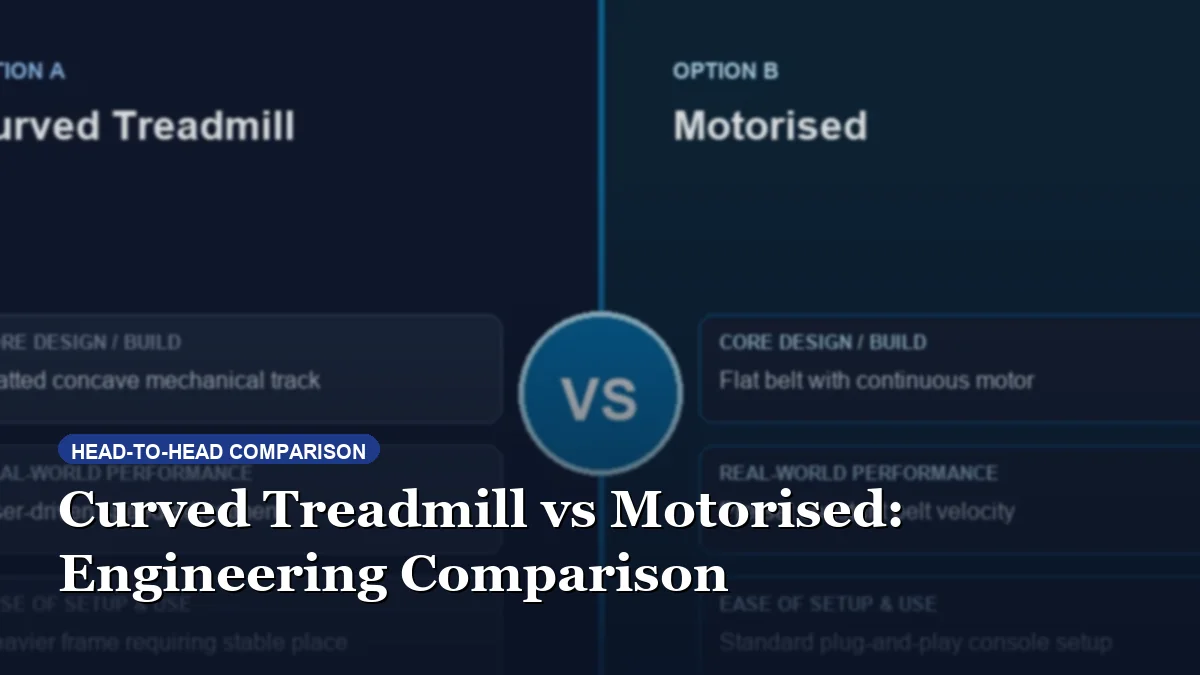
Choose a curved treadmill for intense athletic sprinting and natural running mechanics without electricity. Select a motorized model for steady-state endurance pacing and precise rehabilitation control.
Compare all top models in our Best Treadmill: Top Home Fitness Picks (2026 Guide).
Side-by-Side Breakdown
| Criteria | Curved Treadmill | Motorised | Edge |
|---|---|---|---|
| Core Design / Build | Slatted concave mechanical track | Flat belt with continuous motor | Curved Treadmill |
| Real-World Performance | User-driven speed adjustment | Pre-set constant belt velocity | Motorised |
| Ease of Setup & Use | Heavier frame requiring stable placement | Standard plug-and-play console setup | Motorised |
| Durability & Reliability | Fewer electronic parts to fail | Complex motor and circuit boards | Curved Treadmill |
| Efficiency / Operating Footprint | Zero electrical power consumption | Requires continuous wall power draw | Curved Treadmill |
| Maintenance Requirements | Minimal lubrication and tensioning | Regular belt alignment and deck waxing | Curved Treadmill |
| Best Ideal Use Case | High-intensity interval training and sprinting | Distance running and structured pacing | Motorised |
Core Design and Engineering Fundamentals
Mechanical engineering principles separate self-powered running units from traditional motor-driven alternatives completely. Understanding these baseline structural differences helps users evaluate long-term mechanical reliability and daily operational demands.
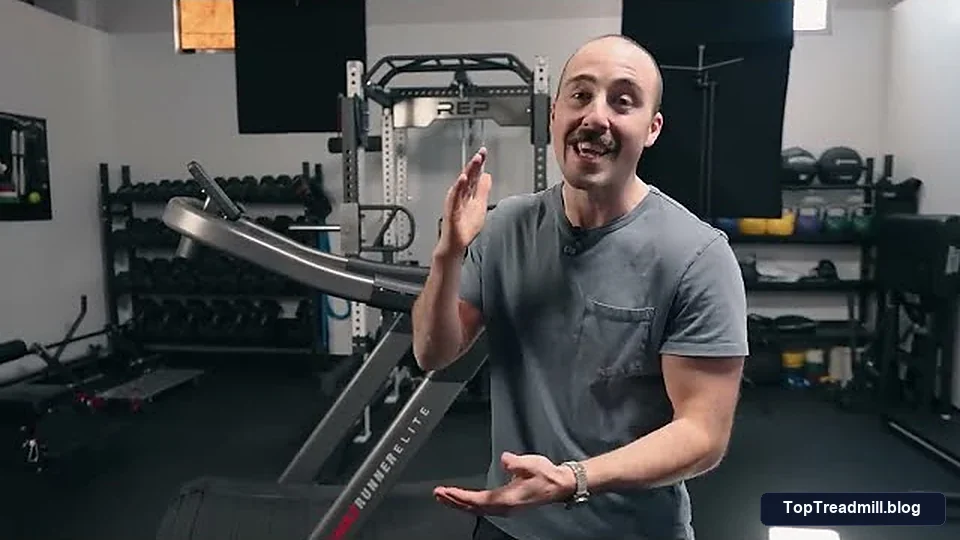
When exploring these options, our best curved manual treadmill guide highlights how a curved treadmill utilizes a concave framework featuring slat-based running surfaces to let your stride directly drive belt rotation.
Curved non-motorized systems rely on a slat-belt design running on precision ball bearings. Users manually drive the concave deck, forcing mechanical interaction that matches true outdoor over-ground running mechanics.
Conversely, motorized treadmills employ continuous-duty continuous horsepower motors driving a flat PVC belt over a phenolic deck. Electrical components manage belt velocity, requiring heavy steel frames to absorb continuous torsional vibration loads.
- Concave curved deck layout promotes forefoot striking.
- Individual aluminum or rubber slats replace continuous nylon belts.
- Zero electrical motor reliance drastically simplifies internal engineering.
Motorized Drive Architecture
Traditional motorized units rely on continuous-duty horsepower motors to drive a flat running belt. These systems require complex electrical controllers and consistent power supplies to maintain steady belt velocities.
Heavy-duty flywheels and rollers manage thermal output and belt tension under heavy runner loads during extended training blocks.
- Continuous horsepower motors dictate maximum belt speed.
- Drive rollers require precise alignment to prevent tracking drift.
Biomechanics and Real-World Performance
Running dynamics shift significantly when transitioning to options featured in our best running treadmill guide. Your body must generate both horizontal propulsion and vertical lift without mechanical assistance.
This mechanical demand forces higher activation of the posterior chain muscles, including hamstrings and glutes, compared to standard motorised running.
Manual curved units eliminate the artificial pull of a motor, demanding higher activation from your hamstrings and glutes. Stride length dictates speed naturally, altering your cadence and foot strike patterns dynamically.
Motorized alternatives provide constant linear velocity, forcing your limbs to keep pace with the rollers. This steady pacing supports sustained endurance runs, though it can alter natural posterior chain engagement.
- Self-driven tracks eliminate passive leg recovery habits.
- Stride rate changes instantly based on foot positioning.
- Increased engagement of hip extensors during acceleration phases.
Pacing Control Dynamics
Motorised units force users to match a pre-determined belt speed established via console buttons. This mechanical pacing proves exceptionally useful for marathon training and maintaining strict endurance zones.
Conversely, curved machines demand constant internal focus to sustain steady pacing without sudden speed surges or unintended slowdowns.
- Digital consoles maintain exact mile-per-hour metrics.
- Curved systems rely entirely on user foot placement.
Power Transmission and Electrical Efficiency
Electrical consumption represents a major divergence in operating costs and installation flexibility for home gyms. Self-powered units require zero wall outlets, offering absolute placement freedom across any room.
Traditional motorized variants, as detailed in our best budget treadmill guide, demand dedicated electrical circuits to prevent breaker trips, especially when running at peak incline and top speeds.
Curved treadmills consume zero grid electricity, relying entirely on human kinetic energy to rotate the bearings. This lack of electronics reduces parasitic power loss and eliminates complex circuit board failures.
Traditional motorized versions draw substantial electrical current from standard household outlets, especially during high-torque acceleration phases. Proper surge suppression is vital to protect sensitive microprocessor motor controllers from damage.
- Zero electricity usage cuts long-term home utility expenses.
- Motorized setups generate noticeable standby and operational power draws.
- Battery-powered consoles on curved units handle simple metric displays.
Energy Conversion Realities
Every step on a curved deck converts human kinetic energy directly into mechanical belt rotation. This direct transfer creates a highly responsive training environment without mechanical lag.
Motorised designs convert electrical energy into rotational force via heavy-duty magnets and copper windings, introducing minor mechanical resistance delays.
- Kinetic conversion eliminates motor torque limitations.
- Electrical resistance requires thermal cooling fans.
Maintenance Protocols and Long-Term Durability
Equipment longevity depends heavily on routine upkeep, component complexity, and overall build quality. Simpler mechanical layouts generally experience fewer catastrophic electronic failures over decades of use.
Curved treadmills feature robust slat assemblies designed to withstand heavy commercial abuse without requiring frequent belt tensioning or electronic calibration.
Slat-belt curved machines demand minimal lubrication because their bearings and rubber slats resist wear effectively. Regular alignment checks and debris removal ensure the mechanical track remains smooth and responsive.
Motorized units require routine silicone lubrication beneath the running belt to prevent excessive friction. Neglecting this step overheats the drive motor, causing premature component degradation and costly electronic repairs.
- Slat systems outlast traditional multi-ply running belts significantly.
- Fewer circuit boards reduce vulnerability to power surges.
- Sealed bearings minimize manual lubrication frequency requirements.
Traditional Upkeep Demands
Motorised equipment demands proactive maintenance routines, including regular silicone deck lubrication and belt tracking adjustments. Neglecting these chores quickly damages expensive motor controllers and running boards.
Routine inspection of drive belts and brushes ensures your motorized investment maintains smooth operation over thousands of miles.
- Silicone lubrication prevents friction buildup under the belt.
- Periodic calibration keeps speed sensors operating accurately.
Setup Footprint and Spatial Requirements
Gym layout planning requires careful consideration of equipment dimensions, weight, and portability features. Heavy commercial frames often lack folding mechanisms, demanding permanent floor allocations.
Many motorised options feature hydraulic folding decks, allowing users to reclaim floor space in smaller home gym environments after completing workouts.
Manual curved treadmills often feature heavier, commercial-grade frames designed to withstand intense multi-directional force vectors safely. Their substantial mass and geometry demand dedicated floor space with solid leveling foot placements.
Standard motorized models frequently incorporate folding hydraulic decks to save valuable room in residential settings. However, their physical footprint still requires adequate rear clearance zones to meet baseline safety standards.
- Non-folding curved frames require dedicated permanent room layouts.
- Transport wheels ease minor repositioning on smooth flooring.
- Substantial unit weights demand reinforced flooring support.
Weight and Structural Stability
The robust steel construction necessary for self-powered running creates exceptionally heavy equipment platforms. This mass guarantees absolute stability during max-effort sprinting drills.
Motorised alternatives balance structural integrity with manageable weight limits, often utilizing lighter frame tubing supported by stabilizer leveling feet.
- Heavy frames prevent lateral rocking during sprints.
- Leveling feet compensate for uneven subfloor surfaces.
Interval Training and Resistance Handling
High-intensity interval training places extreme demands on both human physiology and equipment mechanics. Transitioning from a dead stop to maximum velocity requires instantaneous system responsiveness.
Curved designs excel at explosive interval work because the belt accelerates immediately when you drive through your forefeet, offering limitless top speeds.
Curved surfaces excel during high-intensity interval training due to instant acceleration and deceleration capabilities. Adding manual magnetic resistance levers lets users simulate heavy sled pushes without changing their natural running form.
Motorized alternatives rely on digital console inputs to alter speed and incline settings gradually. While programmable, this electronic lag slows down rapid sprint transitions, reducing efficiency during intense tabata workout protocols.
- Instantaneous speed transitions match explosive athletic bursts.
- Magnetic resistance levers allow added physical workload adjustments.
- Uncapped top speeds accommodate elite professional sprinters.
Motorized Interval Constraints
Traditional motors experience slight acceleration lag when you press buttons to increase speed during quick intervals. This delay can disrupt the natural rhythm of advanced speedwork sessions.
Maximum speed caps on standard motors may also restrict elite athletes who want to push beyond standard twenty miles per hour limits.
- Button response times create minor acceleration delays.
- Top speed limitations restrict elite-level sprint training.
Deciding Your Ideal Fitness Investment
Selecting the right running platform requires matching your specific training goals with the inherent strengths of each engineering style. Budget, available space, and primary workout types dictate your final choice.
Prioritize self-powered curved models if your routine focuses heavily on sprinting, athletic conditioning, and low-maintenance ownership over many years.
Selecting the right machine depends on your primary fitness goals. Reviewing our best treadmill selections helps you evaluate your joint impact tolerances and available home space before making a definitive purchasing choice.
Budget constraints, electrical accessibility, and maintenance willingness should heavily influence your final mechanical decision. Balancing these practical factors guarantees long-term satisfaction with your chosen indoor running apparatus.
- Evaluate your primary goals between steady endurance and sprinting.
- Assess available electrical outlets in your workout area.
- Consider long-term maintenance preferences and mechanical complexity.
When to Choose Motorised
Select a traditional motorized treadmill if you train for distance races requiring strict pacing discipline and incline simulation. These machines offer predictable environments for rehabilitation and structured workouts.
Comfortable console feedback and programmed workouts provide the necessary guidance for runners seeking reliable endurance tracking.
- Incline motors simulate authentic outdoor hill climbing.
- Pre-set programs guide structured cardiovascular endurance training.
Frequently Asked Questions
Do curved treadmills require any electricity to operate?
No electrical power is needed for movement because your running stride drives the belt directly. A small battery usually powers the basic LCD console display.
Can beginners safely use a curved running machine?
Beginners can use them safely after adjusting to the unique self-powered dynamic. Proper coaching helps users manage the natural speed control effectively.
Why do curved treadmills feel harder than standard models?
They require you to pull the belt backward with your own muscle power continuously. This increases engagement of your posterior chain muscles significantly.
Which treadmill type lasts longer under heavy daily use?
Curved models typically outlast traditional units due to their simpler mechanical engineering and robust slat construction. Fewer electronic components mean fewer potential failure points.
Are motorized treadmills better for long-distance marathon training?
Yes, motorized decks excel at maintaining exact, uninterrupted speeds over long durations. This precision helps runners dial in precise race pace targets.