Continuous vs Peak Horsepower Treadmill Motors
Navigating motor specifications determines how long your cardio machine lasts. Understanding continuous and peak ratings prevents costly mechanical breakdowns during intense running sessions.

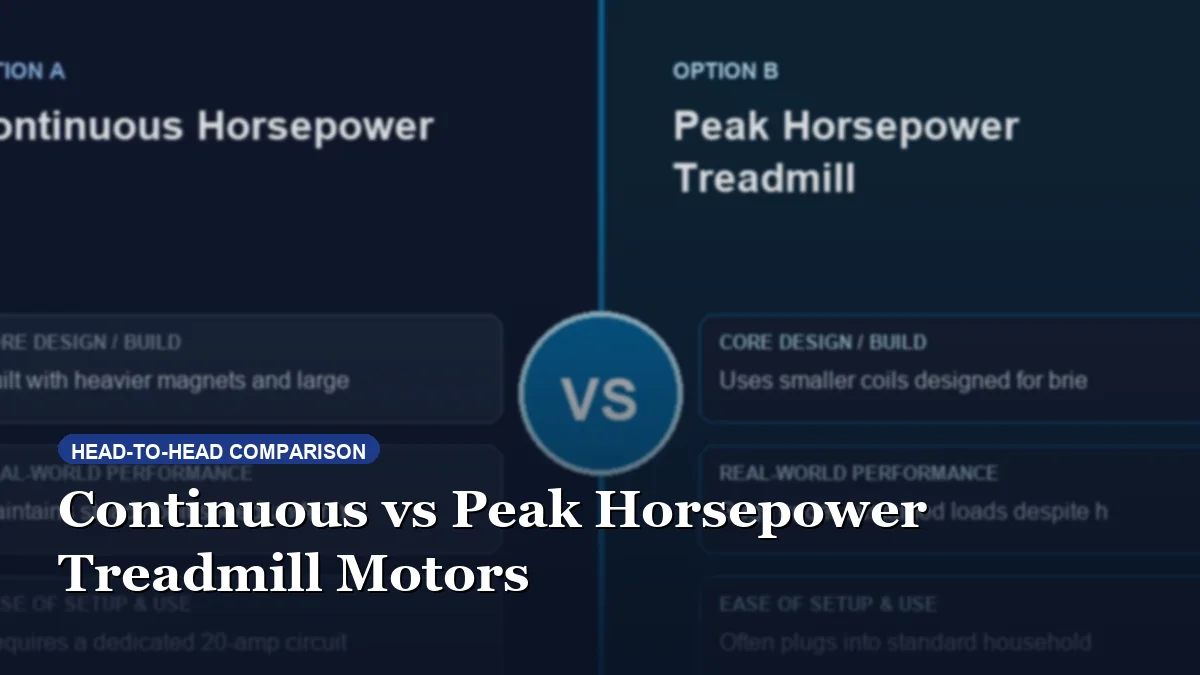
Choose continuous horsepower for reliable distance training and long-term durability. Opt for peak horsepower only if you need a brief burst of acceleration for lightweight sprinting.
Compare all top models in our Best Treadmill: Top Home Fitness Picks (2026 Guide).
Side-by-Side Breakdown
| Criteria | Continuous Horsepower | Peak Horsepower Treadmill | Edge |
|---|---|---|---|
| Core Design / Build | Built with heavier magnets and larger armatures. | Uses smaller coils designed for brief maximum outputs. | Continuous Horsepower |
| Real-World Performance | Maintains steady belt speed under heavy runner weight. | Sags under sustained loads despite high initial burst. | Continuous Horsepower |
| Ease of Setup & Use | Requires a dedicated 20-amp circuit for heavy frames. | Often plugs into standard household outlets easily. | Peak Horsepower Treadmill |
| Durability & Reliability | Resists thermal overload during marathon running. | Prone to winding burnout during extended workouts. | Continuous Horsepower |
| Efficiency / Operating Footprint | Consumes steady electrical current without massive spikes. | Draws extreme amperage spikes when reaching maximum output. | Continuous Horsepower |
| Maintenance Requirements | Demands routine belt lubrication to reduce friction load. | Requires careful monitoring of brushes and commutator wear. | Continuous Horsepower |
| Best Ideal Use Case | Daily distance training and multi-user household setups. | Light jogging and budget-conscious short workouts. | Continuous Horsepower |
Core Motor Engineering Fundamentals
Understanding treadmill engineering requires examining how electric motors convert electrical energy into mechanical movement. Manufacturers use different metrics to describe motor output, creating confusion for buyers.

Continuous horsepower measures the sustained output a motor delivers indefinitely without overheating. This rating reflects true operational capacity during prolonged distance running sessions.
Peak horsepower measures the maximum output a motor achieves for a fleeting moment before stalling. This metric often appears on budget machines to inflate marketing specifications.
Understanding treadmill motors requires examining armature windings and permanent magnets. Reviewing motor requirements for running workouts helps buyers evaluate continuous horsepower versus momentary peak ratings.
Direct current permanent magnet motors dominate residential fitness equipment. These DC systems rely on pulse width modulation controllers to regulate voltage and maintain stable belt speeds under varying runner loads.
Commercial facilities typically upgrade to alternating current induction motors. An AC motor handles higher thermal loads efficiently, eliminating brushes that traditionally wear out under rigorous multi-user daily schedules.
- Continuous motors feature heavier copper windings and larger internal cooling fans.
- Peak motors rely on temporary electrical surges to achieve high initial numbers.
- Engineering standards require continuous ratings for any serious commercial fitness equipment.
Armature Size and Copper Mass
The physical size of the internal armature dictates how well a motor handles thermal stress. Continuous systems utilize dense copper coils that dissipate heat efficiently during long runs.
Smaller peak-rated motors contain less raw material, causing rapid heat accumulation when subjected to sustained friction from a heavy runner's footstrike.
- Higher copper mass reduces electrical resistance and lowers operating temperatures.
- Inadequate thermal mass leads to premature insulation breakdown and motor failure.
Real-World Performance Under Heavy Loads
Your body weight and running stride impose significant mechanical resistance on the walking deck. Choosing the best home treadmill for running models ensures a robust drive system maintains consistent belt velocity.
Continuous horsepower systems maintain steady belt speed even when accommodating heavier runners at steep inclines. This prevents the awkward hesitation or stuttering common in lesser machines.
Peak horsepower units might spin rapidly when unloaded, but their velocity drops noticeably under heavy foot traffic. This sudden deceleration disrupts natural running mechanics and pacing.
When a heavy runner strikes the running belt, friction spikes dramatically. A robust CHP rating ensures the motor maintains torque without stalling or hesitating mid-stride, preserving biomechanical rhythm.
Peak horsepower figures often mask underlying torque deficiencies during extended incline intervals. Motors relying primarily on high peak metrics frequently overheat when forced to sustain steep elevation climbs.
Testing units under maximum user weight capacities reveals significant performance disparities. Machines boasting inferior continuous ratings struggle to recover belt speed quickly following heavy impact deceleration phases.
- Incline walking increases motor load exponentially compared to flat running.
- Consistent torque prevents belt hesitation during high-impact heel strikes.
- Heavy runners require robust continuous ratings to prevent mechanical bogging.
Torque Delivery and Speed Stability
Torque is the rotational force that actually moves the belt against your body weight. Continuous systems generate high torque at low RPMs for immediate response.
Peak systems lack low-end torque, forcing the electronic controller to push excessive current through small windings to prevent stalling.
- Low-end torque dictates how smoothly the treadmill handles sudden speed changes.
- Excessive current spikes degrade electronic controllers over extended periods.
Electrical Efficiency and Heat Dissipation
Electrical efficiency directly impacts your home utility bill and internal electronics lifespan. Evaluating the best treadmill options on the market ensures you find models that convert electrical watts into mechanical motion efficiently.
Continuous motors operate within safe thermal thresholds, drawing stable current during normal workouts. Effective cooling fans keep internal temperatures well below critical insulation limits.
Peak motors generate intense thermal energy when forced to deliver high output continuously. This trapped heat destroys internal components and degrades lubrication inside the motor bearings.
Electrical current draw fluctuates significantly based on motor design and running deck friction. High electrical efficiency minimizes energy waste, converting more incoming wall power into mechanical belt movement.
Excessive heat generation destroys internal copper coil insulation over extended workout sessions. Integrated cooling fans and aluminum heatsinks are mandatory engineering additions designed to dissipate thermal buildup rapidly.
Peak horsepower testing protocols often push electrical windings past safe thermal thresholds momentarily. Continuous operation at these extreme electrical loads inevitably triggers protective thermal overload safety shutdowns.
- Thermal overload protection circuits shut down overheating peak motors automatically.
- Efficient continuous motors reduce wasted electricity and lower operating temperatures.
- Proper ventilation around the motor hood prevents premature thermal degradation.
Flywheel Mass and Thermal Balance
A heavy flywheel stores kinetic energy, smoothing out the minor speed variations between your footstrikes. Continuous systems pair robust motors with heavy, balanced steel flywheels.
Peak systems often use lighter flywheels to make the motor specifications look impressive on paper, sacrificing natural momentum and increasing electrical strain.
- Heavy flywheels absorb shock loads before they reach the motor armature.
- Balanced rotation minimizes bearing wear and reduces overall operating noise.
Long-Term Durability and Mechanical Wear
Investing in a fitness machine means expecting years of trouble-free daily operation. Motor longevity depends heavily on manufacturing quality and the nature of your workout routine.
Continuous horsepower designs withstand the rigors of multi-user households and marathon training blocks. Their durable commutators and brushes resist wear under punishing daily schedules.
Peak horsepower treadmills wear out faster when subjected to regular running routines. The intense thermal cycling eventually causes internal short circuits and permanent motor failure.
Mechanical stress accumulates steadily within the drive motor bearings and flywheel assembly. Selecting equipment with a higher continuous horsepower specification significantly reduces premature component fatigue and failure rates.
Drive belts connecting the motor pulley to the roller experience severe tension cycles. Proper belt tensioning prevents slipping while safeguarding motor shafts from lateral bending stress during high-speed sprints.
Lubrication of the running deck directly impacts total motor load and mechanical longevity. Neglecting routine silicone applications forces the motor to overcome excessive friction, shortening overall drive system lifespan.
- Commercial-grade continuous motors often outlast multiple walking belts.
- Peak-rated units are primarily engineered for light walking and casual jogging.
- Extended manufacturer warranties usually accompany legitimate continuous motor systems.
Brush and Commutator Longevity
Traditional brushed DC motors rely on carbon brushes to transfer electricity to the spinning armature. Continuous motors use oversized brushes that require infrequent replacement.
Peak motors feature smaller contact points that arc and pit rapidly under heavy electrical loads, shortening the overall service life of the entire drive system.
- Carbon dust accumulation inside the motor housing requires periodic vacuuming.
- Advanced brushless designs eliminate this wear point entirely in premium units.
Daily Usability and Workout Dynamics
The responsiveness of your treadmill influences workout quality and user motivation. Comparing options with top budget treadmill choices prevents sluggish motor behavior that ruins intensive interval training sessions.
Continuous motors transition smoothly between recovery paces and sprinting speeds without lagging. This fluid responsiveness mimics outdoor running conditions much more accurately.
Peak motors struggle with rapid speed adjustments, causing noticeable delays when you press the console buttons. This lag can lead to tripping hazards during high-intensity intervals.
User experience hinges on seamless speed transitions during interval training programs. A responsive drive system eliminates awkward lag times when adjusting console speeds for high-intensity sprint intervals.
Sound dampening is another critical factor influenced by motor engineering quality. Premium units operate with minimal audible noise, avoiding the strained whining sounds characteristic of underpowered peak-rated alternatives.
Interval workouts demand rapid torque delivery to accelerate the heavy walking belt instantly. Motors built with robust continuous ratings handle these rapid acceleration demands without faltering or tripping breakers.
- Quick speed transitions enhance high-intensity interval training safety.
- Smooth acceleration protects your joints from sudden mechanical jerks.
- Consistent belt velocity maintains natural running biomechanics throughout workouts.
Incline Performance and Hill Workouts
Simulating steep hills demands immense power from the elevation motor and drive system alike. Continuous motors lift heavy decks effortlessly while maintaining belt speed.
Peak motors often stall or slow down when combining high elevation with a runner's weight, compromising the effectiveness of hill training programs.
- Hill simulations multiply the physical strain on the primary drive motor.
- Robust torque ensures steady climbing speeds on steep inclines.
Maintenance Protocols and Service Lifespan
Proper upkeep preserves your equipment and protects your investment over many years of use. Neglecting basic maintenance will quickly destroy even the highest-rated treadmill motor.
Continuous systems require standard belt lubrication and deck cleaning to minimize friction. Keeping friction low prevents the motor from working harder than necessary.
Peak systems demand even stricter maintenance because their smaller margins leave no room for excess friction. Ignoring lubrication will instantly trigger thermal overload shutdowns.
Preventive maintenance schedules ensure treadmills reach their maximum projected operating lifespan. Regularly cleaning dust from the motor compartment prevents insulation breakdown caused by accumulating household debris and pet hair.
Inspecting internal wiring harnesses during annual tune-ups protects against electrical shorts. Technicians often measure armature resistance to diagnose early brush wear before complete motor failure interrupts your training routine.
High-end equipment featuring industrial components requires far less frequent servicing than budget models. Investing in proper engineering specifications yields reliable service longevity across years of demanding daily use.
- Silicone-based lubricants reduce running deck friction significantly.
- Regularly check drive belt tension to prevent slipping and premature wear.
- Keep the motor compartment free of dust to maintain proper airflow.
Troubleshooting Motor Warnings
Modern treadmills feature diagnostic codes to alert users of impending motor failures. Recognizing these error signals prevents catastrophic electrical fires and costly repairs.
Consult your user manual immediately if you notice burning smells, unusual grinding noises, or erratic belt speeds during your standard walking sessions.
- Unusual electrical odors indicate overheating insulation or failing windings.
- Grinding sounds point directly to worn motor bearings needing replacement.
Selecting the Optimal Motor Spec for Your Gym
Choosing between these motor specifications depends entirely on your specific fitness goals and household usage patterns. Assess your daily routine honestly before purchasing any equipment.
Select a continuous motor if you plan on running regularly, training for races, or sharing the machine with multiple family members. It provides unmatched safety and longevity.
Consider a peak-rated model only if you need a lightweight folding machine strictly for light walking while working or watching television at low speeds.
Choosing the correct treadmill requires matching specifications to your specific training style. Walkers can manage lower ratings, whereas marathon runners need robust continuous power to support extended high-speed mileage.
Household member count also dictates minimum motor requirements for shared equipment. Multi-user households benefit immensely from selecting machines with superior thermal capacities to handle back-to-back workout sessions safely.
Disregarding marketing hype focused on inflated peak numbers ensures better long-term satisfaction. Prioritizing verified engineering standards guarantees your investment delivers reliable mechanical performance throughout its entire operational lifecycle.
- Match the motor rating to your exact body weight and running frequency.
- Prioritize continuous horsepower for any household with dedicated runners.
- Verify technical specifications carefully rather than relying on flashy marketing terms.
Budget Allocation and Long-Term Value
Treadmills featuring genuine continuous horsepower motors require a higher initial financial investment. However, their superior durability delivers much better long-term value.
Cheaper peak horsepower machines often result in early replacement costs, making them a false economy for anyone serious about consistent cardiovascular training.
- Quality engineering saves money on replacement parts over the years.
- Upfront investment in a strong motor prevents frustrating breakdowns.
Frequently Asked Questions
What is the main difference between continuous and peak horsepower?
Continuous horsepower measures sustained output indefinitely without overheating, whereas peak horsepower measures a brief maximum burst before stalling. Always prioritize continuous ratings for serious running routines.
Can I run long distances on a peak horsepower treadmill?
Running long distances on a peak-rated machine risks motor burnout and thermal overload. You should select continuous motors for marathon training and heavy usage.
How much continuous horsepower do I need for running?
Standard runners need at least three continuous horsepower to support adult body weights smoothly. A robust continuous rating ensures reliable belt speed under heavy loads.
Why do manufacturers advertise peak horsepower instead?
Manufacturers use peak ratings because higher numbers look impressive on budget marketing materials. Smart buyers always check for the continuous specification instead.
Do peak horsepower treadmills use more electricity?
Peak motors draw extreme amperage spikes when pushed to their limits, generating intense heat. Efficient continuous systems operate with stable current draws.