Commercial Treadmill vs Residential Treadmill Comparison
Choosing between gym-grade muscle and home-friendly engineering dictates long-term performance. Understanding these structural differences ensures you select the optimal machine.

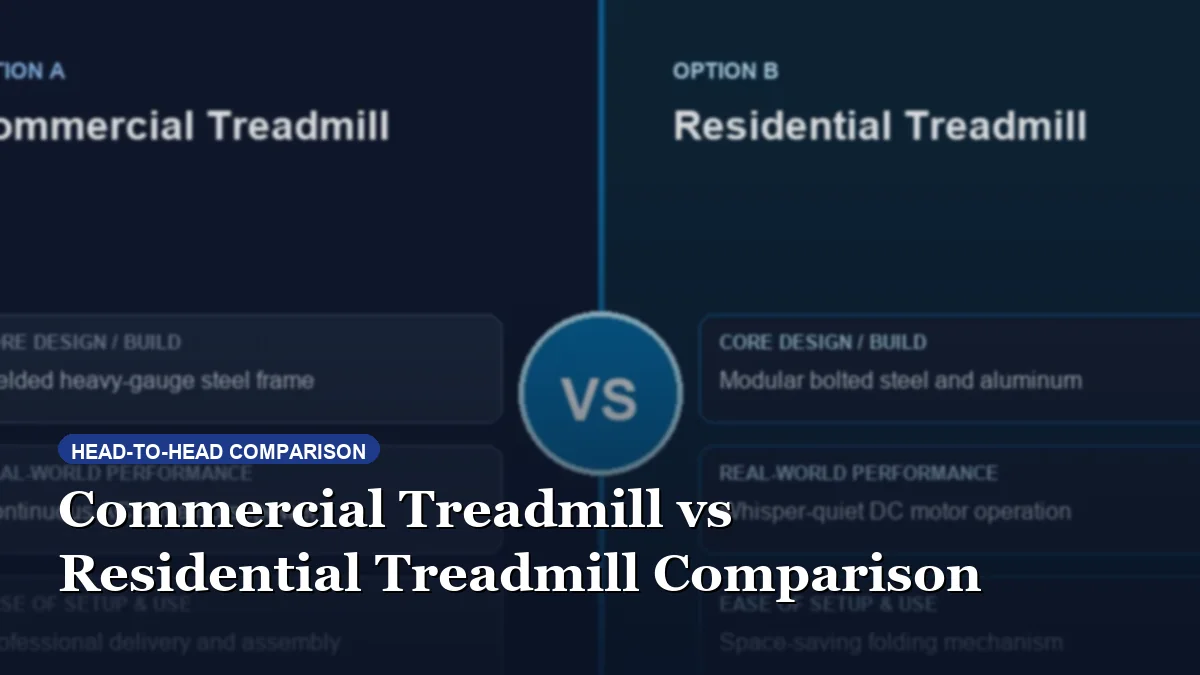
Choose a commercial treadmill for heavy multi-user environments demanding 350-plus pound weight capacities. Opt for a residential treadmill when saving floor space and protecting standard 120-volt household circuits matter.
Compare all top models in our Best Treadmill: Top Home Fitness Picks (2026 Guide).
Side-by-Side Breakdown
| Criteria | Commercial Treadmill | Residential Treadmill | Edge |
|---|---|---|---|
| Core Design / Build | Welded heavy-gauge steel frame | Modular bolted steel and aluminum | Commercial Treadmill |
| Real-World Performance | Continuous AC drive horsepower | Whisper-quiet DC motor operation | Commercial Treadmill |
| Ease of Setup & Use | Professional delivery and assembly | Space-saving folding mechanism | Residential Treadmill |
| Durability & Reliability | Designed for 24/7 public use | Optimized for single household routines | Commercial Treadmill |
| Efficiency / Operating Footprint | Fixed massive footprint | Hydraulic stow-away capability | Residential Treadmill |
| Maintenance Requirements | Scheduled technician service visits | User-performed periodic belt lubrication | Residential Treadmill |
| Best Ideal Use Case | Busy multi-user fitness facilities | Dedicated home gym runners | Commercial Treadmill |
Core Design and Structural Engineering
Heavy-duty steel frames define commercial treadmills by resisting severe torsional flex under extreme workloads. Manufacturers weld thick structural gauges to support continuous public gym usage without structural degradation.
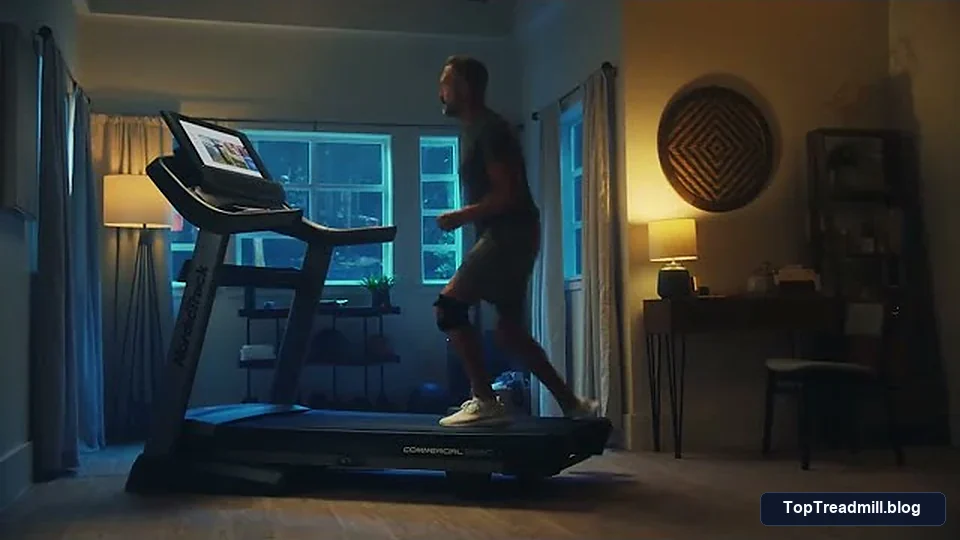
Residential models utilize lighter aluminum or folded steel components to reduce overall shipping weight. While adequate for solitary runners, these frames lack the massive mass required for multi-hour daily operation.
Commercial frames utilize heavy-gauge welded steel tubing weighing upwards of four hundred pounds. As detailed in our commercial 1750 treadmill review, this massive mass mitigates lateral vibration during intense sprints.
Residential units incorporate bolted aluminum or thinner steel profiles to reduce overall shipping weight. While sufficient for daily jogging, these frames flex under continuous multi-user abuse over prolonged operational lifespans.
- Welded heavy-gauge steel frame construction.
- Bolt-together residential structural profiles.
- Massive gross weight thresholds exceeding 350 pounds.
Chassis Stability and Frame Rigidity
Frame stability directly dictates user confidence during high-speed intervals. Commercial variants employ reinforced uprights that eliminate side-to-side swaying even during aggressive sprinting sessions.
Home units incorporate modular joints that simplify freight delivery and basement assembly. However, these multi-piece connections introduce micro-flex points that gradually loosen under heavy foot strikes.
- Upright gussets prevent torsional twisting.
- Modular assembly bolts require periodic torque checks.
Motor Dynamics and Electrical Standards
Continuous horsepower ratings separate commercial AC drive systems from residential DC motors. A robust AC motor delivers instantaneous torque without overheating during back-to-back user sessions.
Residential DC motors provide whisper-quiet operation suited for shared living spaces. They draw less starting current but struggle to maintain stable speeds under prolonged, heavy resistance workloads.
Commercial treadmills demand continuous horsepower motors exceeding 3.0 CHP, utilizing large armatures and external cooling fans. They draw dedicated twenty-amp currents to sustain heavy belt resistance without thermal overload.
Home models typically feature smaller motors peaking around 2.5 to 3.0 CHP with internal cooling limits. As shown in our favorite residential running treadmills, standard fifteen-amp circuits easily power them.
- AC drives operate continuously without thermal overload.
- DC motors require periodic brush inspections.
- Dedicated 20-amp circuits often power commercial units.
Electrical Draw and Circuit Protection
Commercial equipment demands dedicated high-amperage wall outlets to prevent frequent circuit breaker trips. Facilities must verify local electrical infrastructure before deploying heavy gym-grade cardiovascular units.
Residential treadmills plug safely into standard household outlets without requiring costly electrical upgrades. This plug-and-play convenience makes home units accessible for standard bedroom or basement gym setups.
- Standard 120-volt household circuit compatibility.
- Heavy electrical loads necessitate professional installation.
Deck Composition and Cushioning Technology
Reversible phenolic decks on commercial machines double component lifespan by allowing routine flipping. These thick boards endure millions of foot impacts while maintaining structural integrity and surface flatness.
Residential decks feature specialized elastomer cushioning systems designed to absorb impact shock. As outlined in our top commercial running treadmill guide, softer residential suspensions wear out quickly under heavy volume.
Commercial running decks feature reversible phenolic-coated medium-density fiberboard measuring one inch thick. Heavy elastomers or variable-hardness shock absorbers absorb relentless pounding from diverse runners without degrading quickly.
Residential decks use thinner three-quarter-inch boards paired with softer elastomer cushions to maximize joint comfort. These consumer systems favor immediate plushness over the long-term structural durability required in public facilities.
- Reversible multi-ply running boards.
- Elastomer shock-absorption cushioning elements.
- Maintenance-free waxed belt surfaces.
Friction Management and Lubrication Systems
Self-lubricating belt technologies reduce friction heat in high-traffic commercial environments. This automated upkeep minimizes belt wear and prevents premature motor strain during continuous daily operation cycles.
Home treadmills typically require manual silicone lubrication every few months to maintain smooth belt glide. Neglecting this simple chore accelerates belt friction and damages the underlying drive motor.
- Automated fluid reservoirs supply continuous lubrication.
- Manual silicone oil application schedules.
Console Software and Biometric Tracking
Intuitive LED matrices and simplified workout consoles prioritize reliability in public fitness facilities. Commercial interfaces avoid complex software glitches by focusing on core speed and incline adjustments.
Residential machines emphasize immersive HD touchscreens and integrated virtual training applications. These vibrant displays stream instructor-led classes directly into your home gym environment for enhanced motivation.
Facility consoles prioritize rugged membrane buttons and open-source telemetry receivers compatible with commercial chest straps. Their firmware eliminates consumer distractions, focusing entirely on reliable diagnostic reporting and emergency stop compliance.
Residential touchscreens integrate streaming entertainment apps, virtual scenic routes, and extensive user profile management. These consumer interfaces require frequent software updates and depend on robust home Wi-Fi connectivity for operation.
- Simplified commercial LED workout consoles.
- Immersive streaming touchscreens for home users.
- Advanced telemetry heart rate receiver compatibility.
Connectivity and Subscription Ecosystems
Open-platform commercial consoles allow seamless integration with third-party fitness tracking applications. Users can sync their workout metrics instantly without locking into proprietary subscription models or software ecosystems.
Residential equipment frequently ties advanced incline control to mandatory monthly streaming subscriptions. Evaluating these ongoing digital costs remains essential when budgeting for long-term home equipment ownership.
- Proprietary fitness streaming app integration.
- Open Bluetooth data transfer protocols.
Footprint, Portability, and Home Integration
Fixed non-folding frames dominate commercial spaces due to maximum structural stability demands. These massive footprints require dedicated permanent floor space that cannot be easily reconfigured or tucked away.
Space-saving hydraulic fold mechanisms allow residential treadmills to stow upright after workouts. This innovative folding design protects living areas while accommodating multi-functional rooms in apartments or houses.
Commercial machines maintain a fixed, non-folding heavy footprint designed for dedicated fitness floor spaces. Their sheer weight requires professional rigging crews and reinforced subflooring to prevent structural damage indoors.
Home treadmills frequently incorporate hydraulic-assisted folding mechanisms and transport wheels for garage placement. This compact engineering allows users to reclaim valuable living space despite slight compromises in lateral stability.
- Fixed non-folding heavy structural footprints.
- Hydraulic assisted soft-drop folding decks.
- Transport wheels for repositioning residential units.
Ceiling Clearance and Step-Up Heights
High-step commercial decks demand adequate vertical clearance in basement installations. Taller users must calculate ceiling height limits carefully to prevent head impacts during steep maximum incline workouts.
Lower step-up heights on residential models improve accessibility for rehabilitation patients and older adults. These thoughtful ergonomic adjustments ensure safe mounting without requiring elevated platform steps.
- Elevated deck height requirements.
- Accessible low-profile rear roller designs.
Maintenance Protocols and Long-Term Service
Commercial treadmills require scheduled technician visits to inspect belts, motors, and electronic wiring harnesses. Professional maintenance plans ensure continuous operation under extreme daily usage metrics and heavy loads.
Homeowners typically handle basic upkeep tasks like belt alignment and cleaning independently. Understanding these DIY service requirements helps preserve warranty coverage and extends overall equipment operating lifespans.
Commercial maintenance demands monthly belt tension checks and commercial silicone lubrication applied to reversible decks. Facilities rely on modular component designs that allow rapid swapping of worn electronic control boards.
Residential upkeep relies on user-friendly silicone wax bottles and occasional drive belt alignments. Consumer warranties often exclude heavy commercial usage, limiting manufacturer liability when deployed outside domestic environments improperly.
- Professional service contract support availability.
- User-performed belt alignment procedures.
- Comprehensive component warranty duration tiers.
Component Replacement and Spare Parts Availability
Commercial manufacturers guarantee spare parts availability for decades to support heavy gym investments. Facilities can quickly replace worn rollers or motors without forcing premature equipment retirement cycles.
Residential spare parts availability varies widely across different consumer brands and budget tiers. Sourcing replacement circuit boards for older home models can sometimes prove challenging after several years.
- Long-term industrial parts supply guarantees.
- Consumer electronics lifecycle constraints.
Investment Value and Operational Suitability
Initial capital outlays for commercial machines reflect industrial-grade materials and engineering. For example, our Nordictrack Commercial 2450 treadmill review highlights why gym owners view heavy upfront costs as necessary investments.
Residential treadmills balance cost-effective manufacturing with features optimized for single-household running routines. Selecting the right category depends on your specific daily mileage goals and user frequency.
Commercial units represent a substantial capital expenditure built to withstand twenty-four-seven usage across hundreds of diverse members. Their robust engineering ensures minimal downtime and predictable long-term facility operating costs.
Residential equipment offers optimal cost-efficiency for individual households seeking reliable cardiovascular conditioning without commercial overhead. Selecting the appropriate category prevents premature mechanical failure and ensures safe daily operational performance.
- Industrial capital expenditure planning.
- Consumer budget optimization strategies.
- Daily user volume capacity calculations.
Resale Value and Equipment Depreciation
Well-maintained commercial treadmills retain significant resale value among used equipment buyers and local gyms. Their robust build quality ensures secondary market demand remains strong even after years of service.
Consumer fitness equipment generally experiences rapid depreciation once removed from original packaging. Finding buyers for used residential models can prove difficult due to shipping constraints and warranty limitations.
- Strong secondary market resale demand.
- Rapid consumer electronics depreciation rates.
Frequently Asked Questions
Can I install a commercial treadmill on a standard home electrical circuit?
Most commercial units demand dedicated high-amperage breakers to prevent power trips. Consulting an electrician before delivery is crucial for safe residential installation.
Why do residential treadmills feature folding decks while commercial models do not?
Folding mechanisms introduce minor structural flex that cannot withstand continuous commercial use. Heavy gym machines prioritize absolute frame stability over space-saving folding convenience.
Do commercial treadmills require professional maintenance technicians?
Scheduled professional servicing ensures motors and electronic harnesses remain fully operational. Regular maintenance contracts protect heavy capital investments in busy fitness facilities.
Are residential treadmills suitable for marathon training runners?
High-end residential models handle heavy weekly mileage when properly maintained. However, heavy runners pushing extreme paces may exceed standard DC motor limits.
How long do commercial running belts typically last before replacement?
Reversible decks and industrial multi-ply belts can endure millions of foot strikes. Routine lubrication schedules maximize overall component lifespan in commercial settings.