AC vs DC Motor Treadmills: Technical Comparison
Choosing the correct drive system dictates your treadmill's longevity and performance profile. Understanding electromechanical differences ensures proper facility or home gym investments.

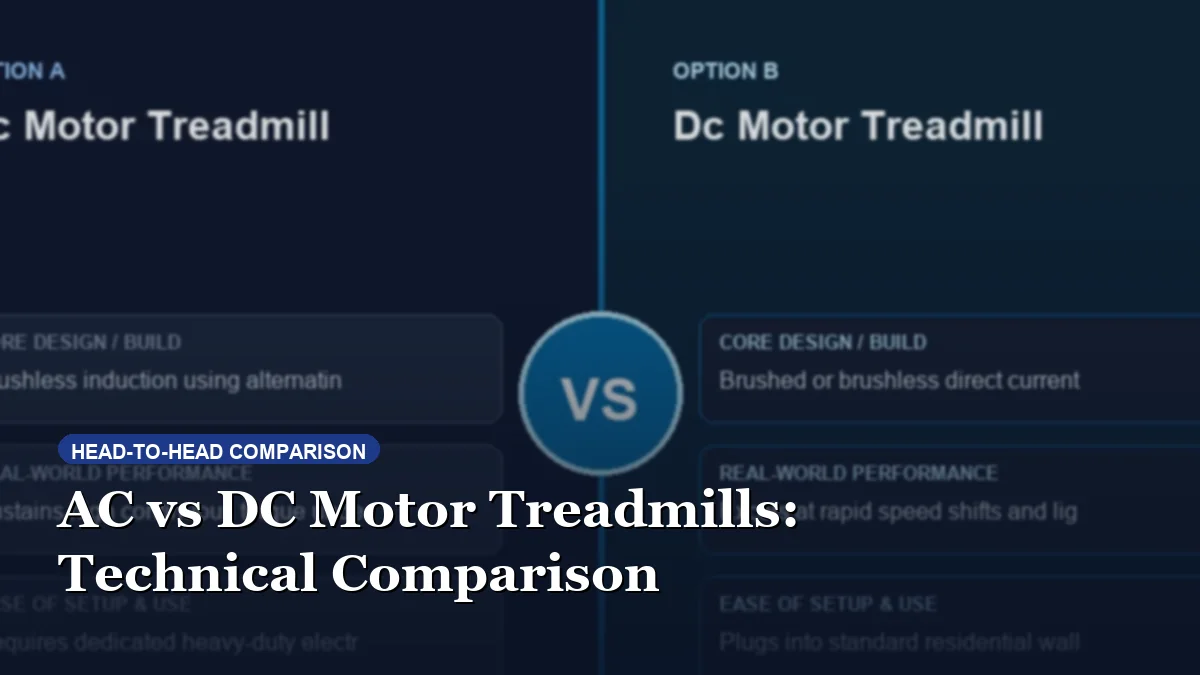
Commercial facilities prioritizing heavy daily traffic should choose AC motor systems for continuous torque delivery, while residential users needing smooth speed transitions will prefer DC motor systems.
Compare all top models in our Best Treadmill: Top Home Fitness Picks (2026 Guide).
Side-by-Side Breakdown
| Criteria | Ac Motor Treadmill | Dc Motor Treadmill | Edge |
|---|---|---|---|
| Core Design / Build | Brushless induction using alternating current | Brushed or brushless direct current magnets | AC Motor Treadmill |
| Real-World Performance | Sustains high continuous torque under heavy loads | Excels at rapid speed shifts and light jogging | AC Motor Treadmill |
| Ease of Setup & Use | Requires dedicated heavy-duty electrical lines | Plugs into standard residential wall outlets | Dc Motor Treadmill |
| Durability & Reliability | Designed for multi-user commercial environments | Built for single-user home walking and running | AC Motor Treadmill |
| Efficiency / Operating Footprint | Higher electrical draw under idle conditions | Modulates power efficiently based on demand | Dc Motor Treadmill |
| Maintenance Requirements | Minimal upkeep due to brushless internal layout | Requires periodic brush inspections and replacements | AC Motor Treadmill |
| Best Ideal Use Case | Busy commercial fitness centers and running clubs | Apartments, home gyms, and daily walking pads | AC Motor Treadmill |
Engineering Fundamentals and Electromechanical Design
Alternating current drive systems operate without internal brushes by utilizing electromagnetic induction to spin the rotor. This fundamental architectural shift eliminates major friction points found inside traditional fitness machinery designs today.

Direct current alternatives rely on permanent magnets and physical brushes to transfer electrical current directly to the armature. Such physical contact introduces mechanical wear that engineering teams must manage over extended lifespans.
- Induction coils replace permanent magnets in commercial layouts.
- Physical carbon brushes transfer electricity in standard variants.
- Rotational friction is significantly reduced in brushless motors.
Stator and Rotor Interactions
The stator creates a rotating magnetic field that forces the rotor to turn without direct physical contact. This non-contact energy transfer reduces heat accumulation during extended running sessions on heavy frames.
Direct current armatures require precise commutator alignment to maintain smooth electrical flow across varying speeds. Misalignment can cause micro-arcs that degrade internal copper windings over sustained operational hours.
- Magnetic fields drive induction rotors efficiently.
- Commutators require precise alignment for stable operation.
Engineering Fundamentals and Electromechanical Design
Alternating current motors rely on stator-generated rotating magnetic fields that induce rotor current without physical contact, whereas direct current builds power using permanent magnets and mechanical commutators inside the housing.
This foundational architecture directly dictates component longevity, which you can evaluate via our home treadmill motor lifespan guide to understand structural mounting plates and internal stress limits.
Power Delivery and Continuous Torque Output
Heavy runners demand consistent belt resistance that does not stutter when foot strikes peak during sprinting intervals. Commercial units excel here by delivering massive continuous horsepower without thermal throttling or speed drops.
Residential variants provide responsive acceleration curves ideal for interval training programs where speed adjustments happen rapidly. Their lightweight flywheels spin up instantly when users tap the console speed buttons.
- Continuous horsepower ratings define heavy-duty running capacity.
- Peak torque output prevents belt hesitation on heavy strikes.
- Acceleration responsiveness varies between commercial and home builds.
Handling Heavy Runner Loads
When a heavy runner steps onto a moving belt, the motor experiences an immediate mechanical braking force. If your deck slips, consult our motor belt replacement guide to restore proper tension.
Smaller direct current builds might experience momentary velocity dips before internal feedback loops compensate. Modern controller boards mitigate this by injecting extra voltage pulses during high-impact running phases.
- Footstrike resistance challenges internal motor controllers.
- Voltage compensation circuits stabilize sudden velocity drops.
Power Delivery and Continuous Torque Output
Heavy runners demand uninterrupted power delivery across variable speeds, making continuous horsepower ratings far more critical than peak metrics when evaluating endurance running performance under intense physical load.
Alternating current systems maintain flat torque curves across extended operational windows, ensuring the belt never slips or stutters when a heavy user strikes the deck at maximum inclination.
Electrical Efficiency and Circuit Requirements
Industrial units demand robust power sources, requiring dedicated circuits to handle high startup loads. Additionally, reading our treadmill motor dust cleaning guide ensures safe long-term maintenance practices.
Residential alternatives connect seamlessly to standard household wall receptacles without risking domestic electrical overloads. Their optimized power conversion modules draw only the electricity required for current user weight loads.
- Dedicated circuits prevent commercial breaker tripping events.
- Standard wall outlets power most residential treadmill models.
- Power factor correction improves overall grid energy efficiency.
Inverter Technology Integration
Variable frequency drives convert incoming wall electricity into precise frequencies required to control induction motor speeds. These sophisticated inverters optimize power draw across broad velocity spectrums very effectively.
Pulse-width modulation controllers manage direct current voltage delivery by rapidly switching power on and off. This efficient modulation keeps operating temperatures manageable during long endurance walking routines.
- Variable frequency drives manage industrial induction speeds.
- Pulse-width modulation optimizes home unit voltage flows.
Electrical Efficiency and Circuit Requirements
Residential direct current setups typically plug into standard 15-amp wall outlets, converting household alternating current via internal pulse width modulation controllers to regulate belt speed accurately.
Heavy-duty commercial alternating current systems often demand dedicated 20-amp circuits to safely handle the massive electrical draw required during high-speed startup phases and steep incline climbs.
Thermal Management and Heavy-Duty Operation
Frictional heat is the primary enemy of fitness equipment longevity, requiring robust cooling fans and large aluminum heat sinks. Industrial designs incorporate massive cooling architectures to survive twelve-hour daily commercial operating schedules.
Home models utilize smaller internal cooling fans tailored for intermittent residential usage patterns lasting under two hours. Running these units continuously in hot rooms can trigger thermal overload safety shutdowns.
- Commercial cooling fans prevent premature winding insulation failure.
- Aluminum heat sinks dissipate operational heat away quickly.
- Thermal sensors protect internal wiring from excessive temperatures.
Continuous Duty Cycle Limits
Commercial fitness equipment is rated for continuous duty cycles without mandatory cooling pauses between multiple users. This endurance makes them ideal for busy health clubs and physical therapy rehabilitation clinics.
Residential machines often specify maximum daily runtime limits in their technical manuals to prevent motor burnout. Exceeding these manufacturer guidelines will quickly void standard warranty coverage protections entirely.
- Continuous duty ratings support back-to-back facility workouts.
- Runtime limits protect residential units from thermal damage.
Thermal Management and Heavy-Duty Operation
Heat dissipation remains the ultimate limiting factor for motor longevity, necessitating heavy aluminum heatsink fins and internal cooling fans to prevent premature insulation breakdown inside the enclosure.
While direct current models warm up quickly under sustained usage, alternating current units dissipate internal thermal loads much more efficiently during back-to-back group fitness endurance sessions.
Maintenance Protocols and Brush Wear Analysis
Brushless industrial designs eliminate the need for routine internal component replacements, drastically lowering long-term service overhead expenses. Facility managers appreciate this reliability when maintaining fleets of multiple cardio machines simultaneously.
Brushed alternatives require scheduled technical inspections to measure carbon brush degradation over months of regular use. Worn brushes must be replaced promptly to prevent severe electrical scarring on internal armatures.
- Brushless architecture removes routine internal wear items.
- Carbon brush inspections prevent catastrophic motor failure events.
- Service overhead costs favor industrial machinery over time.
Scheduled Component Inspections
Technicians should inspect commutator surfaces every six months. Following our motor hood dust cleaning guide helps prevent electrical short circuits on the internal motor controller board.
Industrial induction setups require only basic exterior dusting and belt lubrication checks during routine facility maintenance rounds. Their sealed internal bearings operate reliably for years without direct technician intervention.
- Semi-annual inspections catch carbon dust accumulation early.
- Sealed bearings eliminate internal lubrication maintenance tasks.
Maintenance Protocols and Brush Wear Analysis
Traditional direct current motors rely on carbon brushes that gradually disintegrate against the rotating armature, requiring routine inspections and eventual component replacements after thousands of operating miles.
Brushless alternating current designs eliminate this friction point entirely, providing virtually maintenance-free operation that makes them exceptionally ideal for busy commercial facilities lacking dedicated on-site technicians.
Noise Profiles and Acoustic Footprint
Industrial drive systems generate a distinct low-frequency hum during operation due to the electromagnetic inverter frequencies involved. While noticeable, this industrial sound profile blends easily into busy commercial gym ambient noise levels.
Home units prioritize quiet operation to prevent disturbing household members or downstairs neighbors during early morning workouts. Their enclosures dampen mechanical vibrations effectively across typical residential flooring materials.
- Inverter frequencies create a distinct commercial operating hum.
- Acoustic dampening protects residential spaces from loud vibrations.
- Floor mats further isolate mechanical sound transmission paths.
Vibration Damping and Enclosures
Rubber motor mounts isolate the heavy steel frame from high-frequency vibrations generated by spinning armatures. Proper isolation prevents structural resonance from echoing through multi-story apartment building floor joists.
Acoustic shielding inside the motor hood channels cooling airflow while muffling high-pitched electromagnetic whine. Manufacturers test these housings rigorously to meet strict home appliance decibel standards.
- Rubber mounts isolate frame vibration transmission effectively.
- Internal shielding muffles high-pitched electromagnetic whine.
Noise Profiles and Acoustic Footprint
The mechanical clicking of carbon brushes and the high-pitched whine of pulse width modulation controllers give direct current treadmills a distinct acoustic signature during high-speed intervals.
Conversely, modern alternating current induction motors produce a deeper electromagnetic hum that blends easily into ambient gym noise, reducing overall sound annoyance for nearby users.
Choosing the Right Drive System for Your Facility
Selecting the correct equipment hinges on accurately assessing your daily user volume, runner weights, and electrical infrastructure capabilities. Investing in commercial-grade hardware pays dividends when subjected to punishing multi-user daily schedules.
Residential purchasers should evaluate their specific training goals to ensure the chosen machine matches their running intensity. Prioritizing build quality guarantees years of trouble-free cardio training in your personal space.
- Evaluate daily user volume before making a final purchase.
- Electrical infrastructure dictates whether commercial units are feasible.
- Matching motor specs to training intensity ensures optimal longevity.
Cost-to-Longevity Analysis
While industrial machines require higher upfront capital investments, their extended operational lifespans reduce replacement frequency significantly. Facilities save money over decades by deploying robust commercial-grade hardware from the start.
Home fitness machines offer affordable entry points for casual walkers and light joggers seeking convenient indoor workouts. Their scaled-down components match typical residential budgets without sacrificing essential training safety features.
- Upfront investments balance against extended commercial lifespans.
- Residential units provide accessible entry points for walkers.
Choosing the Right Drive System for Your Facility
Selecting the appropriate motor technology requires balancing upfront equipment budgets against long-term service intervals, power availability, and projected daily usage hours in your specific workout environment.
While home users benefit greatly from the smooth, responsive acceleration of direct current units, heavy commercial spaces demand the robust durability and unyielding reliability of alternating current systems.
Frequently Asked Questions
What is the primary difference between these two drive types?
Commercial induction models operate without carbon brushes using alternating current power to deliver maximum continuous torque. Conversely, residential units rely on direct current magnets for smooth speed adjustments.
Can I install an industrial machine in a standard house?
Most commercial units require specialized heavy-duty electrical circuits to safely handle high startup power draws. Standard home outlets will frequently trip breakers when powering these heavy industrial motors.
How often do residential motors need professional servicing?
Residential units require periodic inspections of their carbon brushes and internal dust accumulation every six months. Replacing worn brushes prevents permanent damage to the delicate internal motor armature.
Why do commercial models cost significantly more money?
Industrial builds feature massive cooling architectures, heavy-duty induction coils, and continuous-duty ratings designed for fitness clubs. These robust commercial components withstand punishing multi-user schedules without overheating.
Which option is quieter for apartment building workouts?
Residential units generally feature superior acoustic shielding and vibration dampening designed to protect downstairs neighbors. Their quiet operation makes them ideal for multi-family housing environments.